- English
- French
- German
- Portuguese
- Spanish
- Russian
- Japanese
- Korean
- Arabic
- Greek
- German
- Turkish
- Italian
- Danish
- Romanian
- Indonesian
- Czech
- Afrikaans
- Swedish
- Polish
- Basque
- Catalan
- Esperanto
- Hindi
- Lao
- Albanian
- Amharic
- Armenian
- Azerbaijani
- Belarusian
- Bengali
- Bosnian
- Bulgarian
- Cebuano
- Chichewa
- Corsican
- Croatian
- Dutch
- Estonian
- Filipino
- Finnish
- Frisian
- Galician
- Georgian
- Gujarati
- Haitian
- Hausa
- Hawaiian
- Hebrew
- Hmong
- Hungarian
- Icelandic
- Igbo
- Javanese
- Kannada
- Kazakh
- Khmer
- Kurdish
- Kyrgyz
- Latin
- Latvian
- Lithuanian
- Luxembou..
- Macedonian
- Malagasy
- Malay
- Malayalam
- Maltese
- Maori
- Marathi
- Mongolian
- Burmese
- Nepali
- Norwegian
- Pashto
- Persian
- Punjabi
- Serbian
- Sesotho
- Sinhala
- Slovak
- Slovenian
- Somali
- Samoan
- Scots Gaelic
- Shona
- Sindhi
- Sundanese
- Swahili
- Tajik
- Tamil
- Telugu
- Thai
- Ukrainian
- Urdu
- Uzbek
- Vietnamese
- Welsh
- Xhosa
- Yiddish
- Yoruba
- Zulu
Light vs. Heavy-Duty Electric Cargo Tricycle: Which One Fits Your Distribution Business?
A distribution business chooses their electric cargo bike long before the first container hits the ground, and the wrong trim sucks margin out of every shift. Hanbang has two separate lines that span the spectrum: the EEC lightweight electric cargo tricycle family for European towns and the heavy-duty class for industrial yards. The post goes over the toll on each line of the lane, which routes will swing the choice and how to read your own brief before signing.send inquiry

What 'Light' Means in a Distribution Yard
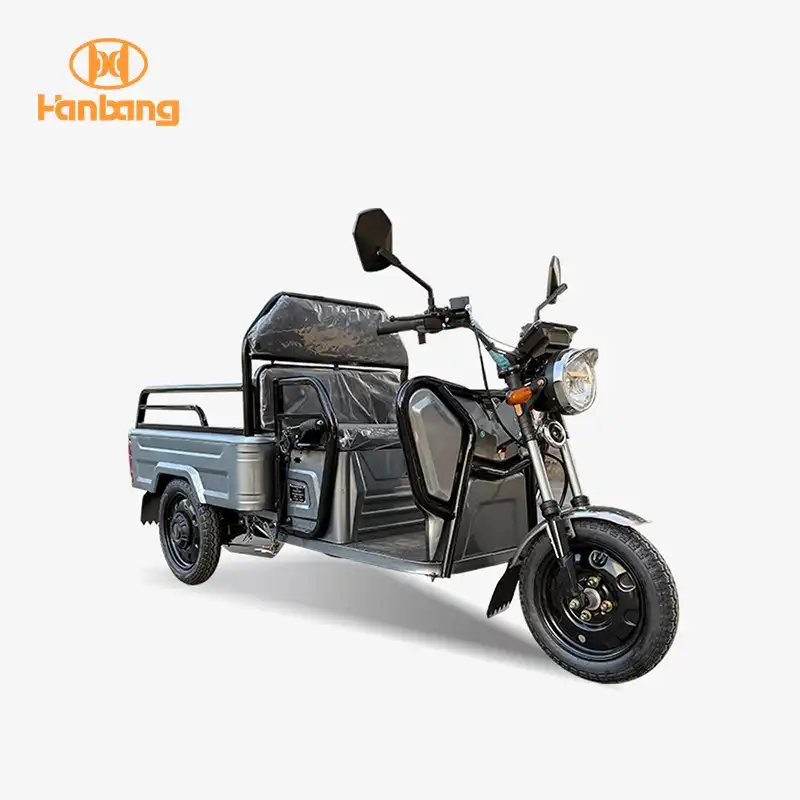
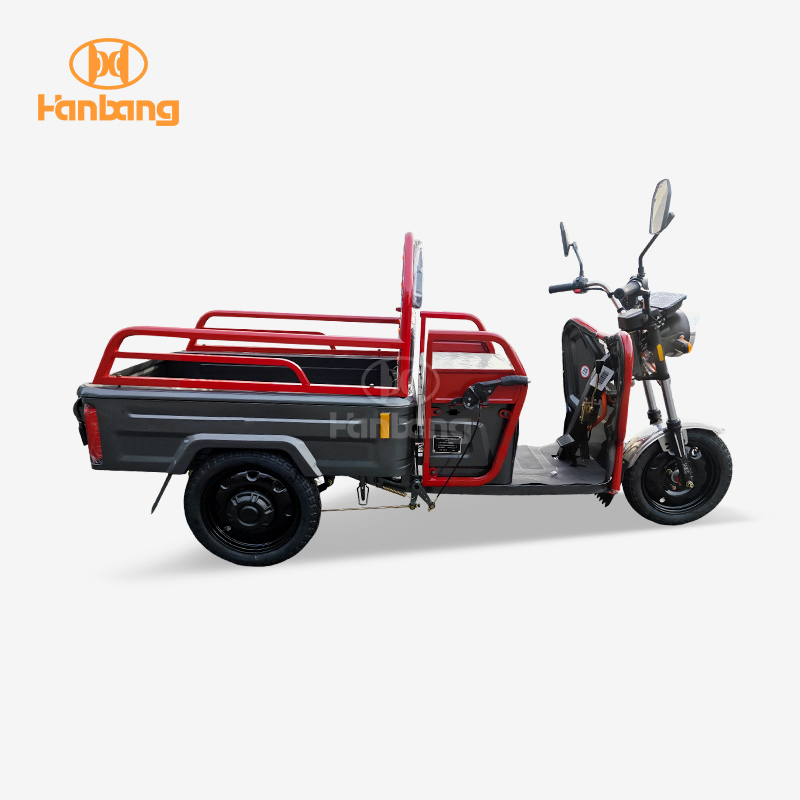
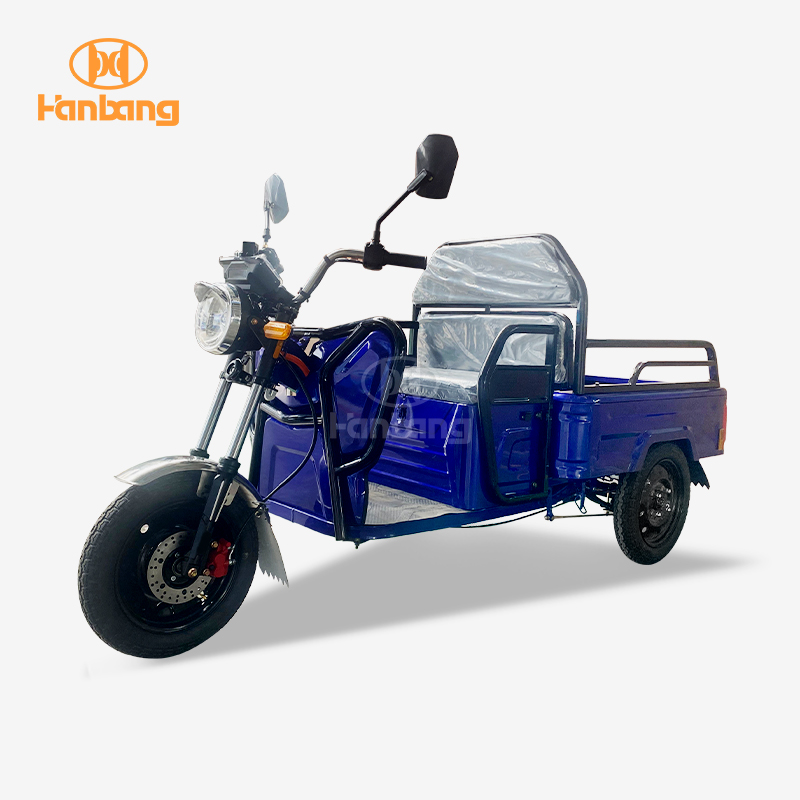
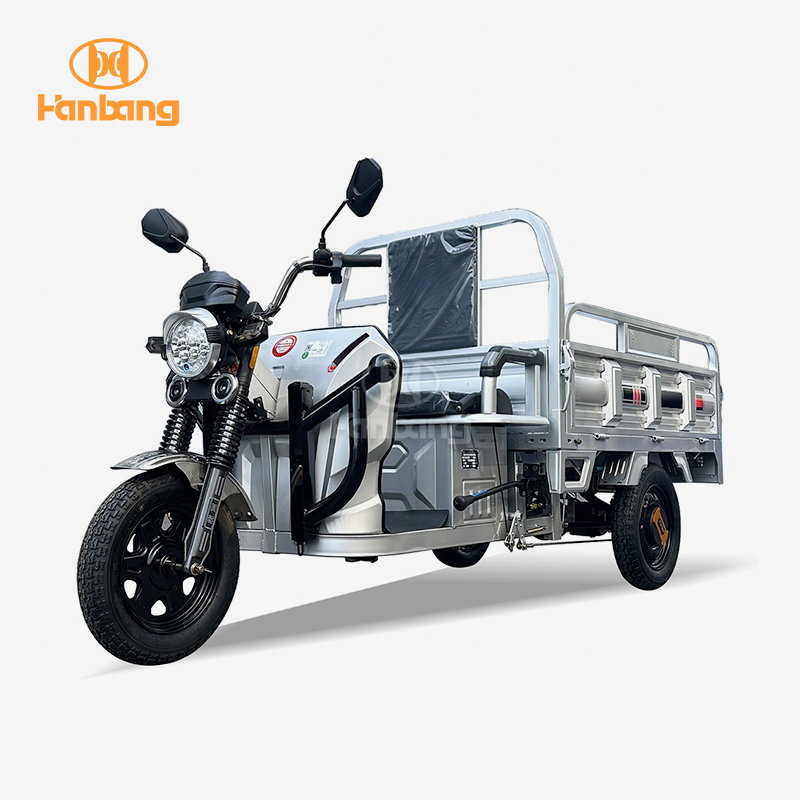
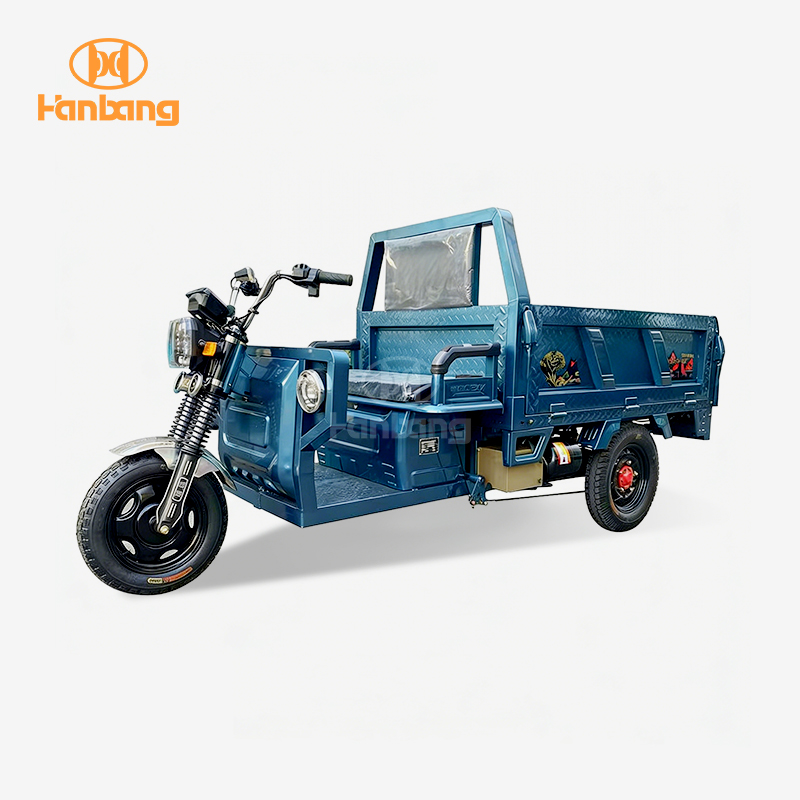
The product line is named after a 1000W motor on the entry trim and 1500W motor on the mid tier, both capped at 25 km/h. The Hanbang EEC approved series has a cargo box of 1.1 by 0.85m to 1 by 1.1m, can accommodate postal totes, market crates and small workshop parts. The line is available with EEC, CCC and ISO 9001 certification, so a distributor can walk a unit from the dock to the registration office without a separate homologation run under Reg (EU) 168/2013.
Geometry, Motor Trim, and the Box Footprint
The Hanbang LETU starter model measures 2485x875x1540mm with a box of 1.1x0.85m, while the mid-tier JIEBAO and ZHANLONG are 3085x1180x1400mm with a box of 1x1.1m. The narrow footprint allows a driver to spin in tighter circles than a standard delivery truck. That geometry translates into additional stops per shift for postal tenders and resort routes — without a driver-fatigue bill.
Where Energy Use Stays Predictable Across the Shift
A 1000W motor on a 72V 32Ah pack is roughly 14 amps at cruising load thus a postal loop of 30 to 40km falls under a single charging cycle. Replacing a battery costs USD 400 to 800 each pack, short enough to write off in a tax year. The trike returns to the depot for an overnight charge, and starts the next shift with no battery-swap backlog.
Container Arithmetic and the First-Order Capital Bill
EEC JIEBAO, 44 SKD or 60 fully-disassembled per 40HQ. EEC ZHANLONG, 36 SKD or 55 fully-disassembled. EEC WEIBA, 30 SKD or 45 fully-disassembled. EEC LETU, 48 SKD or 80 fully-disassembled. Meidi’s desk from Hanbang comes with a free wear-parts envelope, as well as an installation manual, within the initial container which lies in the USD 400 to 800 bracket. The initial order of the capital arrives in one goods envelope, no separate parts air-freighted from Asia.
What 'Heavy-Duty' Means in a Distribution Yard
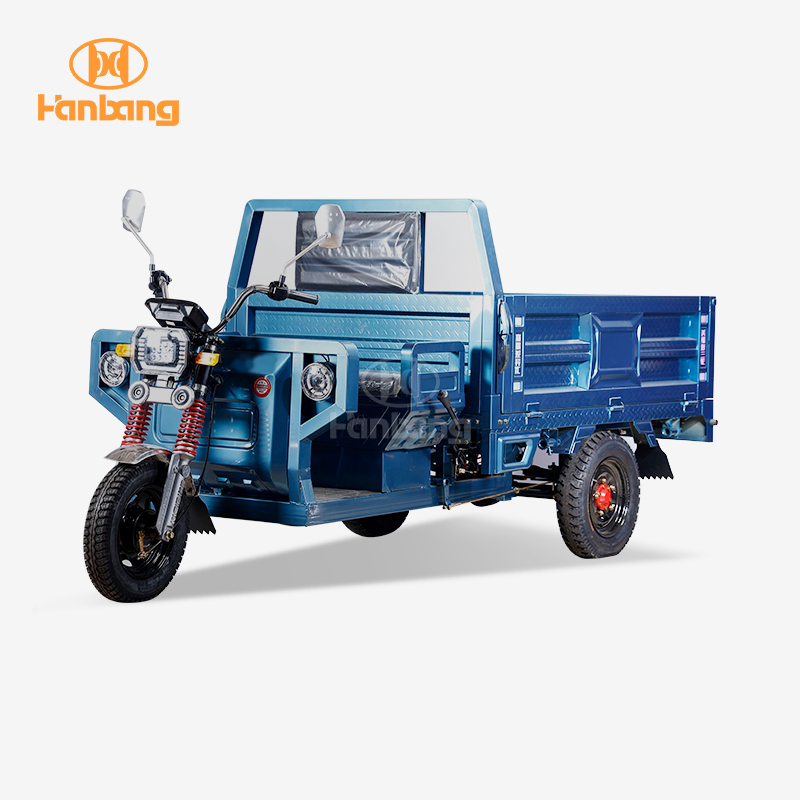
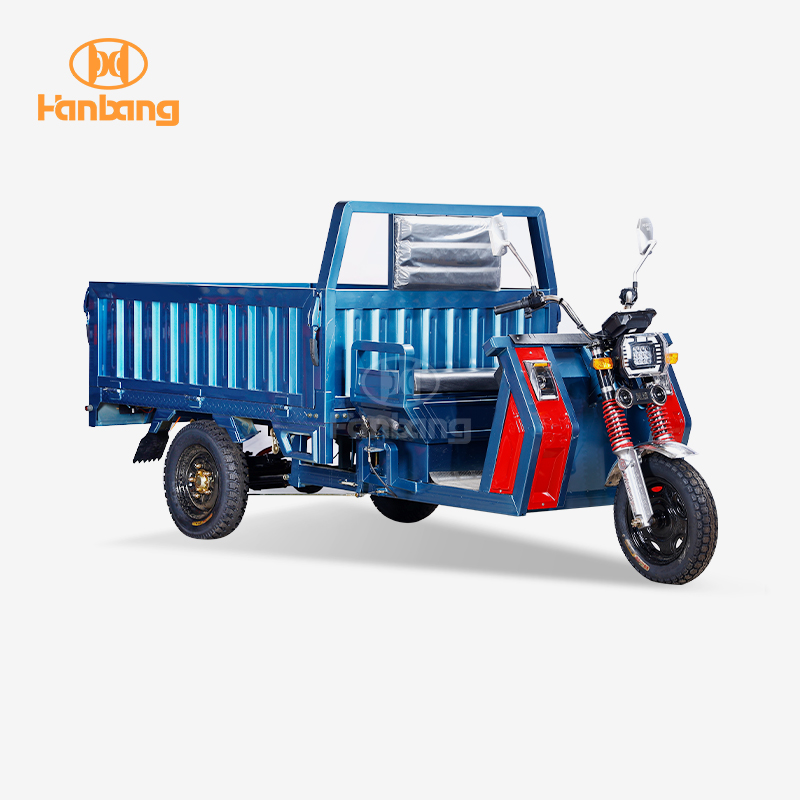
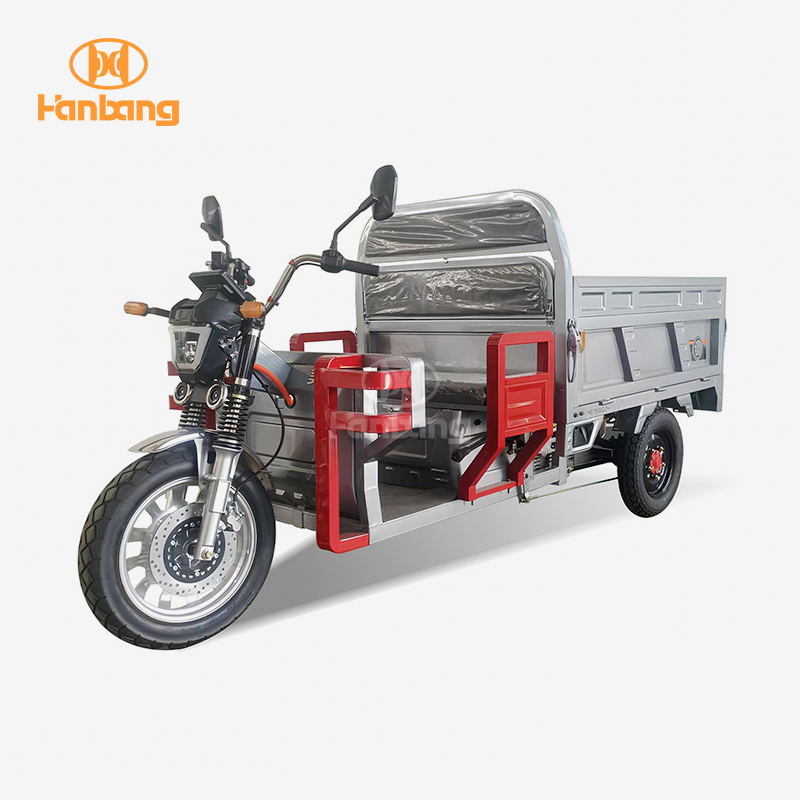
Where the product line ends, the heavy-duty class begins, with a 1500W to 1800W motor and a 1.8 by 1.3m cargo box that swallows a half-tonne load. Hanbang's HANJIANG 180 and ZHIHUIGUAN 180 run a 72V 58Ah pack for 60 to 80km working life and 43# external spring suspension tuned for potholed industrial yards. These units hold CCC and ISO 9001 certifications and are exported to non-EU markets where the EEC envelope does not apply.
Motor Class, Cargo Box, and the Daily Tonnage Behind It
The heavy-duty HANJIANG 180 climbs to 1800W on a 72V system, paired with a rear-axle integrated gear shift rated for daily half-tonne loads. A ZHIHUIGUAN 180 stretches to a 70 to 80km working range on a single charge, which outpaces the light line by a full shift. The cargo box holds a half pallet and a stack of crates, so the driver finishes a tender without a mid-route swap.
Where Battery and Brake Architecture Start to Matter
At 1800W and 70 to 80km per shift, the 72V 58Ah pack outpaces the 72V 32Ah pack by a third, which moves the daily revenue line. Brake hardware stays on a front drum plus rear drum combination with 43# external spring, parts that any neighbourhood truck shop stocks. Hanbang's Meidi desk pairs a free wear-parts envelope with the first container, in a USD 400 to 800 band, while the EU battery framework already charts the road ahead.
Container Arithmetic for the Heavy-Duty Line
Hanbang's heavy-duty units take more space per vehicle because the 1.8 by 1.3m cargo box adds cubic volume, so a 40HQ container ships fewer units per SKD run than the light line. The Meidi desk keeps the packing plan on labelled steel frames with reinforced skids. A forklift on the buyer's dock stacks the frames without a re-packing team, which keeps unloading inside a single yard shift.
Routes That Tip the Decision One Way or the Other
Routes decide the trim, and three European route families make the EEC lightweight electric cargo tricycle line a better margin than the heavy-duty class. Postal and last-mile parcel tenders run inside a 1.1 by 0.85m box footprint, resort and tourist loops turn on tight corners at low speed, and light industrial workshop routes handle small parts on a daily loop. Heavy-duty units win the routes that ask for half a tonne of full size cargo, not the urban families the light line already covers, and European fleet demand keeps both lines moving at a double-digit growth pace.
Postal and Last-Mile Parcel Tenders
Postal tenders cap routes at 30 to 40km with frequent stops, which fits the LETU's 1000W motor and 72V 32Ah pack exactly. The 1.1 by 0.85m box swallows a stack of postal totes without an overhang, so the driver finishes a loop inside the postal box footprint. The light line returns to the depot for an overnight swap and starts the next shift without a battery-change delay.
Resort, Hotel, and Tourist Loops
Resort loops run inside a 25km/h envelope with tight corners, which the light line handles without a driver-fatigue surcharge. The 1 by 1.1m box on the ZHANLONG trim holds luggage transfers, maintenance supplies, and inter-van parcels without tipping the centre of gravity. Hanbang's EEC certified envelope lets the resort register the unit on the same day the unit rolls off the truck.
Where Heavy-Duty Out-Earns the Light Line
Where the route asks for half a tonne per trip, the heavy-duty HANJIANG 180 out-earns the light line by carrying more per shift. A ZHIHUIGUAN 180 stretches the working range to 70 to 80km on a single charge, which puts the unit in the L5e-B class under Zemo's L-Category framework. The 1.8 by 1.3m box holds a half pallet plus a stack of crates, so the driver finishes the route without a mid-route reload.
Reading Your Own Lane Before You Order
A distributor's lane is the brief, and the brief explains which Hanbang trim suits the catalogue better. The product line suits postal, resort, and light industrial routes that cap speed at 25 km/h and finish inside a 40km round trip. The heavy-duty class suits half-tonne routes that ask for a 1.8 by 1.3m box and a 45km/h envelope. Hanbang's Meidi desk returns a written specification on three matched units once the buyer's five questions land in one email.
The Five Questions the Buyer Asks First
A buyer starts with route length, peak payload, certification envelope, exit density, and trim mix. Hanbang's EEC certified platform answers the first four with the LETU and ZHANLONG trims, the heavy-duty HANJIANG answers with a 1.8 by 1.3m box. The fifth answer sits in the buyer's per-SKU velocity data, which the Meidi desk converts into a packing plan per trim.
Trim-Level Mix in a Single Container
A smart first container rarely ships in a single trim, and the buyer's per-SKU velocity data decides the mix. Hanbang's Meidi desk splits a 40HQ container across ZHANLONG, JIEBAO, and LETU trims, with the wear-parts envelope and installation manual bundled inside. The first reply names the trim mix and the line-by-line count before the deposit, not after the goods leave the Chinese port.
The First Reply That Closes the Audit
If the supplier’s initial reply includes trim, container count, certification envelope and spare parts policy in one document, the distributor audit is finished. The Meidi desk returns a written spec on three matched units, the wear-parts package, the installation instructions and the registration checklist. The buyer’s deposit moves into one envelope. The first container departs the Chinese port during the same freight window.
Conclusion
The light line and the heavy-duty line answer two distinct briefs, and the brief decides which trim fits the distribution business. Hanbang's EEC lightweight electric cargo tricycle platform serves postal, resort, and light industrial routes inside a 25 km/h envelope, and the heavy-duty Hanbang class serves half-tonne industrial routes with a 1.8 by 1.3m box. The first reply closes the audit on the same desk, before the deposit leaves the buyer's account.
FAQ
What is the box size difference between the light and heavy-duty lines?
The light EEC line runs from 1.1 by 0.85m on the LETU to 1 by 1.1m on the ZHANLONG and JIEBAO, while the heavy-duty HANJIANG 180 and ZHIHUIGUAN 180 stretch to 1.8 by 1.3m.
Does the heavy-duty line carry EEC certification?
Hanbang's heavy-duty HANJIANG 180 and ZHIHUIGUAN 180 carry CCC and ISO 9001, and are exported to non-EU markets where the EEC envelope does not apply. The EEC line is reserved for the light trims.
How many units fit in a 40HQ container under each line?
The light line fits 44 EEC JIEBAO SKD, 36 EEC ZHANLONG SKD, 30 EEC WEIBA SKD, or 48 EEC LETU SKD, while full-disassembly lifts those numbers to 60, 55, 45, and 80.
What licence class does the heavy-duty line require in Europe?
The heavy-duty HANJIANG 180 runs at 45km/h, which puts it in the L5e-B category and may require a B-class car licence in most EU states, not the AM moped tier.
What is the typical production lead time for both lines?
Hanbang runs both lines on a 25 working day cycle from purchase order to trial run, with shipping scheduled around the buyer's freight envelope.
Your Lane Picks the Trim. Send the Brief, Get the Match.
Tell our Hanbang desk which European lane your fleet serves, which cargo box footprint your buyer's brief demands, and which speed envelope your licence tier allows. We will return a written specification on three matched units from Hanbang's certified light line and the heavy-duty Hanbang class, with a line-by-line count for SKD or full-disassembly packing inside a 40HQ container. Hanbang operates a 150,000 square-metre intelligent production base with four workshops, stamping, welding, painting, and final assembly, plus 5 wholly-owned subsidiaries and one overseas investment company, so any custom box dimension, colour, or logo moves through one supply chain. Reply to nicole@xzmeidi.com or message WhatsApp +86 13115031091 with one sentence or a chapter. The first response is a written specification, not a catalogue page.
References
1. European Parliament & Council (2014). Regulation (EU) No 168/2013 on the approval and market surveillance of two- or three-wheel vehicles and quadricycles. Official Journal of the European Union. Last amended 2020.
2. Zemo Partnership (2024). L-Category Vehicles Guide: Understanding L1e, L2e, L5e-A and L5e-B Classification. London: Zemo Partnership.
3. European Parliament & Council (2023). Regulation (EU) 2023/1542 concerning batteries and waste batteries. Official Journal of the European Union.
4. Horeca Technology (2026). Electric Tricycles in Europe: Market Trends and Opportunities. Industry Market Report.
Tell us your requirements – get a tailored quote and technical support within 24 hours.