- English
- French
- German
- Portuguese
- Spanish
- Russian
- Japanese
- Korean
- Arabic
- Greek
- German
- Turkish
- Italian
- Danish
- Romanian
- Indonesian
- Czech
- Afrikaans
- Swedish
- Polish
- Basque
- Catalan
- Esperanto
- Hindi
- Lao
- Albanian
- Amharic
- Armenian
- Azerbaijani
- Belarusian
- Bengali
- Bosnian
- Bulgarian
- Cebuano
- Chichewa
- Corsican
- Croatian
- Dutch
- Estonian
- Filipino
- Finnish
- Frisian
- Galician
- Georgian
- Gujarati
- Haitian
- Hausa
- Hawaiian
- Hebrew
- Hmong
- Hungarian
- Icelandic
- Igbo
- Javanese
- Kannada
- Kazakh
- Khmer
- Kurdish
- Kyrgyz
- Latin
- Latvian
- Lithuanian
- Luxembou..
- Macedonian
- Malagasy
- Malay
- Malayalam
- Maltese
- Maori
- Marathi
- Mongolian
- Burmese
- Nepali
- Norwegian
- Pashto
- Persian
- Punjabi
- Serbian
- Sesotho
- Sinhala
- Slovak
- Slovenian
- Somali
- Samoan
- Scots Gaelic
- Shona
- Sindhi
- Sundanese
- Swahili
- Tajik
- Tamil
- Telugu
- Thai
- Ukrainian
- Urdu
- Uzbek
- Vietnamese
- Welsh
- Xhosa
- Yiddish
- Yoruba
- Zulu
Folding Seat Electric Cargo Tricycle: A Practical Choice for EU Urban Delivery Fleets
Most of the time, European city fleets don't fight about motor wattage. The round has a service lane that is too narrow for a van, a curbside stop that doesn't have a loading bay, and a rider who wants a backrest by the fourth hour. Jiangsu Hanbang builds its EEC electric cargo tricycle foldable seat for that brief, and the Meidi export desk quotes it as a working machine.send inquiry

What an Urban Delivery Round Demands from a Three-Wheeler?
There are a set of rules called a "round" that the machine has to follow all at once. Which lanes stay open is based on the width. How fast a box can be switched depends on how high the curb is. How long it takes to charge determines whether one battery lasts for a shift or two trips to the plug. The Meidi desk at Hanbang needs those three numbers before it can name a trim. This is because the product only makes sense after the round is written down.
Street Width, Turning and the Last Hundred Metres
Most of a delivery route takes place in places where a van can't park. The real limits are service lanes, market squares, and places where people walk. A three-wheel track works better in these places than almost anything with four wheels. The cargo trim with a folding seat is type-approved in the L2e class, which includes machines up to 45 km/h and 4 kW. In most member states, this class goes with an AM moped licence.
Stops Per Hour and the Payload Behind Each One
An errand round is a set of short hops. The rider takes longer at each stop than the machine itself, so a low, flat cargo floor and a box that can fit a standard crate without having to be repacked are more important than the top payload number. Most of the time, fleets that tell Hanbang about the heaviest single item, stop density, and box size end up with a lighter trim than what they asked for.
Shift Length Against Battery Size and Charging Window
You should plan your day around eight hours. There are about 3.2 kWh of power in a 72V 45Ah pack, and the folding-backrest model is rated for 60 to 70 km on a mixed urban route, which is enough for a normal shift and still has power left over. There is no need for a second battery pack for a depot that can plug in overnight from a home outlet.
Where the Folding Backrest Helps and Where It Does Not
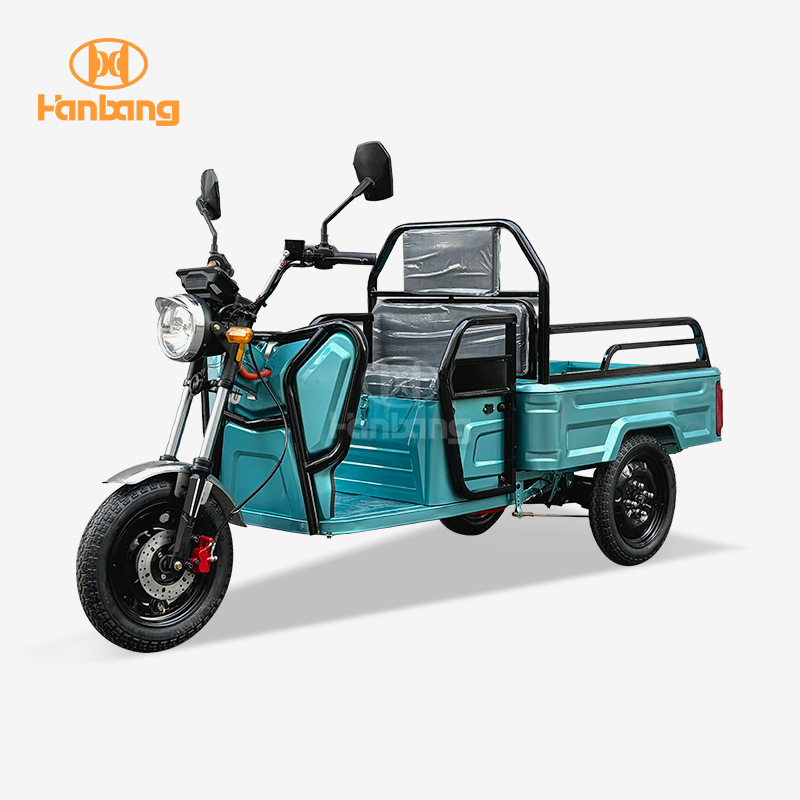
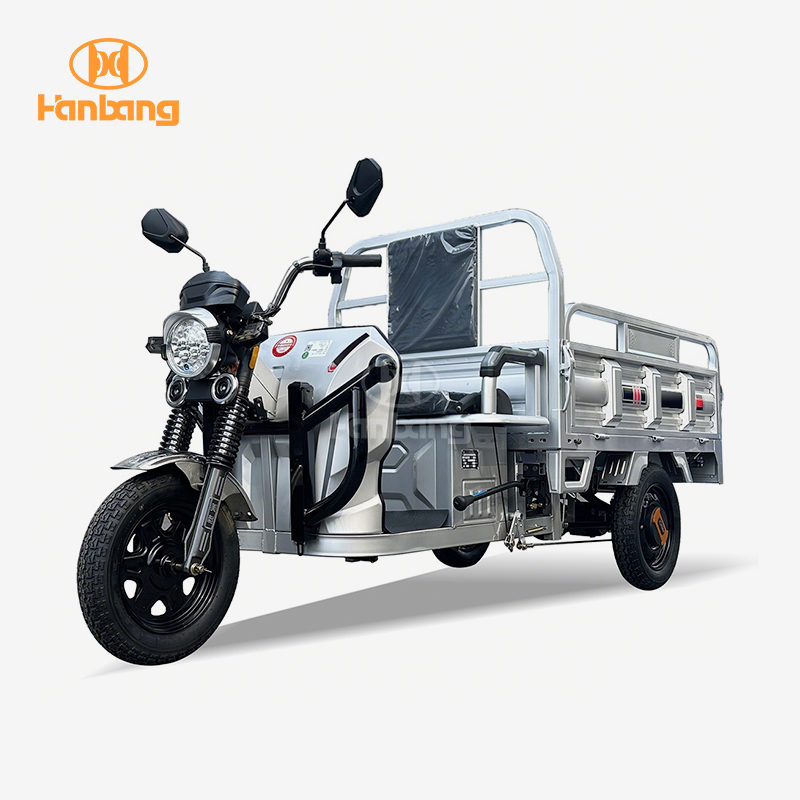
The part of Hanbang's product that folds up is the user bench's backrest. When the driver sits for a long time, it tilts forward to support their lower back and lifts a box over the car. There isn't a second row of seats or a safety belt on that, and the depot shouldn't sell rides from it. Because an approval document talks about a set configuration and not a menu, Hanbang writes that limit into the specification.
A Backrest That Tips Forward, Not a Bench for Two
Since the hinge is behind the rider, folding the backrest forward doesn't change the load capacity, the wheelbase, or the space for stored items. If the rider would normally stretch across the box, they can now tip the backrest down and lift the crate straight in. That's the whole point, and it's important to explain it clearly.
The 150 kg Rating and Who It Is Actually For
It says that the seat can hold up to 150 kg, but that's only for occasional sitting, not regular use. In that range is a fitter riding along for the last 200 meters or a second worker getting a ride back to the depot. It's not a queue of people paying their price, and a fleet that plans around one will fail its own insurance review.
What a Cargo Fleet Should Never Promise
It takes a different approval process and a different conversation with the insurance company for a passenger carriage. A cargo platform that has been turned into a taxi invites the very scrutiny it doesn't want, and the backrest doesn't have a footwell, a grab rail, or a seat belt for the user. Hanbang's answer to that question is not a folded backrest but a real three-wheeled passenger bike.
How the ZHANLONG Platform Measures Up on That Round?
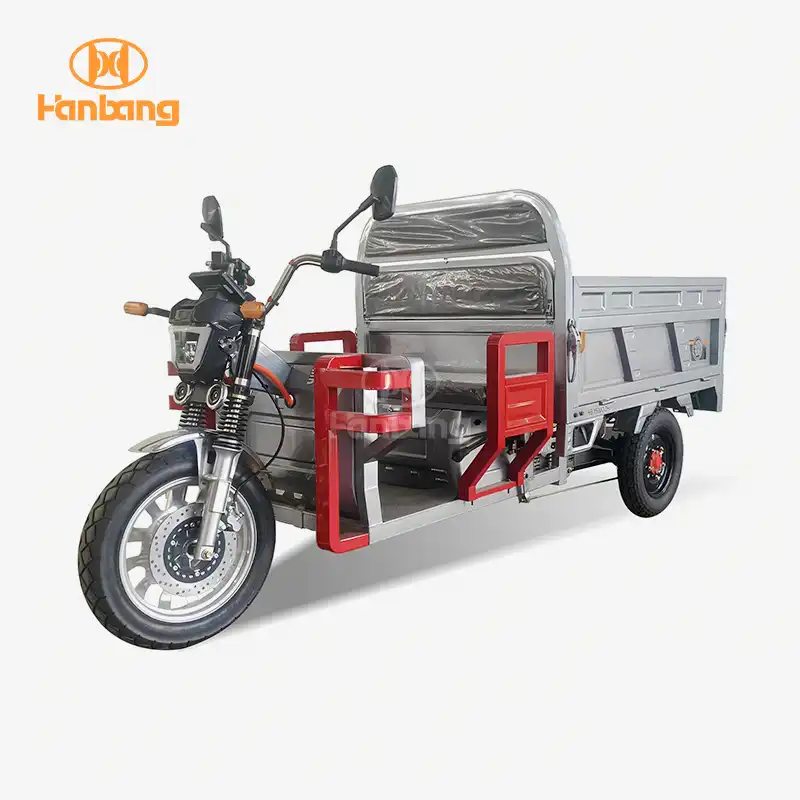
There is a folding-backrest trim from Hanbang called the EEC ZHANLONG. Its numbers look like they were made for a depot instead of a trade show stand. The body is 3,085 mm long, 1,180 mm wide, and 1,400 mm high. The cargo box is 1.6 m long and 1.1 m wide. The engine is a 60/72V 1500W unit with a big 24 tube controller. That footprint, not the hinge, is what makes Hanbang's EEC electric cargo tricycle foldable seat work in a city.
Cargo Box, Rear Axle and Kerbside Loading
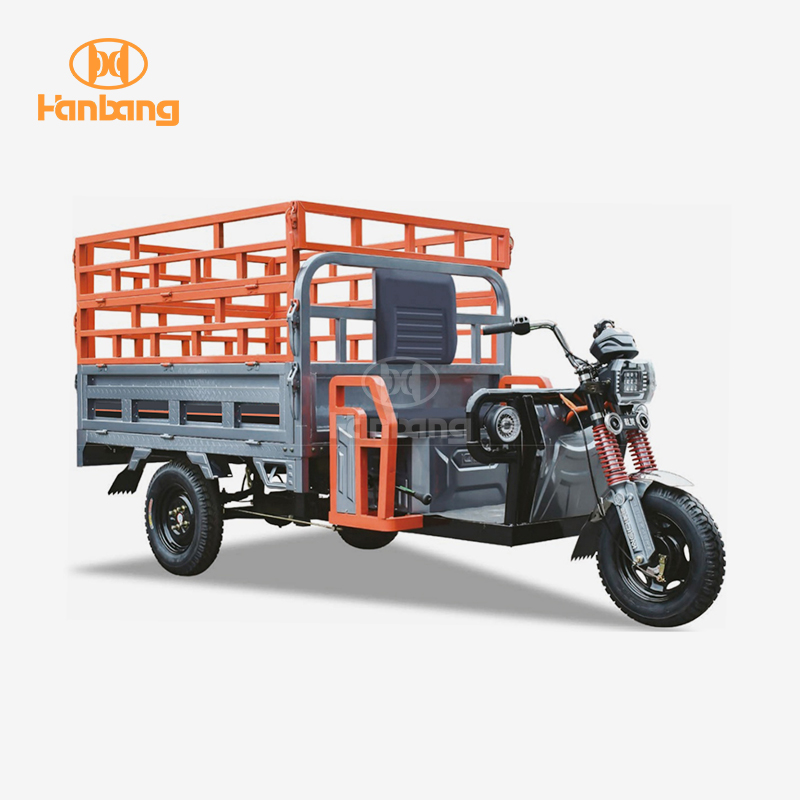
Nearly 1.76 square meters of floor space can be found in a box that is 1.6 meters by 1.1 meters. This is enough for two produce crates to be stacked on top of each other. The front tires are 3.75-12 and the back tires are 4.00-12. The rear axle has a 160-gear shift built in, which keeps the track narrow for market work. Hanbang puts out the whole sheet instead of just the top number.
Twin Speed, Range and the Hill Outside the Depot
The controller has two speed settings, 25 km/h and 45 km/h. This way, a depot can limit the machine to the moped licence level and keep the faster setting for work in the yard and industrial estate. Range lands are about 70 km away. And Hanbang makes it clear to buyers that a fully loaded box can cut that number by 30 to 40 percent. The gear shift also helps on the way home.
Brakes, Suspension and Wet-Season Reliability
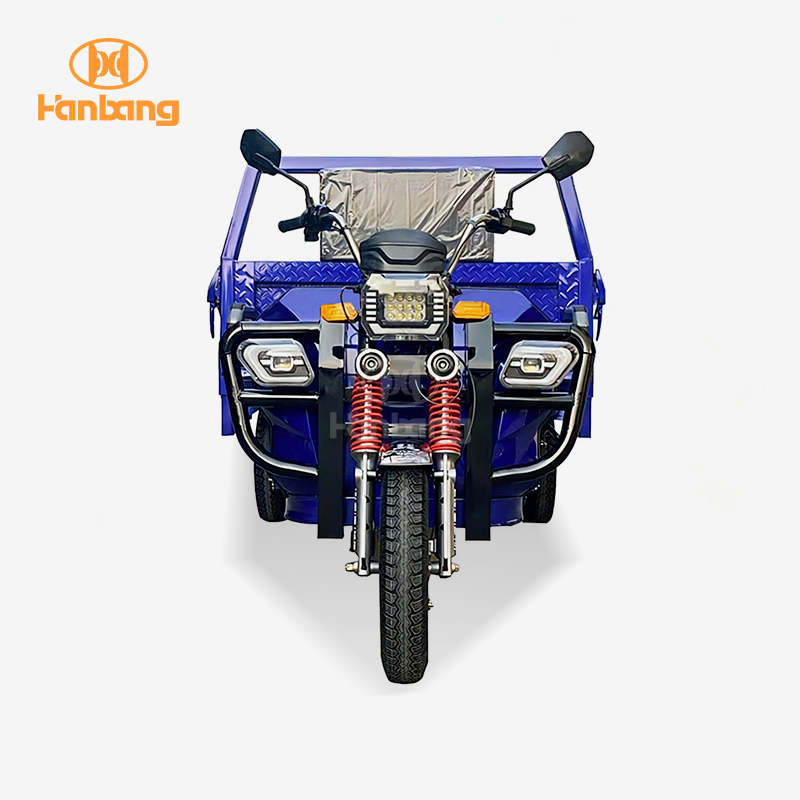
For a machine that stops a lot more than it speeds up, front and rear drum brakes work best. Drums also handle water and dirt better than discs on a curbside round. A 37# external spring set holds the car up. The fact that electrical parts are sealed to IP65 or IP67 is what determines whether a fleet will make it through a winter in northern Europe.
What to Settle Before the First Container Ships?
A tricycle order is closed by four lines: the unit band, the number of containers that the yard can unpack, the set of documents that the registration office will accept, and the production slot. Hanbang's Meidi desk puts the order for goods on one page so that a dealer can see how it compares to another quote without having to go to a second meeting. You shouldn't leave any of those four numbers for the first shipment to show.
Unit Band, Duty and the Landed Cost Line
The price range for an EEC folding-backrest program is usually between 400 and 800 USD per unit on a pilot shipment. At the higher end of that range are lithium packs, custom box work, or a fuller document package. There is a duty of 6% of the CIF value, which means that goods and insurance affect the landing price just as much as they affect the ex-works price.
Retail Headroom and What the Band Leaves a Dealer
This type of machine costs between EUR 2,000 and EUR 5,000 at stores in Europe. The need for small electric delivery platforms has grown at a rate of about 12.5% per year. That space between the factory band and the shelf is enough to pay for a demo unit, a showroom, and a service bench. A dealer who doesn't do the maths will trade on margin for volume without realising it.
SKD and Full-Knockdown Counts by Trim
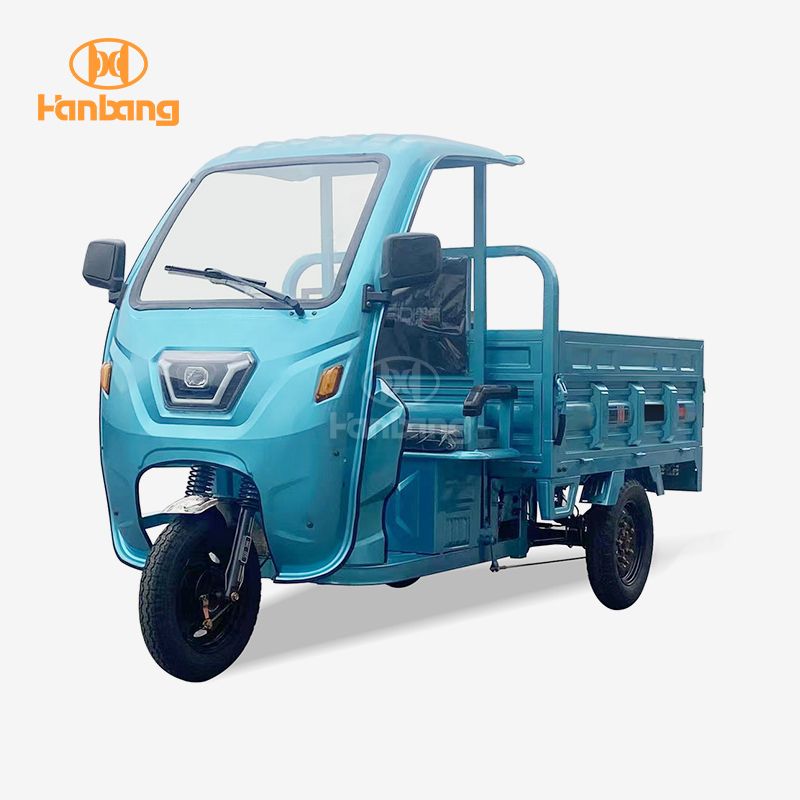
Since no bicycle going to Europe leaves China fully put together, the order is planned to come in either partially or fully disassembled kits. LeTU trims load at 48 SKD or 80 fully knocked down, Jiebao trims load at 44 or 60, Zhangliong trims load at 36 or 55, and Weiba trims load at 30 or 45, according to 40HQ. Which mode is best for you depends on the equipment you use to unload.
Documents, Registration Checks and the 25 Day Slot
A Certificate of Conformity is free to travel with every unit, and the regulation says that the seller can't refuse to give it to the buyer if they ask for it. Hanbang puts the CoC in the first container with an installation guide, a maintenance video, and a box of wear parts. They then schedule production for 25 working days.
Conclusion
Judged on the round rather than the brochure, the EEC electric cargo tricycle foldable seat holds up: 1.18 m of track, a 1.6 m by 1.1 m box, 60 to 70 km of range, and a backrest that folds and nothing more. That comes with EEC approval, a CoC per unit, a production slot of 25 days, and a box for wear parts in the first container from Hanbang. Do not use it as a small bus, but as a cargo vehicle with a useful hinge.
FAQ
Is the folding seat a passenger seat?
No. It is a backrest on the rider bench, rated to 150 kg for occasional sitting. It has no footwell, no grab rail and no belt, so it cannot be sold as passenger transport.
Which licence does this trim need in the EU?
It is type-approved in the L2e class, which covers machines up to 45 km/h and 4 kW. Most member states pair that with an AM moped licence, and the 25 km/h setting keeps the machine in that tier.
How far does it go on one charge with a full box?
Light urban duty reaches 60 to 70 km. Hanbang advises a 30 to 40 percent range penalty under heavy load, so plan the round on the loaded figure.
How many units fit in a 40HQ container?
Counts are per trim: LETU at 48 SKD or 80 fully knocked down, JIEBAO at 44 or 60, ZHANLONG at 36 or 55, and WEIBA at 30 or 45. Nothing ships fully assembled.
What does a fleet pay per unit, and what comes with it?
A pilot programme usually lands in a USD 400 to 800 band per unit, with a CoC, an installation manual, a maintenance video and a box of wear parts included.
Hand Us Your Depot's Worst Round and a Budget Band
Fleet managers rarely argue about motors. They argue about the round that eats a rider's morning. Describe that round to the Meidi export desk at Hanbang: the tightest turn your riders take, the stops in a peak hour, the heaviest item they load, and the budget band you can defend, which for an EEC tricycle pilot usually sits between USD 400 and 800 per unit. Hanbang answers in writing with the trim, the box footprint, the backrest specification and the count your yard can unpack. Since 2010 Hanbang has invested about 1 billion yuan in its own lines and holds more than 10 provincial high-tech product certifications, with research, stamping, welding, painting and assembly on one 200 mu site. Write to nicole@xzmeidi.com, or send a voice note to +86 13115031091 on WhatsApp. Which round would you test first?
References
1. Regulation (EU) No 168/2013 on the approval and market surveillance of two- or three-wheel vehicles and quadricycles. Official Journal of the European Union, 2013 (consolidated 2020).
2. Zemo Partnership (2024). L-Category Vehicles Guide. London: Zemo Partnership.
3. Horeca Technology (2026). Electric Tricycles in Europe: Market Trends and Opportunities. Industry market report.
Tell us your requirements – get a tailored quote and technical support within 24 hours.