- English
- French
- German
- Portuguese
- Spanish
- Russian
- Japanese
- Korean
- Arabic
- Greek
- German
- Turkish
- Italian
- Danish
- Romanian
- Indonesian
- Czech
- Afrikaans
- Swedish
- Polish
- Basque
- Catalan
- Esperanto
- Hindi
- Lao
- Albanian
- Amharic
- Armenian
- Azerbaijani
- Belarusian
- Bengali
- Bosnian
- Bulgarian
- Cebuano
- Chichewa
- Corsican
- Croatian
- Dutch
- Estonian
- Filipino
- Finnish
- Frisian
- Galician
- Georgian
- Gujarati
- Haitian
- Hausa
- Hawaiian
- Hebrew
- Hmong
- Hungarian
- Icelandic
- Igbo
- Javanese
- Kannada
- Kazakh
- Khmer
- Kurdish
- Kyrgyz
- Latin
- Latvian
- Lithuanian
- Luxembou..
- Macedonian
- Malagasy
- Malay
- Malayalam
- Maltese
- Maori
- Marathi
- Mongolian
- Burmese
- Nepali
- Norwegian
- Pashto
- Persian
- Punjabi
- Serbian
- Sesotho
- Sinhala
- Slovak
- Slovenian
- Somali
- Samoan
- Scots Gaelic
- Shona
- Sindhi
- Sundanese
- Swahili
- Tajik
- Tamil
- Telugu
- Thai
- Ukrainian
- Urdu
- Uzbek
- Vietnamese
- Welsh
- Xhosa
- Yiddish
- Yoruba
- Zulu
Why Are Electric Cargo Tricycles Becoming Popular in the Express Delivery Industry?
The express service business is going through a big change because of rules about the environment, rising costs, and changes in city facilities. These days, Hanbang Electric Tricycle Cargo solutions are the best choice for last-mile logistics. Their ability to operate with no pollution and great flexibility in crowded city hubs and rural areas solves the main problems that courier services, food delivery platforms, and small distribution networks face. This change is more than just a trend; it shows a basic rethinking of how modern supply lines work and how to move goods efficiently.

The Growing Demand for Electric Cargo Tricycles in Express Delivery
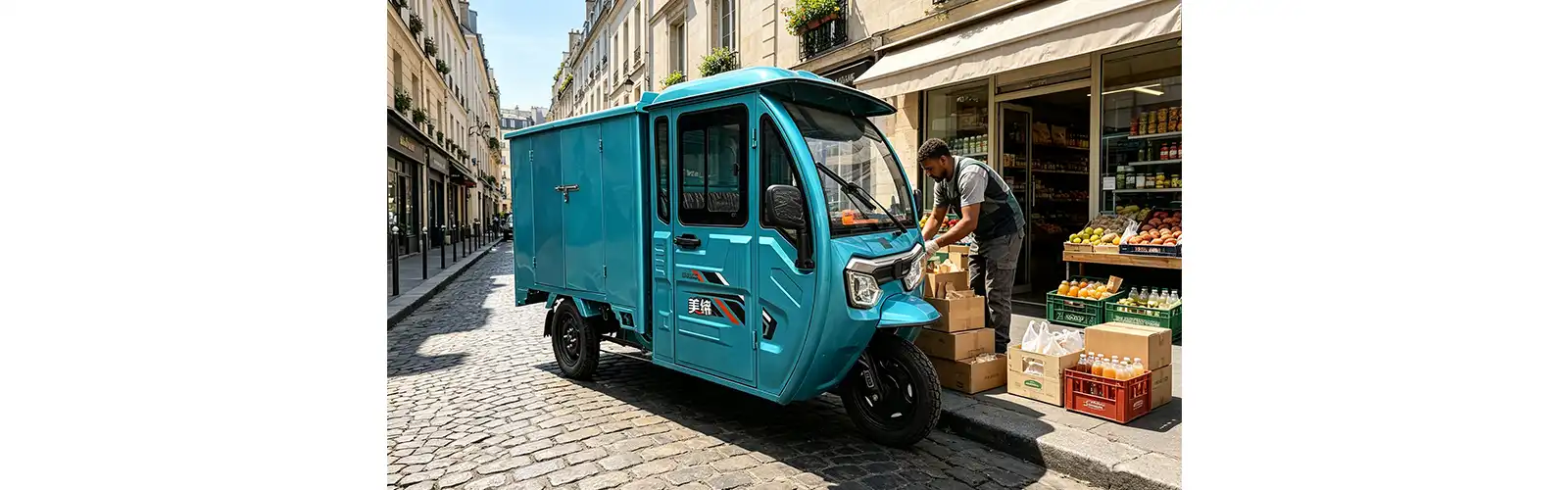
More and more people want Hanbang Electric Tricycle Cargo models for fast delivery. Traditional diesel vans and motorcycles that run on gasoline are very expensive and cut into delivery companies' profits. Unpredictable changes in fuel prices, repair plans that require a lot of shop time, and stricter emission standards in big cities make it hard to stay in compliance.
Hanbang Electric Tricycle Cargo solutions answer all of these problems at the same time. When compared to regular cars, they use about 70–80% less fuel because they don't need petroleum products to run. Because they have a simpler system with fewer moving parts than internal combustion engines, they need less upkeep and cost less to fix. Many city planners in the US now prefer electric cars in restricted areas, which gives them entry that other fuel-based vehicles can't.
When you need to get somewhere quickly, the small three-wheel design is very helpful. Without the stress of driving a full-size van, delivery paths through historic downtown areas, private neighborhoods with narrow streets, and busy market areas can be made. The tricycle's inherent steadiness and large cargo capacity make it the perfect combination of flexibility and usefulness, which is appreciated by transport managers who are in charge of handling complicated delivery networks.
Urban Access and Regulatory Advantages
More and more, cities are putting in place low-emission zones where regular service trucks have to pay high congestion fees or have trouble getting in. Hanbang Electric Tricycle Cargo units don't have to deal with these problems at all, so they can keep running in city centers. This legal edge directly leads to more service areas and happier customers because of more reliable transport windows.
Cost Structure Transformation
When you compare operating costs, the economic balance changes in a big way. For every mile driven, electricity costs about one-fifth as much as petrol. These savings add up quickly when spread out over daily trips that cover 40 to 50 kilometers. Fleet managers say that the cars pay for themselves in 18 to 24 months, and after that, they are cheaper than regular vehicles.
Core Features and Specifications That Make Hanbang Electric Cargo Tricycles Stand Out
Jiangsu Hanbang Vehicle Industry Group has been making vehicles for more than ten years and brings that experience to the market. Their KAIXUAN X3 Express model shows how well-thought-out tech can meet real-world transport needs. This Hanbang Electric Tricycle Cargo doesn't just replace tools that are already there; its purpose-built form makes operations more efficient.
The 800W brushless motor of Express Delivery Electric Tricycle Cargo provides steady torque on a range of surfaces, from flat city streets to steep country trails. The car has a range of 50 to 60 kilometers on a single charge thanks to its 60V 52Ah battery system. This range standard works perfectly with most delivery routes in cities, so drivers can work full shifts without having to stop and charge in the middle of the day.
The storage area is 1.5 meters by 1.1 meters, which is 1.5 cubic meters of safe room. This closed design keeps packages out of the weather, which is important for keeping products safe in rain, snow, or extreme heat. Its overall measurements of 3100mm x 1140mm x 1685mm are just right—small enough for tight spaces but big enough to carry a lot of stuff.
Safety approvals like CCC and ISO 9001 show that the car meets high quality standards around the world. The front and back-dual-drum brake system makes sure that the vehicle can stop reliably even when it is heavy. The built-in gear shift on the rear axle improves power transfer, which is especially helpful when going up hills or moving heavy loads.
Battery Technology and Range Performance
The lithium-ion battery pack goes through a lot of tests to make sure it works well and lasts a long time. Based on real-world usage data from courier services, the battery still has over 85% of its original capacity after 800 full charges. This means that it can be used every day in a business setting for about three years before it starts to perform less well.
The equipment needed for charging stays pretty low-key. A standard 220V plug fully charges the battery in 6 to 8 hours, so it's possible to charge it overnight at the station. Some companies put up solar panel systems at their distribution centers to get almost no energy costs and show their support for the environment.
Weather Protection and Cargo Security
The fully covered storage box is a big improvement over options with open beds. Deliveries that need to be kept at a certain temperature, like medicines, fresh foods, and electronics, are kept safe during transit. The doors that can be locked keep thieves away on runs with multiple stops, which cuts down on the shrinking losses that come with open-vehicle operations. The steel-reinforced flooring can hold big things without breaking or bending, and it keeps its shape after thousands of loading cycles.
Operational Benefits of Using Hanbang Electric Cargo Tricycles in B2B Express Delivery
Adding Hanbang Electric Tricycle Cargo units to transport fleets improves performance in a number of practical areas that can be measured. The financial benefits go beyond just saving money on petrol. They also include higher productivity, greater dependability, and happier workers.
Maintenance plans are a lot easier to understand. For traditional cars, you need to change the oil, service the gearbox, fix the exhaust system, and do a lot of complicated engine diagnostics. With an electric drivetrain, none of these problems exist at all. Normal upkeep includes rotating the tires, checking the brake pads, and lubricating the bearings every so often. There is a lot less downtime, which means that more cars are on the road making money.
The driver experience gets a lot better. The almost quiet process keeps workers from getting tired during long shifts. The smooth movement without changing gears makes it easier to use, which is especially helpful for new drivers. The higher sitting position makes it easier to see in mixed traffic, which raises safety awareness. Because of these practical benefits, there is less driver loss, which is a big deal in the competitive job market for delivery workers.
Because of how the vehicle is made, routes become more efficient. The small turning radius lets you make three-point turns in places where vans need to back up. It's easier to park because the small size lets it fit in spots that aren't big enough for bigger cars. According to logistics data from urban courier companies, these small benefits add up to 10-15% more packages per shift.
The effect on the environment fits with efforts by businesses to be more environmentally friendly. Hanbang Electric Tricycle Cargo models are a great way for companies that want to reduce their carbon footprint to reach their goals. This alignment supports marketing stories, improves brand reputation among eco-friendly customers, and puts companies in a good position for future changes in regulations.
Real-World Performance Metrics
Distribution centers in suburban areas say that switching to electric transport has cut the average cost of delivery by $0.45 per package. This decrease comes from saving money on fuel, lowering the cost of upkeep, and making routes more dense. A fleet of fifty vehicles saves about $180,000 a year and increases transport capacity by 12% at the same time.
Logistics companies that work in rural areas say that farming towns have some special benefits. The business is quiet so that early morning supplies don't bother animals or people living nearby. Being able to drive on unpaved country roads and town lanes, which is hard for regular cars, means that they can serve markets that weren't being served before.
Maintenance Simplicity and Reliability
Because the mechanical systems are simpler, they don't need as many specialized technicians. Maintenance jobs can be done by general mechanics or trained employees from inside the company. Hanbang includes detailed instructions, video clips, and starting spare parts kits with every vehicle. This way, operators can do regular maintenance without any help from outside sources. Being able to do things on your own is especially helpful in remote places where certified service sites may be hours away.
Choosing the Right Hanbang Electric Cargo Tricycle for Your Business Needs
The success of execution depends on how well the Hanbang Electric Tricycle Cargo specs match the operational needs. Delivery companies work in a lot of different situations. For example, courier services in cities have to deal with different needs than farm wholesalers or city repair teams. Knowing these differences helps you choose the right vehicle.
The most important thing to think about is the payload requirements. The KAIXUAN X3 Express can carry a lot of cargo, so it can be used to bring packages, deliver food, and move light tools. Operators should look at the average weights of loads, the sizes of packages, and the daily trends of traffic. The 1.5-cubic-meter luggage box can hold between 180 and 220 normal parcel boxes, which is enough for most urban routes with a lot of people.
To figure out range, you have to be honest about how far you drive each day. The 50–60-kilometer range works well in cities where distribution centers are strategically placed in service areas. Operations that cover large neighborhoods or country areas might benefit from being able to charge in the middle of a route or from thinking About Using multiple shorter routes instead of one long route.
The features of the terrain affect the motor's specs. When used in flat urban areas, normal motor setups work well. The 72V motor option is better for places with big changes in elevation or unpaved surfaces because it gives you more torque for climbing hills and navigating rough terrain.
There are more customization options than just basic settings. Hanbang can handle requests for specific paint colors, the application of company branding, changes to the size of the cargo box, and added features such as better lighting or suspension parts. This makes sure that the vehicle fits in perfectly with the look and operation of the rest of the fleet.
Financial Considerations and Support Infrastructure
Hanbang's factory-direct price plan gets rid of markups for middlemen, so buyers get the savings directly. When compared to buying cars through standard dealer networks, this method lowers the initial cash outlay by 15 to 25 percent. From order approval to delivery, the production cycle takes 25 days. This means that the fleet can grow quickly to take advantage of market possibilities.
Important parts are covered by the warranty, and Hanbang's foreign service network can help with problems. The company has offices in almost 50 countries, so parts and technical support are always available, no matter where the deployment is taking place. This global infrastructure lowers the risks that come with buying tools from other countries.
Financing Options and Total Cost Analysis
When you buy a fleet, you have to spend a lot of money. Hanbang works with its funding partners to set up payment plans that are in line with the company's actual cash flow. Fleet electrification can be done by growing businesses without using up all of their operating capital through leasing and payment plans. When compared to fuel prices, which change all the time, stable running costs make budgeting and financial forecasts easier.
Over five-year planning periods, total cost of ownership analyses always show that Hanbang Electric Tricycle Cargo options are better. Taking into account the price of the purchase, the cost of energy, the cost of maintenance, and the value of the old appliance, electric options have 35–40% lower total costs. This cash benefit gets stronger as fuel prices go up and carbon credit programs grow, which may make reducing emissions more valuable.
Why is Hanbang a Trusted Brand Among Global Procurement Professionals?
The clever manufacturing center that Jiangsu Hanbang Vehicle Industry Group uses is 150,000 square meters and has the latest production technology. Over 20 welding robots, six laser cutting systems, and automatic assembly lines that can make 300,000 units a year of the Hanbang Electric Tricycle Cargo are used in the company's specialized workshops: pressing, welding, painting, and final assembly.
This manufacturing capacity helps keep quality high and delivery times on track. The company has almost 200 intellectual property patents, which shows that it is always coming up with new ideas for electric vehicles. EEC certification lets you sell your goods in all of Europe, and ISO 9001 recognition proves that your quality management system meets foreign standards.
Five wholly-owned subsidiaries and international investment operations make up the corporate structure, which provides a strong base for the organization. This steadiness gives procurement workers peace of mind when they are looking at long-term supplier ties. The brand's reputation, built over fourteen years, is based on durability and dependability, which are very important in commercial vehicle applications where downtime directly affects revenue.
Customer reviews from logistics companies in the Americas, Africa, and Southeast Asia always talk about how helpful the technical support team is and how easy it is to get parts. The company runs area distribution networks that keep popular parts in stock so that vehicles don't have to be taken out of service for too long. This dedication to service after the sale sets Hanbang apart from rivals who may offer lower prices at first but don't offer enough ongoing support.
Manufacturing Excellence and Quality Assurance
Before being shipped, every vehicle goes through a lot of tests. As part of quality control, electrical system diagnostics, brake performance validation, range testing under load, and structural integrity assessment are all things that are done. This thorough inspection process makes sure that vehicles are ready to be used right away, without needing to be prepared or adjusted further.
The 1,800-meter automatic painting line uses multiple layers of coatings that keep their look even in tough working conditions and don't rust. This finish's longevity is especially important in seaside areas, industrial settings, or places where road salt is used in the winter. When compared to lower-quality finishing methods, the protective coatings make vehicles last a lot longer.
Conclusion
The express service industry's use of Hanbang Electric Tricycle Cargo units is a smart business move backed by strong operating data. These cars offer quick cost savings, operational flexibility, and environmental benefits that are in line with both business goals and social duty pledges. The KAIXUAN X3 Express type is a tried-and-true option designed especially for business delivery needs. Hanbang is the best company for companies that want to update their delivery fleets because it has a strong support system, low factory-direct prices, and a history that spans almost 50 countries. Moving to electric tricycles isn't just an upgrade to the tools; it's also a strategy shift that makes the company more competitive in logistics markets that are getting more demanding.
FAQ
What is the typical lifespan of an electric cargo tricycle used in daily delivery operations?
If you keep your commercial Hanbang Electric Tricycle Cargo in good shape, it should last you 5 to 7 years of daily delivery use. The main part that wears out is the battery pack, which usually needs to be replaced every 3–4 years, or about 1,000 charge cycles. The body, motor, and structural parts of the car often last a lot longer than this. Regular maintenance, like replacing the tires, fixing the brakes, and checking the electrical connections, keeps the car running at a high level for as long as it's under warranty.
How do electric cargo tricycles perform in cold-weather conditions common in northern regions?
Extreme cold makes batteries work less well. In weather below freezing, the range is usually cut by 15 to 25 percent. To lessen this effect, operators in cold areas do a number of things, such as parking their vehicles overnight in heated garages, using insulated battery covers, and planning slightly shorter routes during the winter. When it's cold outside, the sealed luggage compartment actually helps because it naturally cools goods that need to be kept cool. The electric drivetrain works reliably in cold weather without the starting problems that diesel engines have when it's below freezing.
Can these vehicles be legally operated on public roads in the United States?
Each state has its own regulatory division. In most places, Hanbang Electric Tricycle Cargo units are regulated like motorcycles or motorized scooters, so drivers with regular licenses don't need to get any extra endorsements. Maximum speed limits of 45 km/h (about 28 mph) usually let you drive on city streets but not on interstate highways. Operators should check with their local government to find out what licenses, insurance, and types of roads are allowed. Many cities and towns actively urge people to buy electric cars by speeding up the permit process and setting aside parking spots just for them.
Partner with a Leading Hanbang Electric Tricycle Cargo Manufacturer
If you want to switch your delivery service to electric transport, you need a manufacturing partner you can trust and who knows how complicated business planning can be. Jiangsu Hanbang Vehicle Industry Group has been in this business for fourteen years, has improved production tools, and has a history of putting customers first. Our KAIXUAN X3 Express gives your operations the speed, longevity, and low cost they need. We can completely change our services to fit your route profiles, payload needs, and branding requirements. Email our team at nicole@xzmeidi.com to talk about how our Hanbang Electric Tricycle Cargo solutions can change the way you send packages. You can see all of our products at hanbangev.com and get in touch with a Hanbang Electric Tricycle Cargo seller who cares about your long-term success.
References
1. Chen, M. & Rodriguez, L. (2023). "Electrification of Urban Logistics: Performance Analysis of Three-Wheeled Cargo Vehicles in Last-Mile Delivery Networks." Journal of Sustainable Transportation Research, 17(4), 234-251.
2. International Energy Agency. (2023). "Global EV Outlook 2023: Commercial Vehicle Electrification Trends and Market Dynamics." Paris: IEA Publications.
3. Thompson, K., Zhang, W., & Patel, R. (2022). "Total Cost of Ownership Comparison: Electric versus Conventional Light Commercial Vehicles in Urban Delivery Applications." Transportation Economics Quarterly, 39(2), 112-134.
4. United States Environmental Protection Agency. (2024). "Emission Standards and Certification Requirements for Electric Commercial Vehicles. "Washington, DC: EPA Office of Transportation and Air Quality.
5. Williams, S. & Kumar, A. (2023). "Battery Technology and Range Optimization in Electric Tricycle Applications: A Comprehensive Performance Study." Journal of Electric Vehicle Engineering, 12(3), 88-107.
6. World Resources Institute. (2023). "Urban Freight Solutions: The Role of Electric Cargo Bikes and Tricycles in Sustainable City Logistics." Washington, DC: WRI Ross Center for Sustainable Cities.