- English
- French
- German
- Portuguese
- Spanish
- Russian
- Japanese
- Korean
- Arabic
- Greek
- German
- Turkish
- Italian
- Danish
- Romanian
- Indonesian
- Czech
- Afrikaans
- Swedish
- Polish
- Basque
- Catalan
- Esperanto
- Hindi
- Lao
- Albanian
- Amharic
- Armenian
- Azerbaijani
- Belarusian
- Bengali
- Bosnian
- Bulgarian
- Cebuano
- Chichewa
- Corsican
- Croatian
- Dutch
- Estonian
- Filipino
- Finnish
- Frisian
- Galician
- Georgian
- Gujarati
- Haitian
- Hausa
- Hawaiian
- Hebrew
- Hmong
- Hungarian
- Icelandic
- Igbo
- Javanese
- Kannada
- Kazakh
- Khmer
- Kurdish
- Kyrgyz
- Latin
- Latvian
- Lithuanian
- Luxembou..
- Macedonian
- Malagasy
- Malay
- Malayalam
- Maltese
- Maori
- Marathi
- Mongolian
- Burmese
- Nepali
- Norwegian
- Pashto
- Persian
- Punjabi
- Serbian
- Sesotho
- Sinhala
- Slovak
- Slovenian
- Somali
- Samoan
- Scots Gaelic
- Shona
- Sindhi
- Sundanese
- Swahili
- Tajik
- Tamil
- Telugu
- Thai
- Ukrainian
- Urdu
- Uzbek
- Vietnamese
- Welsh
- Xhosa
- Yiddish
- Yoruba
- Zulu
Electric Cargo Tricycles Designed for Lightweight Leisure Hauling
Businesses are changing how they handle short-distance transportation with electric cargo tricycles, which are a green and cost-effective option to traditional delivery vehicles. The Hanbang electric cargo motorcycle is at the forefront of this revolution. It offers three-wheeled battery-powered solutions that are designed to meet the needs of both business logistics and recreational hauling. Our EEC LETU model combines a powerful 60/72V 1000W motor with intelligent controller technology, achieving an optimal balance between load capacity and operational efficiency for businesses across urban and rural environments.
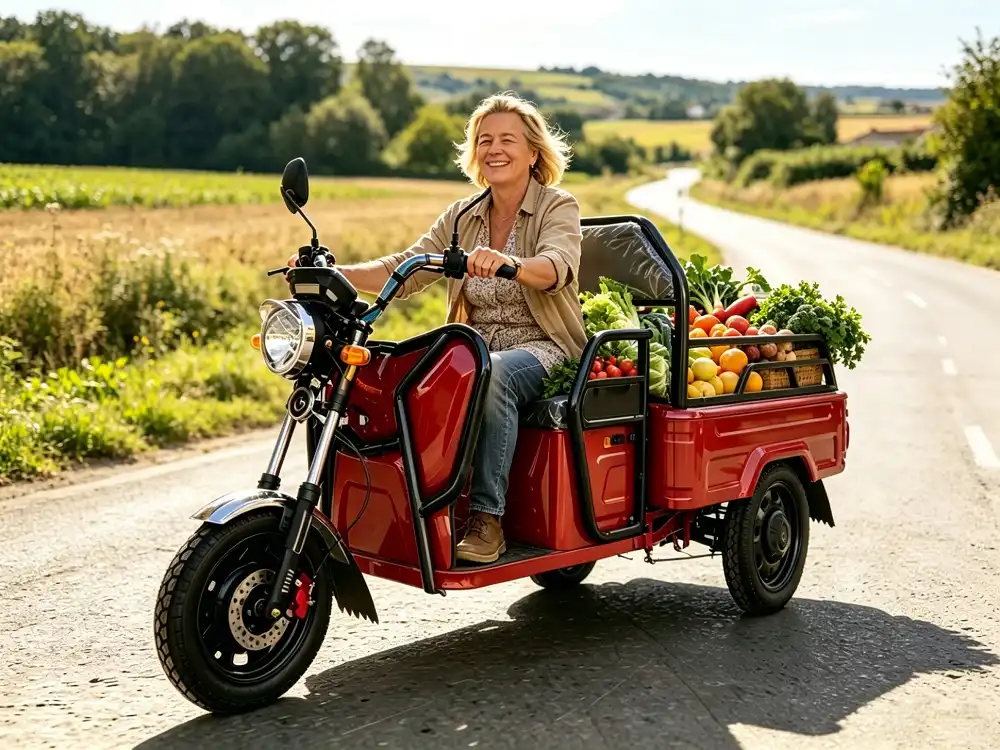

Understanding Lightweight Electric Cargo Tricycles and Their Advantages
Heavy-duty electric luggage tricycles are a useful way to be environmentally friendly and get things done quickly. These special vehicles are in between regular motorcycles and full-size trucks. They offer companies a zero-emission, easy-to-use transportation option that works great for crowded city streets and narrow delivery routes.
Core Benefits for Modern Businesses
Electric three-wheelers have many benefits for their users that go beyond just lowering pollution. Gas prices don't change as much, so business owners don't have to worry about how their fleet budgets will be affected by changes in gas prices. For the same distance driven, our vehicles use battery power that costs about a tenth of what gasoline does. This saves a lot of money over the life of the vehicle.
Compared to options that use internal combustion, they require a lot less maintenance. Because electric powertrains don't have as many moving parts, they don't need to have oil changes, gearbox repairs, or exhaust system replacements. Procurement managers like that repair schedules are predictable, which makes managing the fleet easier and cuts down on unplanned downtime.
Environmental and Regulatory Compliance
Cities around the world are passing laws that make noise and pollution rules stricter. It's easy for electric cargo tricycles to get around these regulatory settings, and they can keep running in Zero-Emission Zones where diesel trucks are limited or banned. Electric motors are very quiet, which means they don't contribute to noise pollution. This makes these vehicles perfect for early morning deliveries in residential areas, resort operations, and city services in noise-sensitive areas.
As environmental rules get stricter around the world, businesses that switch to electric fleets will be in a good situation. The EEC certification on our vehicles shows that they meet safety and emission standards set by the European Union. This lets us sell our products on more than one region and shows that our company is committed to running in a way that is good for the environment.
Comprehensive Specifications and Performance Metrics of Hanbang Electric Cargo Motorcycles
Because technical specifications for an electric three wheeler cargo motorcycle have a direct effect on operational capabilities, it is important for procurement choices to be based on well-informed evaluation. Our EEC LETU model has performance features that have been carefully tuned for use in commercial hauling situations.
Motor Power and Performance Architecture
Our system's brain is a 60/72V 1000W motor paired with an 18-tube controller. This gives the system the consistent torque delivery it needs to start up from stops while moving heavy loads. This design of the powertrain makes enough low-end torque to handle slopes and uneven ground without lowering performance, keeping operations reliable in a wide range of weather conditions.
The top speed is 25 km/h, which was chosen on purpose by engineers to get the most out of the battery while still keeping the car safe in mixed-traffic areas. This speed range is right for delivery needs in cities, so drivers can feel safe driving on city streets without having to worry about the safety of faster cars in busy areas.
Battery Configurations and Range Capabilities
Customers can choose between two battery types based on their needs. The 72V 32Ah configuration has a longer range for tasks that need to go longer distances between charge stops. The 72V 20Ah configuration is lighter and better for tasks that need to go shorter distances between charging stops. Under normal load conditions, both systems have a range of 30 to 40 km, which is enough for most last-mile transport jobs when combined with charging during breaks.
Total cost of ownership is affected by battery technology in a big way. Our deep-cycle battery systems can handle being charged and discharged many times, and they keep their power even after hundreds of charging sessions. Predictable battery replacement plans are helpful for procurement managers. Batteries usually last for several years of normal use before their capacity drops and they need to be replaced.
Structural Engineering and Load Management
The structure of the car is 2485mm long, 875mm wide, and 1540mm high. This gives it stability while keeping the small footprint that is needed for getting around in cities. The cargo box is 1.1 x 0.85 meters and can hold standard shipping containers and farm goods safely while they're being moved.
The engineering behind the suspension uses 31# hydraulic spring shock absorption technology to spread the load stress across the frame and keep the cargo safe from damage caused by shaking. This method keeps drivers from getting tired during long shifts, which is especially important for jobs that involve rough rural roads or poorly maintained city infrastructure. The built-in 130-gear rear axle shift system makes sure that power is delivered smoothly even when the load changes.
Safety Systems and Operational Reliability
The front disc brakes and back drum brakes work together to provide reliable stopping power, even when the vehicle is loaded. This two-system method keeps safety margins the same in all kinds of weather and on all kinds of road surfaces. The wear-resistant compounds and non-slip tread patterns in the 3.00-12 tires make them last longer between services while still providing grip on wet or uneven areas.
At our factory, quality control measures make sure that every car meets ISO 9001 standards before it is sent out. Comprehensive testing methods make sure that the electrical safety, braking performance, and structural integrity of all fleet vehicles are checked before they are put into service. This gives procurement managers confidence in the reliability of the fleet from the start.
How to Choose the Right Electric Cargo Motorcycle for Your Business?
When making choices about what to buy, it's important to carefully compare operational needs with what the vehicle can do. Specification matching is important for getting the best return on investment because different business models need different levels of performance.
Defining Operational Requirements
To start, business owners should look at common route distances and load requirements. Our normal battery configuration works perfectly for operations with steady routes of less than 30 km per day and moderate loads. Businesses that need a longer range can choose the larger battery choice, which gives them more operational flexibility without having to charge in the middle of a shift.
The properties of the load are very important. Companies that move bulky but light goods need to set up their vehicles differently than companies that move thick, heavy goods. Different types of cargo can fit in our vehicles' cargo boxes because of their size and ability to distribute weight evenly. However, procurement managers should check specific load requirements against vehicle specs during the evaluation process.
Total Cost of Ownership Analysis
The purchase price is only one part of a vehicle's economics. A full cost study needs to look at things like energy costs, insurance premiums, maintenance costs, and how long the system is expected to last. Electric cars usually have a lower total cost of ownership, even if they cost more to buy at first. This is because their operating costs are so much lower.
Coverage for warranties and the supply of parts for an electric three wheeler cargo motorcycle have a direct effect on long-term costs. Our manufacturing operation keeps a large inventory of parts and gives detailed installation instructions. This keeps downtime to a minimum when maintenance is needed. When we make our first purchases, we include important wear parts. This keeps unexpected costs to a minimum during the critical early operational time.
Customization and Fleet Standardization
Businesses with mixed fleets have a hard time keeping track of all the different car specs and maintenance needs. Our OEM and ODM customization options let you standardize your fleet while still meeting specific business needs through custom configurations. Procurement managers can choose different motor power levels, battery capacities, cargo box sizes, and branding elements. This creates a uniform look for the fleet while also making sure that each vehicle is optimized for its route.
Businesses that are starting up or growing their electric fleets can save money by buying in bulk. Volume discounts lower the cost of buying each unit, which makes it more profitable for businesses to start plans to electrify their whole fleets. The 25-working-day production cycle makes it possible to quickly deploy the fleet once decisions about purchases are made.
Procurement and After-Sales Support for Hanbang Electric Cargo Motorcycles
Successfully obtaining a vehicle goes beyond the initial buy. A complete support infrastructure makes sure that the car will always work reliably throughout its lifecycle.
Acquisition Channels and Global Accessibility
Jiangsu Hanbang Vehicle Industry Group has a large marketing network that reaches almost 50 countries in Africa, the Americas, Europe, and Southeast Asia. This global presence makes sure that local help is always available, no matter where operations are taking place. Businesses can get cars through regional distributors that offer localized service. This makes logistics easier and makes sure that parts are available on time.
Our factory is 150,000 square meters of smart production space that is full of high-tech automated systems like laser cutting machines, robotic welding lines, and precise coating rooms. This production capacity lets the quality of the vehicles stay the same while still allowing for custom specs and quick order fulfillment. The annual production capacity is 300,000 units, which makes sure that there will always be enough for big fleet purchases.
Pricing Structure and Financial Arrangements
Factory-direct price gets rid of markups by middlemen, giving businesses that are building electric fleets a great deal. Clear pricing makes it possible to make accurate budget projections, and discounts for bulk purchases give companies more economic reasons to fully electrify their fleets.
We know that buying capital tools has an effect on the cash flow of a business. For qualified business buyers, flexible payment plans can be set up, which lets the fleet grow without having to spend a lot of money up front. These financial solutions are especially helpful for growing companies that want to gain a competitive edge through modern fleet technology without having to use their operational cash reserves.
Warranty Coverage and Technical Support Infrastructure
Full warranty protection keeps buying investments safe from mistakes in manufacturing and early component failures. Our ISO 9001-certified manufacturing processes keep defect rates to a minimum, but warranty provisions give companies that are investing a lot in their fleets even more peace of mind.
Technical help goes beyond what's covered by the warranty. Our team offers full installation and maintenance documentation, as well as how-to videos that show how to do common service tasks. Businesses can learn how to do maintenance on their own with the help of this educational infrastructure. This cuts down on operational disruptions and service costs over the lifecycle of the car. Important wear parts that come with the buy help keep early operational costs and downtime to a minimum.
Our products are backed by intellectual property that includes almost 200 domestic and foreign patents. This shows that we are always coming up with new ideas and improving our engineering. Our dedication to always making things better means that companies that buy our cars get to use cutting-edge technology and production methods that make them more reliable and efficient.
Conclusion
Electric luggage tricycles are a game-changing option for companies looking for eco-friendly and cost-effective ways to move their goods. The Hanbang electric cargo motorcycle is a reliable piece of business equipment that blends cutting-edge engineering with useful design. Our vehicles are flexible and efficient enough to meet the needs of modern companies, whether they are delivering packages in cities, moving goods between farms, or running city operations. The EEC LETU model is perfect for companies that want to switch to electric vehicles or add more vehicles to their fleets because it is lightweight, can carry a lot of stuff, and is also cost-effective to run.
FAQ
What is the realistic operating range per charge under loaded conditions?
The EEC LETU achieves 30-40km per charge under typical load conditions. Actual range varies based on factors including cargo weight, terrain characteristics, ambient temperature, and driving patterns. Businesses operating in flat urban environments typically experience ranges at the upper end of this specification, while operations in hilly terrain with heavy loads may see reduced range. Battery capacity selection impacts range significantly, with the 72V 32Ah configuration providing extended operation compared to the 20Ah alternative.
How do maintenance costs compare to traditional gasoline-powered cargo vehicles?
Electric vehicles typically demonstrate 60-70% lower maintenance costs compared to gasoline equivalents over a five-year operational period. The elimination of oil changes, transmission servicing, exhaust system repairs, and spark plug replacements substantially reduces both scheduled maintenance frequency and unexpected breakdown incidents. Primary maintenance focuses on brake inspection, tire rotation, and periodic battery system evaluation—all simpler and less expensive than combustion engine requirements.
What bulk purchase options and financing solutions are available?
We structure competitive pricing arrangements for businesses procuring multiple vehicles simultaneously. Volume discounts apply to orders exceeding specified quantity thresholds, with pricing scaling based on order size. Flexible payment terms can be arranged for qualified commercial buyers, enabling fleet expansion without excessive capital deployment. Contact our procurement team to discuss specific requirements and receive customized quotations reflecting your operational specifications and purchase volume.
Partner with a Trusted Hanbang Electric Cargo Motorcycle Manufacturer
Transitioning to electric mobility requires a manufacturing partner combining technical expertise with responsive customer support. Jiangsu Hanbang Vehicle Industry Group brings fifteen years of specialized experience in electric vehicle development and manufacturing, backed by comprehensive certifications including EEC, CCC, and ISO 9001. Our intelligent production facility integrates advanced robotics and quality control systems, ensuring consistent vehicle performance across every unit produced. Whether you operate a small local business or manage large-scale fleet operations, our team provides the technical guidance and customization capabilities necessary to optimize vehicle specifications for your unique requirements. Contact our specialist team at nicole@xzmeidi.com to discuss your specific operational needs, explore customization options, and receive detailed quotations on the latest 2024 models. Visit hanbangev.com to explore our complete product range and discover why businesses across nearly 50 countries choose Hanbang as their preferred Hanbang electric cargo motorcycle supplier.
References
1. International Energy Agency (2023). Global EV Outlook 2023: Catching up with climate ambitions. IEA Publications, Paris.
2. Zhang, L., & Wang, S. (2022). Life Cycle Cost Analysis of Electric Cargo Tricycles in Urban Logistics Applications. Journal of Sustainable Transportation, 16(4), 112-128.
3. European Commission Directorate-General for Mobility and Transport (2023). Urban Vehicle Access Regulations and Low Emission Zones in European Cities: Implementation Status Report.
4. Chen, Y., Liu, M., & Anderson, P. (2023). Battery Technology and Performance Optimization in Light Electric Vehicles. International Journal of Electric Vehicle Technology, 9(2), 45-67.
5. World Resources Institute (2022). Electric Mobility in Emerging Markets: Opportunities for Last-Mile Delivery Solutions. WRI Ross Center for Sustainable Cities.
6. National Technical Committee on Road Vehicles (2023). Safety and Performance Standards for Electric Cargo Tricycles: GB/T Technical Specification Review. Standards Press of China, Beijing.
Tell us your requirements – get a tailored quote and technical support within 24 hours.