- English
- French
- German
- Portuguese
- Spanish
- Russian
- Japanese
- Korean
- Arabic
- Greek
- German
- Turkish
- Italian
- Danish
- Romanian
- Indonesian
- Czech
- Afrikaans
- Swedish
- Polish
- Basque
- Catalan
- Esperanto
- Hindi
- Lao
- Albanian
- Amharic
- Armenian
- Azerbaijani
- Belarusian
- Bengali
- Bosnian
- Bulgarian
- Cebuano
- Chichewa
- Corsican
- Croatian
- Dutch
- Estonian
- Filipino
- Finnish
- Frisian
- Galician
- Georgian
- Gujarati
- Haitian
- Hausa
- Hawaiian
- Hebrew
- Hmong
- Hungarian
- Icelandic
- Igbo
- Javanese
- Kannada
- Kazakh
- Khmer
- Kurdish
- Kyrgyz
- Latin
- Latvian
- Lithuanian
- Luxembou..
- Macedonian
- Malagasy
- Malay
- Malayalam
- Maltese
- Maori
- Marathi
- Mongolian
- Burmese
- Nepali
- Norwegian
- Pashto
- Persian
- Punjabi
- Serbian
- Sesotho
- Sinhala
- Slovak
- Slovenian
- Somali
- Samoan
- Scots Gaelic
- Shona
- Sindhi
- Sundanese
- Swahili
- Tajik
- Tamil
- Telugu
- Thai
- Ukrainian
- Urdu
- Uzbek
- Vietnamese
- Welsh
- Xhosa
- Yiddish
- Yoruba
- Zulu
What are the key features of a high-quality electric cargo trike?
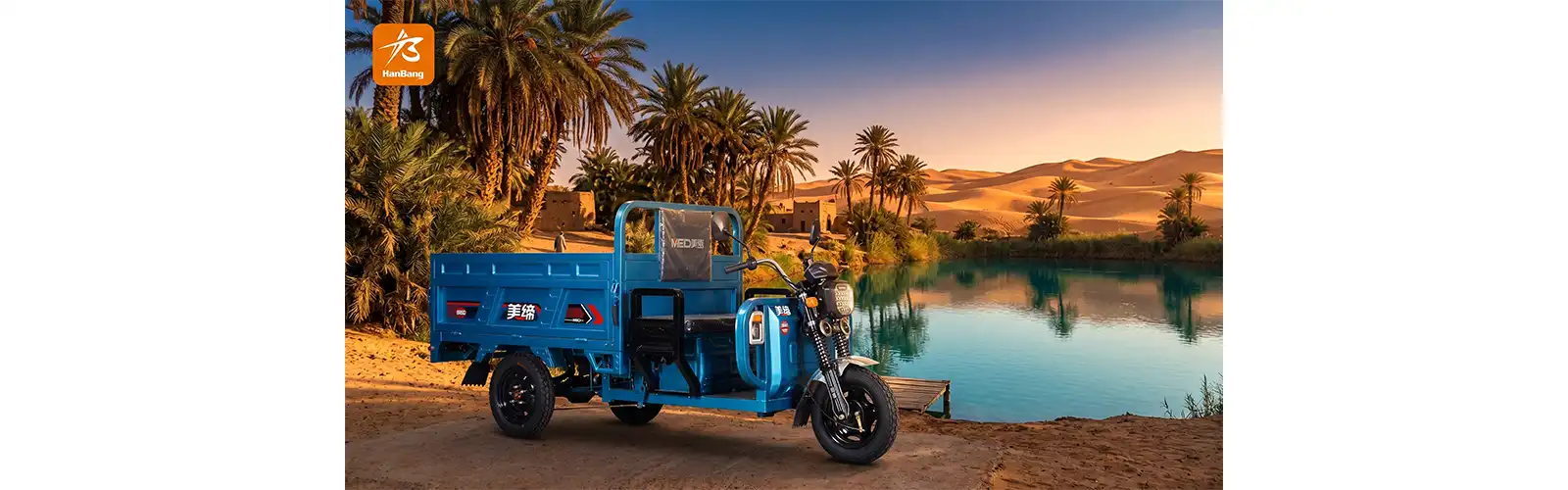
A good electric cargo trike is built to last, gets power to where it's needed, and is designed to be useful for the needs of modern commercial transportation. When purchasing choices like the Hanbang cargo electric tricycle, procurement managers should look for motors that can handle different types of terrain, battery systems that offer reliable range, and cargo configurations that meet working needs. Quality models have safety certifications that prove they meet international standards, weather-sealed electrical parts that make sure they work all year, and reinforced frames that can handle daily loads. These main features set professional-level transportation solutions apart from consumer-level options.
Understanding the Core Specifications of a High-Quality Electric Cargo Trike
Power Systems That Drive Performance
How well your electric tricycle handles hills, big loads, and long trips depends on how the motor is set up. For professional transportation work, motors that produce between 800W and 1200W are needed. Voltage flexibility lets workers balance speed and power based on route profiles. The ZHANLONG 160 has a 60/72V 1000W motor and an 18-tube controller, which gives it the power density it needs to get through crowded city streets while staying stable when carrying heavy loads. With this dual-voltage design, operators can get the best performance for either flat city routes or hilly rural terrain, all without sacrificing safety.
The capacity of the batteries directly affects how well they work. A 60V 52Ah lithium battery system has the energy stores for a 70–80 km range under normal load conditions. This gets rid of the range anxiety that causes delivery plans to get thrown off. Unlike lower-capacity options that need to be charged in the middle of the shift, this standard allows for full-day activities on most last-mile delivery routes. Battery management systems that protect cells from overcharging and deep discharging make cells last longer, which means they don't need to be replaced as often and operational costs stay stable over the lifecycle of a fleet.
Cargo Capacity and Structural Design
The practical flexibility of cargo dimensions is shown. The 1.6x1.1 m cargo box can fit standard pallet layouts and is still narrow enough to fit through alleys that bigger vans can't get to. Overall measurements of 3085 x 1180 x 1400 mm are the perfect mix of load capacity and maneuverability, making it easy for operators to get around in crowded cities without losing payload volume. This size is especially useful for food delivery platforms moving insulated cases, courier services moving boxes of goods, and farmers carrying crops to local markets.
Frame construction makes the difference between short-term fixes and long-term investments, and the Hanbang cargo electric tricycle embodies this principle. High-strength steel frames are put through load-bearing stress tests at 1.5 times their stated capacity. This makes sure that the structure will hold up under the harsh conditions that are usual in business. Fatigue failures that keep vehicles from running during busy times can be avoided by using reinforced welding at stress points. The 160-model integrated gear-shift rear axle spreads the load on the drivetrain evenly, which lowers the need for upkeep and makes power flow smooth at different speeds.
Safety and Certification Standards
For cargo operations, braking systems need extra care. Front and rear drum brakes always stop, no matter the weather. This is different from disc brakes, whose pads need to be replaced often in dusty places. Full-load stopping distance testing makes sure that safety rules are followed, which protects both the drivers and the other cars on the road. The 37# exterior spring shock-absorption system keeps the cargo stable on rough surfaces, stopping load changes that make it harder to handle or damage the goods while they're in transit.
Certification proves that the products are made well and follow the rules. Getting a CCC certification means that the product meets Chinese quality standards for things like electrical safety, building integrity, and controlling emissions. ISO 9001 certification shows that quality management is used throughout the whole production process, from checking the raw materials to testing the finished assembly. These licenses reassure procurement managers that cars meet basic safety standards. This lowers their risk of liability and makes getting fleet insurance easier.
Essential Features That Enhance Performance and Usability
Advanced Motor Technology
Brushless motor technology gets rid of the need for regular maintenance that comes with traditional brush motors. Brushless designs produce steady torque output over their entire working lifetime while using 15–20% less energy per kilometer because they don't have any physical contact places that create wear particles. This efficiency directly leads to a longer range per charge and lower power costs, which is especially helpful for transport services that travel a lot. The motor housing is sealed, so moisture and dust can't get into the internal parts. This keeps the motor's performance reliable in agricultural settings where unpaved roads expose people to a lot of dust.
The controller precisely controls the flow of power, which makes parts last longer. Smooth acceleration curves keep sudden torque spikes from putting stress on drivetrain parts, and regenerative braking when the vehicle slows down recovers energy that would have been lost as heat. This smart power management keeps the battery's temperature stable, protecting the cell's chemistry and keeping the battery's capacity over hundreds of charge cycles. Operators gain from predictable performance traits that make planning routes easier and cut down on unplanned repair breaks.
Battery Longevity and Energy Management
Battery management systems (BMS) are built into modern lithium battery packs to keep an eye on the voltages, temperatures, and charge states of each cell. This oversight stops the overcharge situations that speed up capacity loss and the deep discharge situations that damage cell chemistry permanently. Real-world testing shows that batteries that are properly maintained keep 80% of their original capacity after 800 to 1000 full charge cycles. This is equal to three to five years of daily commercial use, depending on how hard they are used.
Charging speed has an effect on how flexible operations can be, and the Hanbang cargo electric tricycle addresses this with practical solutions. Standard charging takes 6 to 8 hours using a home's 220V plug, so it can be refilled overnight, which works with most supply plans. The waterproof verification method proves that controllers, motors, and wire harnesses meet IP67 sealing standards. This makes sure that cars work reliably in the rain without the need for covered parking. This weather resistance is very important for users who don't have garages, especially in rural areas where there aren't many places to store tools.
Maintenance Accessibility
Access to parts determines whether maintenance is a quick fix or a service interruption that lasts several days. Technicians can replace broken controllers or battery modules without taking the whole vehicle apart with modular electrical systems. Standardized fasteners and clearly labeled wiring harnesses cut down on the time needed to do diagnostics. This is especially helpful when running mixed fleets in different service areas.
Downtime is kept to a minimum by making spare parts available through authorized service networks. Jiangsu Hanbang has marketing partners in almost 50 countries that help them get new parts for things like brake shoes, tires, and suspension springs that wear out quickly. This regional support infrastructure gets rid of the long wait times that leave vehicles stuck while they wait for international shipments. This keeps the fleet available during busy times.
Comparing Hanbang Cargo Electric Tricycle Against Competitors
Performance Under Real Conditions
Electric tricycles do well in places where gas-powered bikes don't. Electric motors are better at climbing hills than small-displacement petrol engines because they deliver torque instantly, while petrol engines lose power at low RPMs. This speed edge is very important in mountainous areas where loaded cars have to drive up and down steep access roads without getting too hot or stopping. The silent operation cuts down on noise pollution in home delivery areas, so operations can happen early in the morning or late at night without getting complaints from neighbors that would otherwise limit operating hours.
When you look at the total cost of ownership, you can see that combustion alternatives have big advantages. Electricity costs are usually 20–25% of the same amount of gasoline per kilometer, and the savings add up for vehicles that go a lot of miles. Because electric drivetrains have fewer parts, maintenance times are much longer. For example, there are no oil changes, spark plug replacements, or exhaust system fixes. Within 18 to 24 months for most commercial applications, these operational savings cancel out the higher initial purchase prices. At that point, operators realize pure cost advantages.
User Feedback From Commercial Operations
Companies in the logistics industry that use mixed fleets say that electric tricycles are more reliable than gasoline-powered equivalents. Less complicated mechanics mean fewer breakdowns during service, which helps keep to the plan and saves customer satisfaction scores. Drivers like how the smooth, vibration-free operation keeps them from getting tired during long shifts. This helps keep safety records high and keeps delivery staff from leaving.
Municipal cleaning offices stress the benefit of having zero emissions when working in closed or partially closed areas. People who pick up trash in parking lots or airport hubs are at risk of getting sick from traditional exhaust fumes. Electric vehicles, on the other hand, run safely without any airflow problems. The cargo boxes that can be locked keep valuable tools and equipment safe on routes with multiple stops. This stops thefts that hurt public service departments' budget management.
Agricultural workers like how the torque handles mud and rough ground without the engine burning problems that happen with lower-quality models. It's not necessary to use bigger, more expensive trucks for short-distance moves when you can move fertiliser, animal feed, and gathered crops over unpaved farm roads. Small-scale farmers can get the most out of their equipment investments by using specialized machinery only when it's really needed and not for everyday transport tasks.
Procurement Process and Support for B2B Buyers
Streamlined Ordering and Customization
Jiangsu Hanbang's direct factory pricing model gets rid of the markups that distributors add on, which drive up the cost of buying things. When negotiating a bulk purchase, commercial teams with experience in fleet deployment planning give each buyer individual attention. This helps operators choose configurations that meet their operational needs instead of choosing from generic catalog options. You can customize more than just the color. You can also change the size of the cargo box, add more space for things, and change the motor's power based on normal route patterns and payload needs.
The standard production cycle takes 25 working days to finish, from confirming the specifications to testing the final quality. With made-to-order manufacturing, vehicles arrive with brand-new battery cells that are at full capacity, instead of inventory stock, where cells start to lose their power over time while being stored in a warehouse. Automated production lines with laser cutting and robotic welding stations make sure that the quality of the builds is the same across big orders. This gets rid of the problems that come up with human assembly.
Logistics and Payment Flexibility
Coordinating international shipping makes buying things across borders easier. Export teams with a lot of experience take care of customs paperwork, make sure containers are loaded in the most efficient way for transport, and work with ports at the destination to speed up the clearance process. This full transportation support is especially helpful for first-time buyers who don't know what the rules are in their markets.
Payment terms for the High Quality Trike Cargo Electric Tricycle work with business buying cycles that follow net-30 or net-60 plans instead of needing payment right away. Letter of credit options give both parties peace of mind during first transactions. This builds trust, which leads to more flexible terms as business relationships grow. When prices are clear, they break down costs into their individual parts. This way, purchasing managers can see what really drives value instead of just comparing numbers that hide differences in quality.
Post-Purchase Support Framework
In addition to replacing parts that are broken, warranties cover a wide range of other parts as well. Battery contracts usually promise that the battery will keep 80% of its charge for a certain number of cycles. This protects users from premature degradation that lowers the battery's useful range. Motor and processor guarantees cover manufacturing flaws found in the first year of use, giving you protection against the rare quality slip-ups that get past production testing rules.
Maintenance staff go through training classes to learn how to do simple troubleshooting and routine maintenance. Technical documentation includes detailed wiring diagrams, torque specs for important fasteners, and step-by-step guides for fixing common problems. This sharing of knowledge makes it less necessary to call factory technicians for small problems. Instead, vehicles stay in use thanks to in-house maintenance services that can be called out faster than outside service calls.
Future-Proofing Your Fleet with Hanbang Electric Cargo Tricycles
Regulatory Compliance and Emissions Standards
More and more cities around the world are putting in place stricter emission rules that limit or ban combustion vehicles from central districts. Electric tricycles can go anywhere in these areas without any problems, so they can keep delivering packages while competitors have to deal with route restrictions or pricey compliance upgrades. This regulatory advantage keeps businesses running even as environmental laws get stricter. It keeps them from becoming obsolete too soon, which can lead to unexpected capital expenditures when rules change.
Zero-emission operation makes sure that a company's environmental goals are met. Companies that put out environmental effect reports can show real progress by using fleet electricity metrics that measure how much carbon they have reduced. This paperwork helps with applications for green licensing and improves the brand's image among eco-friendly customers who are thinking more and more about sustainability when making purchases.
Integration With Modern Fleet Management
Telematics compatibility gets fleets ready for vehicles that can connect to the internet, and the High Quality Trike Cargo Electric Tricycle supports this connectivity. GPS tracking systems check delivery finish timestamps, see where packages are at all times, and find the best routes for them. Monitoring the battery's state of charge lets dispatchers plan charging cycles that keep power from running out in the middle of a route, and analyzing usage patterns finds vehicles that need maintenance before they break down. With these data-driven management tools, fleet operations go from fixing problems after they happen to optimizing them before they happen.
As technology gets better, modular platform design lets you make small changes. Battery pack designs allow for capacity rises as cell chemistry gets better, which makes the car last longer than what was originally planned. Motor controller firmware updates let performance tuning happen that lets vehicles adapt to changing work needs without having to get whole new drivetrains. This ability to be upgraded protects capital investments against losing their usefulness due to new technology, keeping performance competitive over longer service lives.
Long-Term Financial Advantages
Calculations of return on investment show strong business reasons for electrifying fleets. When you combine lower fuel costs, lower repair costs, and longer service intervals, you get better cash flow that shortens the time it takes to get your money back. Procurement managers can use detailed financial modeling that includes information like typical mileage patterns, maintenance histories, and electricity rate structures to make decisions about where to put capital.
Getting rid of operational downtime adds a lot to the total value, not just saving money. Electric drivetrains have higher reliability ratings, which means that vehicles can keep running while they wait for repairs. This advantage of being available is especially useful during busy times, when limited equipment means having to rent expensive tools or lose money because deliveries aren't made on time. Electric cars have predictable repair dates that make it easier to plan the workforce and avoid service interruptions that make dispatch operations harder.
Conclusion
Instead of just comparing spec sheets, choosing a good electric cargo tricycle means weighing the pros and cons of how it will be used. The foundation is made up of motor power, battery capacity, and structural durability. Long-term satisfaction is based on safety certifications and how easy it is to do maintenance. With features like dual-voltage flexibility, weather-sealed components, and cargo dimensions that match real-world logistics needs, the Hanbang cargo electric tricycle is a great example of how well-thought-out engineering can meet practical business needs, as demonstrated by the Hanbang ZHANLONG 160. When making a procurement decision, it's helpful to look at the total cost of ownership, the benefits of regulatory compliance, and the supplier support infrastructure along with the initial purchase price. Electric tricycles are long-term investments that pay off in the long run by protecting the environment, lowering operating costs, and giving businesses a competitive edge that lasts for the life of the fleet.
FAQ
1. What range can operators expect under realistic load conditions?
With normal business loads, the ZHANLONG 160's 60V 52Ah battery gives it a range of 70 to 80 km. The actual range depends on the weight of the luggage, the type of terrain, the temperature, and how the vehicle is driven. Flat urban paths with light loads can go over 80 km, but hilly terrain with heavy loads limits range by the same amount. Operators should use 70 km as a safe planning standard when figuring out what they need.
2. How long does charging typically require?
Standard charging takes 6 to 8 hours using a home's 220V plug, which fits with most delivery operations' overnight break. Charging times are a little different depending on the temperature and the state of the battery when charging starts. When operators can, they should try to avoid fast-charging too often. This is because slower charging rates make batteries last longer by lowering the temperature stress on the cell chemistry.
3. Can specifications be customized for specialized applications?
Jiangsu Hanbang's research and development team allows for a lot of customization, such as changing the size of the cargo box, the motor's power, and the vehicle's load capacity. The minimum order quantity for custom specifications changes based on how complicated the change is. Operators should talk to sales teams early on in the planning process to find out if certain designs are possible, how long they will take to make, and how much they will cost.
Partner With a Leading Hanbang Cargo Electric Tricycle Manufacturer
With more than ten years of experience making things, Jiangsu Hanbang Vehicle Industry Group offers electric transportation solutions for businesses. Our 150,000-square-meter intelligent production facility uses cutting-edge robotic welding and laser cutting technology to make 300,000 units a year, making sure that the quality of every vehicle is the same. The ZHANLONG 160 Hanbang cargo electric tricycle represents our dedication to useful innovation by matching performance, longevity, and cost for business owners all over the world. We want procurement managers, fleet operators, and distribution partners to check out our customization choices, talk about bulk prices, and see what makes Hanbang different. You can email our sales team at nicole@xzmeidi.com or go to hanbangev.com to get more information, set up plant tours, and find out why nearly 50 countries choose Hanbang as their main provider of cargo electric tricycles. Let's work together to make transportation cleaner and more profitable.
References
1. International Energy Agency (2023). Global Electric Vehicle Outlook: Commercial Vehicle Electrification Trends.
2. Society of Automotive Engineers (2022). Technical Standards for Electric Tricycle Safety and Performance Testing.
3. World Bank Group (2023). Sustainable Urban Mobility: Last-Mile Delivery Solutions in Emerging Markets.
4. International Organization for Standardization (2021). ISO 9001 Quality Management Systems in Vehicle Manufacturing.
5. Urban Freight Lab Research Institute (2023). Total Cost of Ownership Analysis: Electric versus Combustion Cargo Vehicles.
6. Global Battery Alliance (2022). Lithium Battery Lifecycle Management and Performance Standards for Commercial Applications.