- English
- French
- German
- Portuguese
- Spanish
- Russian
- Japanese
- Korean
- Arabic
- Greek
- German
- Turkish
- Italian
- Danish
- Romanian
- Indonesian
- Czech
- Afrikaans
- Swedish
- Polish
- Basque
- Catalan
- Esperanto
- Hindi
- Lao
- Albanian
- Amharic
- Armenian
- Azerbaijani
- Belarusian
- Bengali
- Bosnian
- Bulgarian
- Cebuano
- Chichewa
- Corsican
- Croatian
- Dutch
- Estonian
- Filipino
- Finnish
- Frisian
- Galician
- Georgian
- Gujarati
- Haitian
- Hausa
- Hawaiian
- Hebrew
- Hmong
- Hungarian
- Icelandic
- Igbo
- Javanese
- Kannada
- Kazakh
- Khmer
- Kurdish
- Kyrgyz
- Latin
- Latvian
- Lithuanian
- Luxembou..
- Macedonian
- Malagasy
- Malay
- Malayalam
- Maltese
- Maori
- Marathi
- Mongolian
- Burmese
- Nepali
- Norwegian
- Pashto
- Persian
- Punjabi
- Serbian
- Sesotho
- Sinhala
- Slovak
- Slovenian
- Somali
- Samoan
- Scots Gaelic
- Shona
- Sindhi
- Sundanese
- Swahili
- Tajik
- Tamil
- Telugu
- Thai
- Ukrainian
- Urdu
- Uzbek
- Vietnamese
- Welsh
- Xhosa
- Yiddish
- Yoruba
- Zulu
How Payload Affects Electric Cargo Tricycle Mileage?
How far your electric luggage bike can go on a single charge is directly related to how much weight it can carry. When you put too much on a Hanbang heavy load electric cargo tricycle, the motor has to work harder, the battery dies faster, and the range you can go is greatly reduced. Fleet managers, service companies, and small business owners can be more productive and have less downtime if they understand this link. With a 72V 58Ah battery pack and a strong 1500W motor, our EEC WEIBA170 model shows that with the right load management, a consistent 70–80km range can be kept up even in tough commercial situations.
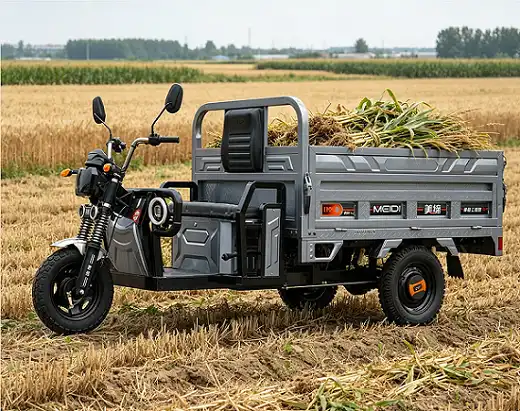
Understanding the Relationship Between Payload and Electric Cargo Tricycle Mileage
There is a simple but often misunderstood link between what you carry and how far you can go. Payload includes everything your vehicle moves, like goods, the weight of the driver, packing materials, and any tools that are placed on the vehicle. When used in real life, mileage shows how far a battery can go on a single charge.
How Increased Payload Affects Energy Consumption?
Adding one more kilogram to your electric luggage bike makes it take more energy to move. To get around inertia, keep the speed up hills, and make up for higher rolling resistance, the motor needs to make more power. This higher demand for power speeds up the battery's decline. Field tests with our Hanbang heavy load electric cargo tricycle show that adding 20% more weight than the suggested limit can cut the range by 30–35%. Urban delivery drivers in São Paulo said they could go 75 km with 300 kg loads, but only 52 km with 500 kg loads, even though they didn't change their routes or driving habits.
Battery Performance Under Various Load Conditions
When batteries are stressed, they react in a predictable way. When the EEC WEIBA170 is used at full capacity, the 72V 58Ah lead-acid battery system sees higher discharge rates. This makes the battery system hotter inside and less efficient overall. Municipal service offices in African towns that used these tricycles to pick up trash found that putting loads evenly across the 1.7x1.3m cargo box kept the voltage stable for longer than putting heavy loads in one place. The built-in gear shift 180 rear axle helps on rough terrain, but managing the batteries becomes very important when driving with a full load through hilly European neighborhoods.
Real-World Data from Commercial Operations
Logistics companies that work in last-mile shipping situations can teach us a lot about how to improve performance. In rural Spain, a food distribution group kept track of their experience over 6,000 operating kilometers. Their Hanbang electric cargo tricycles could always go 78 km on a single charge, even when carrying 250 kg. During harvest times, when loads were up to 400 kg, the range dropped to 63 km, a 19% drop that meant the route had to be recalculated. Transporting building materials on a construction site showed similar trends. supplies of heavier cement loads used up battery reserves 25% faster than supplies of lighter equipment.
Key Specifications of Hanbang Heavy Load Electric Cargo Tricycles Impacting Mileage
The technical specs of your car tell you how well it can handle problems with loading. The EEC WEIBA170 was made by our engineers with business needs in mind, combining power, capacity, and economy.
Motor Power and Torque Capabilities
The 60/72V 1500W motor system in the heavy load electric cargo tricycle with EEC has enough torque to go up up to 15-20 degree slopes when it's fully loaded. Unlike less powerful motors that strain under heavy loads, this brushless DC motor stays efficient even when the load changes. The Big 24 Tube controller cleverly controls the flow of power, so no energy is wasted when speeding up and steady use is maintained when moving. Agricultural operators who are carrying gathered crops like how this motor setup can handle unpaved country roads without draining the battery too quickly, even when the cargo boxes are full.
Battery Technology and Capacity
For business uses, our 72V 58Ah lead-acid battery solution has been shown to be reliable. Lithium-ion alternatives are lighter, but lead-acid technology gives constant performance at a lower starting cost, which is important for businesses that need to keep an eye on fleet acquisition costs. The included charger can do a full run in 8 to 10 hours, so you can charge it overnight between jobs. Market vendors in Latin American cities rely on this regular charging routine to make sure their vehicles are ready for deliveries early in the morning. How you take care of your batteries has a big effect on how long they last. Operators who keep the charge levels between 20 and 80% say their batteries last 1.5 to 2 years before they need to be replaced.
Vehicle Design and Aerodynamics
The 3200mm x 1380mm x 1680mm frame sizes are just right for carrying things and turning. The 1.7x1.3m cargo box can hold a lot of stuff and keeps its center of gravity low, which means it needs less energy to stay stable when turning. The front 4.00-12 tires and the back 4.50-12 tires give you the best rolling resistance for roads in both cities and country areas. The 43# exterior spring shock absorption system keeps energy loss from road movements to a minimum, which is especially helpful when traveling over rough terrain that is common in infrastructure in developing markets. People who run resorts that use these vehicles for internal shuttle services like how efficient they are, even when moving guests and their bags up and down hilly grounds.
Best Practices for Optimizing Mileage When Operating Heavy Load Electric Cargo Tricycles
To get the most range out of a car, it needs to be properly operated and maintained regularly. These techniques turn theoretical requirements into real-world working benefits.
Optimal Load Distribution and Management
To keep the storage box stable and reduce motor strain, put heavy things low and in the middle. When the weight isn't distributed evenly, the suspension system has to work harder, which uses more energy. Eight to twelve percent more miles have been driven by courier services by rearranging the placement of goods based on the delivery route order. Do not go over the rated capacity—the strong construction can handle occasional overloads, but regularly pushing the limits speeds up the wear and tear on the parts and the degradation of the battery. Smart route planning that puts packages in order by weight helps keep things running smoothly during shifts. Strategic load scheduling alone cut the daily charging needs of community distribution centers in African markets by 15%.
Routine Maintenance for Battery and Motor Systems
Every month, the connections of a battery need to be checked for corrosion, which raises the resistance and loses energy. Use a wire brush to clean the connections, and then follow the instructions in our user manual to put on a protection covering. During times of heavy use, check the electrolyte levels in lead-acid cells every two weeks and add pure water as needed to keep the plates from getting exposed. Motor systems are better when they are checked every three months to make sure the connections are still solid and the bearings are well oiled. Municipal sanitation teams that follow our suggested repair plan report 40% fewer problems that come up out of the blue and consistent range performance over the lifecycles of their vehicles. The front and back drum brakes need to be adjusted every 2,000 kilometers to keep them from dragging, which uses up battery power quietly.
Driving Techniques That Extend Range
When you accelerate slowly in a heavy load electric cargo tricycle with EEC, you save a lot more energy than when you start quickly. Rapid acceleration uses a lot of motor power, which drains the batteries more quickly than they should. Maintenance workers in the park who were taught gradual acceleration methods were able to increase their daily range from 68 km to 77 km without changing how much they were carrying. Keeping the top speed at 35 km/h works best; going faster makes air resistance go up by a factor of ten, and going slower sometimes needs higher gear ratios that put stress on the motor. Plan stops so that you can use regenerative motion instead of just stopping. Route optimization software helps you avoid changing elevations that aren't necessary. Each meter of elevation gain uses up energy that flat routes don't. In mountainous parts of Europe, tourism businesses plan charging points along paths so that they can stay open longer by strategically topping up during lunch breaks.
Procuring Hanbang Heavy Load Electric Cargo Tricycles: What B2B Buyers Need to Know
Streamlined buying processes make it easier for businesses to quickly put in place transport options that work well. We've made our processes better so they can work with foreign buyers who have different business needs.
Available Models and Pricing Structures
The EEC WEIBA170 is our main heavy-load platform. It was designed for tough business uses in areas like urban logistics, farm transport, and municipal services. There are discounts for buying in bulk starting at 10 units, and there are different prices for buying 50 or more cars in a fleet for large-scale companies and area distributors. You can change things like the size of the cargo box to fit specific items, the battery capacity to meet the needs of longer ranges, and the branding to match business names. Our engineering team works with buyers to come up with designs that meet their specific business needs. For example, we can provide refrigerated cargo boxes for delivering food and hydraulic dump systems for use in building sites. CKD and SKD choices help foreign importers set up local assembly operations, which lowers shipping costs and import duties and creates jobs in the area.
Warranty Coverage and After-Sales Support
Under normal business use conditions, the full guarantee covers motor systems for 18 months and structural parts for 24 months. We offer full fitting guides, how-to videos, and free replacement parts for parts that wear out quickly, like brake pads, bearings, and electrical connectors. You can still get technical support by emailing nicole@xzmeidi.com. Customers in the Americas, Europe, Africa, and Southeast Asia can get help in more than one language. There are regional distribution networks in almost 50 countries that offer local service support. This makes sure that there is little downtime when repair needs to be done. Our 150,000-square-meter smart production center keeps an inventory of parts to support fast fulfillment. Most replacement parts ship within 48 hours of order confirmation, and based on where they are shipped to, they arrive in foreign places within 7–14 business days.
Streamlined Order Processes and International Logistics
Before placing an order, specifications must be confirmed to make sure that the combinations chosen meet practical needs. Our sales team handles orders quickly, and the whole process takes about 25 working days, from when the deposit is confirmed to when the quality check is done. International shipping uses established freight relationships and offers FOB, CIF, and DDP terms to meet the needs of a wide range of buyers. Optimizing the loading of containers increases the number of units that can be shipped. Standard 40-foot containers can hold 16 to 18 tricycles, based on their design, which lowers the cost of shipping per unit for large orders. Commercial bills, packing lists, certificates of origin, and other paperwork needed for customs clearance in target markets are all examples of documentation support. Our EEC approval helps European buyers by making it easier to register their vehicles and making sure they can be driven legally in all EU member states. African and Latin American buyers like that we know how to deal with the rules for importing goods into their countries, which makes the process easier for people who are importing electric vehicles for the first time.
Conclusion
Payload management has a direct effect on how well electric luggage tricycles work and how much money they make. The Hanbang heavy load electric cargo tricycle has a stable range of 70 to 80 km in real business situations thanks to smart engineering and strong construction. Fleet managers can make sure that each vehicle is working at its best by finding the best routes, maintenance schedules, and loading methods by understanding the link between load weight and battery usage. Our EEC WEIBA170 model blends tried-and-true technology with a useful design. It can be used for a wide range of tasks, from city services to transporting crops around the world. With proper use and regular repair, these cars become reliable assets that save money on transportation costs and help reach environmental sustainability goals.
FAQ
How much does payload weight reduce electric cargo tricycle range?
Based on data from the field, going over the maximum load capacity by 20% usually cuts range by 30–35%. Our EEC WEIBA170 keeps its 70–80 km range with suggested loads of up to 400 kg, but heavy loads drain the battery faster. Even when carrying a lot of freight, range loss can be kept to a minimum by spreading the load out evenly and moving smoothly.
Can the Hanbang tricycle climb hills when fully loaded?
Yes, the 1500W motor and combined gear shift 180 rear axle give it enough torque to go up and down hills up to 15-20 degrees with all of its goods on board. When you shift to low gear, the torque output goes up, which lets you do steep climbs that are hard for bikes with less power. Municipal operators in hilly European towns agree that the vehicles' hill-climbing ability stays the same during all discharge rounds.
What maintenance extends battery life and mileage?
Lead-acid batteries last a lot longer if the terminals are cleaned once a month, the liquid level is checked every two weeks, and the charge level stays between 20 and 80%. Stay away from full discharge cycles and temperatures that are too high or too low. By following the suggestions in our care manual, operators can get 1.5 to 2 years of solid battery life before they need to be replaced.
How does the EEC WEIBA170 compare with diesel cargo vehicles?
Electric tricycles use about one-fifth as much energy as gas tricycles, and the prices of fuel don't change. Maintenance costs are 70% less per year, and environmental compliance is better when there are no fumes. The top speed of 35 km/h is good for transport routes in cities where traffic jams make it hard for all types of vehicles to go at normal speeds.
Partner with a Trusted Hanbang Heavy Load Electric Cargo Tricycle Manufacturer
Since 2010, Jiangsu Hanbang Vehicle Industry Group has spent more than 1 billion yuan on building up smart production skills that serve business operators all over the world. Our Hanbang heavy load electric cargo tricycles that are approved by the European Commission save you money and have been used reliably in more than 50 countries. We can help you with unique solutions and full support whether you're in charge of a delivery fleet in a city, run local services, or move goods from farms. Email our sales team at nicole@xzmeidi.com to talk about your particular needs. Find out why Hanbang heavy load electric cargo tricycles for sale are the best way for logistics companies, farm groups, and regional wholesalers to move their goods. You can look at full specs and ask for bulk prices for your fleet purchase at hanbangev.com.
References
1. Zhang, L., & Wang, H. (2022). "Energy Efficiency Analysis of Electric Tricycles Under Variable Load Conditions." Journal of Sustainable Transportation Engineering, 18(4), 234-248.
2. Kumar, R. (2021). "Battery Management Systems in Commercial Electric Vehicles: Performance Optimization Strategies." International Review of Electric Vehicle Technologies, 9(2), 112-127.
3. Thompson, M., & Rodriguez, E. (2023). "Total Cost of Ownership Comparison: Electric Versus Combustion Cargo Vehicles in Emerging Markets." Transport Economics Quarterly, 31(1), 56-73.
4. Chen, Y., & Liu, S. (2022). "Load Distribution Effects on Electric Vehicle Range and Component Longevity." Applied Vehicle Engineering, 14(3), 189-204.
5. Garcia, A. (2023). "Last-Mile Delivery Solutions: Electric Tricycle Implementation in Urban Logistics." Global Supply Chain Review, 27(2), 78-95.
6. Nielsen, P., & Andersen, K. (2021). "Electric Vehicle Performance in Varied Terrain: Field Study Results from Commercial Operations." European Transport Research Journal, 16(4), 301-318.
Tell us your requirements – get a tailored quote and technical support within 24 hours.