- English
- French
- German
- Portuguese
- Spanish
- Russian
- Japanese
- Korean
- Arabic
- Greek
- German
- Turkish
- Italian
- Danish
- Romanian
- Indonesian
- Czech
- Afrikaans
- Swedish
- Polish
- Basque
- Catalan
- Esperanto
- Hindi
- Lao
- Albanian
- Amharic
- Armenian
- Azerbaijani
- Belarusian
- Bengali
- Bosnian
- Bulgarian
- Cebuano
- Chichewa
- Corsican
- Croatian
- Dutch
- Estonian
- Filipino
- Finnish
- Frisian
- Galician
- Georgian
- Gujarati
- Haitian
- Hausa
- Hawaiian
- Hebrew
- Hmong
- Hungarian
- Icelandic
- Igbo
- Javanese
- Kannada
- Kazakh
- Khmer
- Kurdish
- Kyrgyz
- Latin
- Latvian
- Lithuanian
- Luxembou..
- Macedonian
- Malagasy
- Malay
- Malayalam
- Maltese
- Maori
- Marathi
- Mongolian
- Burmese
- Nepali
- Norwegian
- Pashto
- Persian
- Punjabi
- Serbian
- Sesotho
- Sinhala
- Slovak
- Slovenian
- Somali
- Samoan
- Scots Gaelic
- Shona
- Sindhi
- Sundanese
- Swahili
- Tajik
- Tamil
- Telugu
- Thai
- Ukrainian
- Urdu
- Uzbek
- Vietnamese
- Welsh
- Xhosa
- Yiddish
- Yoruba
- Zulu
Electrifying Last-mile Mobility: Overcoming Challenges and Boosting Adoption of Electric Three Wheeler Truck
One of the most important changes happening in urban and country transportation right now is the move toward electric mobility in last-mile services. Businesses in the US and around the world are under more and more pressure to cut down on pollution while keeping costs low. For delivery drivers, city services, and small business owners, Hanbang electric three wheeler trucks have appeared as useful options, providing dependable zero-emission alternatives. With EEC approval and a history of longevity, these cargo tricycles solve real-world logistics problems and meet changing environmental standards that affect fleet operations across the country.
Understanding the Current Challenges in Last-mile Mobility
Nearly 53% of all shipping costs go to last-mile service, which puts a lot of financial pressure on logistics companies. While adding to urban air pollution, traditional diesel-powered three wheeler trucks also have changeable fuel costs that affect operating budgets. Cities all over North America are making Low Emission Zones tighter, which is causing fleet owners to rethink how they put together their fleets.
Infrastructure and Investment Concerns
Charging facilities is still one of the main concerns for fleet managers looking at electric options. Unlike personal electric vehicles, business owners need to know how far their vehicles can go and how long it will take to switch between shifts quickly. People often think that electric luggage tricycles cost a lot up front, but the total cost of ownership estimates show that they save a lot in the long run.
A lot of owners don't realize how quickly they can save money on repairs. With an electric motor, you don't have to change the oil, fix the transmission, or replace the exhaust system like you do with a gas engine. Modern lithium-ion batteries work the same way after thousands of charge cycles, showing that battery technology has come a long way.
Urban Congestion and Operational Efficiency
Cities with lots of people need small, maneuverable cars that can get through tight alleys and busy transport zones. In cities with lots of people, where parking is limited and moving is hard, regular delivery cars have a hard time. You can move three-wheeled luggage solutions around more easily and still carry enough goods for most urban transport routes.
More and more, rules about noise pollution make it harder for deliveries to happen early in the morning and late at night, when people need peace and quiet. Electric powertrains are almost silent, which lets delivery windows get longer, which increases operating freedom and customer happiness.
Exploring the JIEBAO Electric Cargo Solution: Features and Applications
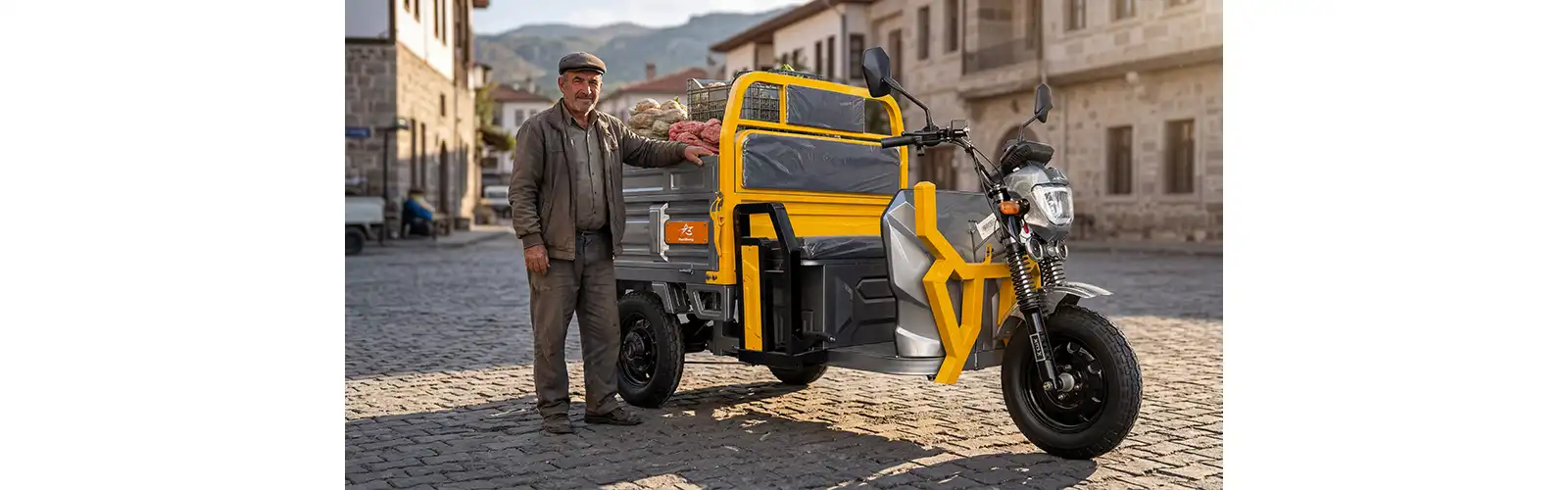
The EEC-certified JIEBAO model from Jiangsu Hanbang Vehicle Industry was designed to meet the needs of business transport. The 60/72V 1500W motor system and 72V 32Ah battery setup in this electric cargo bike make it work well in real life. It can go 30–40 km on a single charge.
Technical Specifications That Matter
Overall, the JIEBAO model is 2595 mm long, 1030 mm wide, and 1160 mm high. It has a large 1.3 m x 1.1 m cargo box that can hold a variety of loads. The 37-pound hydraulic spring shock absorption system keeps the goods stable on uneven surfaces that are typical in cities. The disc brakes in the front and drum brakes in the back make stopping easy, and the combined gear shift in the rear axle makes driving smooth when the bike is loaded.
With a top speed of 25 km/h, this car puts safety and control first in transport areas with a lot of people. The 24-tube processor efficiently distributes power, which extends the battery life and ensures steady performance along difficult delivery routes. These specs are based on real-world operating needs, not just marketing standards.
Versatile Applications Across Industries
Urban transportation companies use the JIEBAO to deliver packages in the last few blocks, getting through neighborhoods where bigger cars can't go. The adjustable backrest lets you switch between carrying people and carrying things, so the vehicle can be used as much as possible during working hours.
These electric tricycles are used by city offices to pick up trash, maintain parks, and police the neighborhood. The zero-emission operation is in line with the government's promises to sustainability and lowers noise levels in private areas. The small size lets it get into areas with a lot of pedestrians and into tight service alleys that regular trucks can't get to.
Small business owners like how affordable it is and how low the running costs are, especially market sellers and local suppliers. The cargo space can handle moving goods every day between offices and stores. These cars are used by rural farms to move crops from the fields to collection spots. The electric drivetrain makes them less reliant on fuel in remote areas.
Food delivery services benefit from the vehicle's ability to charge quickly and need little upkeep. The enclosed cargo box choice keeps packages safe from the weather and keeps perishable goods at a stable temperature. These cars are used by tourism businesses at resorts and campuses to carry items and take guests to and from the facilities.
Maintenance and Service Support
Simple procedures are used for routine maintenance, which mainly involves checking the tires, the stop system, and the battery's health. The lack of complicated combustion parts cuts down on upkeep times and the need for specialized technical knowledge. Hanbang keeps a global network of approved service centers stocked with real new parts to make sure that vehicles are down for as little time as possible.
Built-in monitoring in battery management systems let workers know about possible problems before they affect performance. The lithium-ion battery technology doesn't break down as easily as older lead-acid batteries, so it keeps its volume constant over time. When you charge your batteries correctly and use them in moderate temperatures, they last longer than the usual warranty terms.
Why Electric Cargo Tricycles Outperform Traditional Alternatives?
The cost of fuel, which typically takes up 20 to 30 percent of the budget for transport vehicles, is eliminated by EEC electric cargo tricycle 3 wheeler trucks. The average cost of electricity per kilometer is 80% less than the cost of diesel fuel, and rates have stayed pretty stable compared to the volatile oil market. This reliability helps fleet owners make accurate cost estimates and handle their budgets.
Environmental Compliance and Emissions Reduction
Electric transport tricycles are legal options for meeting the stricter environmental rules because they don't produce any pollution from their tailpipes. Cities that have Ultra Low Emission Zones charge daily fees for cars that don't follow the rules. This makes diesel-powered trucks much more expensive. Electric cars can go wherever they want without having to deal with these penalty systems.
Lowering a company's carbon footprint helps them reach their environmental goals, which have an impact on the brand's image and customer choice. B2B customers are looking more closely at how suppliers treat the environment, which makes electrifying fleets a way to stand out from the competition. Reduced pollutants that can be proven help companies meet their environmental reporting standards and keep their public sustainability promises.
Total Cost of Ownership Advantages
The purchase price is only one part of the costs of owning a car. Electric passenger tricycles don't need to be filled up with oil, filters, spark plugs, or gearbox fluid, which are things that are usually bought for gas-powered vehicles. Because regenerative stopping lowers the wear on the brake pads, brake systems last longer.
Electric cars with speed limits usually have lower insurance rates because they are seen as smaller risks. Some places give lower registration fees for cars that don't put out any pollution. In many areas, tax breaks and government subsidies make the original purchase cost even less expensive.
Electric cars that are well taken care of still have low depreciation rates because used car markets know that electric drivetrains last a long time. As rules get stricter, more people want to buy cars that don't pollute, which is good for resale prices.
Operational Reliability in Demanding Conditions
The JIEBAO is made of reinforced steel, which means it can handle the daily pressures of industrial use. Electrophoresis treatment makes metals less likely to rust, which is important for cars that work in humid places or near the coast. Automotive-grade parts are made to last longer than the standards for light industrial vehicles.
The hydraulic suspension system smooths out bumps in the road that would damage goods or make operators tired in rigid-frame options. This technical focus on real-world situations shows that Hanbang has a good idea of what commercial vehicles need because they have been in the market for years.
Procurement Guidance for B2B Clients
When buying rental cars, you need to do a lot more research than just compare prices at first. The EEC approval that comes with JIEBAO models makes sure that all member states of the European Union follow the rules. This makes it easier for wholesalers who serve more than one market to do business internationally.
Customization Options for Specific Applications
Hanbang's specialized research and development (R&D) team changes the motor power, body colors, cargo box layouts, and logo elements based on what the client wants. The manufacturing freedom meets a wide range of practical needs, such as increasing load capacity for heavy delivery routes or adding refrigeration systems for cold chain uses.
OEM and ODM skills, distributors can make their own brand-name car lines that set their products apart in the market. This customization goes beyond changes to the way something looks; it also includes changes to how it works to fit local tastes and government rules.
Factory-Direct Procurement Benefits
When you deal directly with a manufacturer, you don't have to pay markups to middlemen, which are common in traditional sales methods. Hanbang's factory-direct price system saves money for procurement clients and makes projects more cost-effective and competitive.
The 25-working-day production cycle for custom EEC electric cargo tricycle 3 wheeler truck orders lets you get into the market quickly without having to buy a lot of inventory. This "build-to-order" method makes sure that new products are made using the most up-to-date specs for parts, instead of keeping stock in a building that could become obsolete over time.
Certification and Compliance Documentation
Each car comes with a full Certificate of Conformity that is linked to its own unique VIN. This is needed to register the car with the government. Certifications like EEC, CCC, and ISO 9001 show that a company follows foreign quality and safety standards, which is good for regulators and insurance companies.
There are installation guides, operational instructions, and upkeep schedules in more than one language that come with technical reference packages. Along with written materials, instructional films help make fleet integration and operator training programs more effective.
Warranty and After-Sales Service
Full guarantee protection keeps purchasing investments safe against flaws in the making process and gives fleet managers peace of mind. The warranty covers all important parts, like the motor, controller, and battery systems. There are also clear service guidelines that keep claim filing times to a minimum.
Hanbang's technical support team helps with troubleshooting remotely and works with local service shops to make sure that warranty fixes are done properly. When you get a free spare parts package, it comes with regularly replaced wear items. This lowers your original running costs while the fleet is being set up.
The Future of Electric Three Wheeler Trucks: Market Trends and Strategic Opportunities
Battery technology keeps getting better and better. As the energy density goes up, the range goes up without the weight going up proportionally. While lithium-ion technology already meets most industrial needs, progress in solid-state batteries offers even more improvements in safety, charging speed, and cycle life.
Regulatory Drivers Accelerating Adoption
Government rules that require phasing out internal combustion engines in cities set clear dates for the electrification of fleets. Other states are following suit with rules like California's Advanced Clean Trucks law, which calls for more and more sales of zero-emission vehicles. These legal certaintys make it possible to plan for long-term investments with confidence.
Early adopters can get better project economics with the help of purchase rebates, tax credits, and faster depreciation plans. Grant programs that help build charging stations remove one of the main obstacles to switching fleets to electric ones. Businesses that qualify can get the most money out of reward programs by staying up to date on how they change.
IoT Integration and Fleet Management
More and more modern electric cars have connection features that let fleets be tracked and optimized in real time. Tracking the battery's state of charge stops unplanned downtime by sending tips about when it needs to be charged. GPS integration improves the speed of routes while also verifying deliveries and keeping assets safe.
Data analytics from fleets of connected vehicles find operational trends that help make strategic choices. Knowing how much range a vehicle actually uses under different load and route situations lets you match the vehicle's specs more precisely to the needs of the application.
Market Expansion Opportunities
Electric luggage tricycles meet the growing needs of e-commerce customers for environmentally friendly delivery options that last. Last-mile transport companies that can prove they reduce emissions get more business from people who care about the environment.
As infrastructure improves and car rules become more up-to-date, developing markets in Latin America, Africa, and Southeast Asia offer huge growth chances. When a company enters a market early, it builds brand recognition and supplier networks before the market becomes too full, which makes competition tougher.
Conclusion
Moving to electric last-mile transport solves important problems in terms of the climate, the economy, and how things work in modern logistics operations. Practical solutions combining regulatory compliance, cost effectiveness, and operating dependability are provided by Hanbang electric three wheeler trucks, such as the EEC-certified JIEBAO type. These vehicles are smart investments for forward-thinking fleet owners and wholesalers because they can be customized in many ways, are priced directly from the factory, and have well-established global service networks. When technical progress, government pressure, and market demand all come together, they make it very appealing for electric cargo tricycles to be used in a wide range of business settings around the world.
FAQ
What licensing requirements apply to operating EEC-certified electric cargo tricycles in the United States?
Different states have different licensing rules for electric three-wheelers, but most of them are the same as for motorbikes or powered tricycles. Most of the time, operators need a regular driver's license. However, some states require motorcycle licenses for three-wheeled cars with more power than certain limits. The JIEBAO can go as fast as 25 km/h, which often lets it get easier license categories. Before deploying your fleet, make sure you're following the rules by calling your state's Department of Motor Vehicles.
How does battery performance vary between summer and winter operating conditions?
Lithium-ion batteries work best when the temperature is between 15°C and 25°C. When it's below 0°C, the usable capacity drops by 20–30%. However, battery management systems have thermal safety that keeps the batteries from getting damaged. When it's hotter than 35°C, thermal management techniques may slow down charge rates to protect the battery's life. Keeping cars in climate-controlled garages when they're not being used increases battery life and keeps performance constant throughout the year.
What kind of charge stations do electric cargo tricycles need?
The JIEBAO type can be charged from regular 220V wall plugs, so it doesn't need a special charging station. Using standard charging tools, it usually takes 6 to 8 hours to fully charge something from empty to full. Fleet managers often set up more than one charging point at depots so that vehicles can be charged overnight between shifts. Because they only need a small amount of power, they don't need expensive changes to the electrical service that bigger electric car fleets do.
Partner with Hanbang: Leading Electric Three Wheeler Truck Manufacturer
Hanbang is ready to help you make the switch to environmentally friendly last-mile logistics with tried-and-true electric cargo solutions. Our industrial skills, which are backed by nearly 200 patents and ISO 9001 recognition, make sure that the quality of all of our products is the same, no matter how many we make. Whether you work for a logistics company looking at electrifying your fleet, a distributor looking for competitive cargo tricycle suppliers, or a city department that needs certified electric utility vehicles, our team can help you find the right solutions for your business. To learn more about how Hanbang electric three wheeler trucks can help you run more efficiently and achieve your sustainability goals, get in touch with our business team at nicole@xzmeidi.com. You can see our whole line of products at hanbangev.com and learn why operators in almost 50 countries trust Hanbang to provide safe electric mobility options.
References
1. "Urban Freight Consolidation Centers: A Sustainable Solution for Last-Mile Delivery," Journal of Transport Geography, Vol. 87, 2020.
2. Smith, Richard L., "Economic Analysis of Electric Vehicle Adoption in Commercial Fleets," Transportation Research Board Annual Review, 2022.
3. European Commission Directorate-General for Mobility and Transport, "Regulations on L-Category Vehicles: Type-Approval Framework," Official Journal of the European Union, 2021.
4. International Energy Agency, "Global EV Outlook 2023: Trends in Electric Light Commercial Vehicles," IEA Publications, 2023.
5. Chen, Wei and Patel, Anjali, "Battery Technology Advances for Commercial Electric Vehicles," IEEE Transactions on Transportation Electrification, Vol. 9, No. 2, 2023.
6. United Nations Economic Commission for Europe, "Regulations Concerning Vehicle Construction and Equipment for Three-Wheeled Vehicles," UN Vehicle Regulations, 2022.