- English
- French
- German
- Portuguese
- Spanish
- Russian
- Japanese
- Korean
- Arabic
- Greek
- German
- Turkish
- Italian
- Danish
- Romanian
- Indonesian
- Czech
- Afrikaans
- Swedish
- Polish
- Basque
- Catalan
- Esperanto
- Hindi
- Lao
- Albanian
- Amharic
- Armenian
- Azerbaijani
- Belarusian
- Bengali
- Bosnian
- Bulgarian
- Cebuano
- Chichewa
- Corsican
- Croatian
- Dutch
- Estonian
- Filipino
- Finnish
- Frisian
- Galician
- Georgian
- Gujarati
- Haitian
- Hausa
- Hawaiian
- Hebrew
- Hmong
- Hungarian
- Icelandic
- Igbo
- Javanese
- Kannada
- Kazakh
- Khmer
- Kurdish
- Kyrgyz
- Latin
- Latvian
- Lithuanian
- Luxembou..
- Macedonian
- Malagasy
- Malay
- Malayalam
- Maltese
- Maori
- Marathi
- Mongolian
- Burmese
- Nepali
- Norwegian
- Pashto
- Persian
- Punjabi
- Serbian
- Sesotho
- Sinhala
- Slovak
- Slovenian
- Somali
- Samoan
- Scots Gaelic
- Shona
- Sindhi
- Sundanese
- Swahili
- Tajik
- Tamil
- Telugu
- Thai
- Ukrainian
- Urdu
- Uzbek
- Vietnamese
- Welsh
- Xhosa
- Yiddish
- Yoruba
- Zulu
EEC vs. CCC Certification: What EU Importers Need to Know Before Ordering
Even though EEC and CCC are often used together, they are used in different situations and to show different points. When EU buyers mix them up, it can lead to containers getting stuck and registrations failing. This article explains what each mark covers, why one cannot stand in for the other, and how to verify paperwork before you order an EEC electric three wheel cargo motorcycle for your fleet or dealer network.send inquiry

What Do EEC and CCC Actually Certify?
EEC Approval in the EU Market
In everyday business, "EEC" stands for "European type approval." In a strict sense, three-wheelers are now covered by Regulation (EU) No 168/2013. This regulation sets uniform approval rules for L-category vehicles like tricycles and quadricycles (European Commission, accessed 2026; Regulation (EU) No 168/2013, 2013). You should expect a type-approval certificate and a certificate of conformity for that exact model when a supplier says that a product is approved.
CCC as a China-Market Requirement
China Compulsory Certification, or CCC, is the country's safety and quality mark for products on its required list. It is given out by Chinese certification groups and covers goods sold in or brought into China (U.S. International Trade Administration, accessed 2026). The mark lets you know that a product meets a Chinese standard. It doesn't say if the same product is legal in Europe.
Can a CCC Certificate Replace EEC for EU Imports?
Why CCC Alone Will Not Clear EU Registration
No. For the Chinese market, you need CCC, but to register in an EU country, you need EU type-approval. In Member States, customs officers and the government look for European documents, not Chinese marks. Manufacturers can have good credentials in their home country, like Hanbang's national Class-A electric motorcycle qualification, but they still need separate EU approval for each model they want to sell abroad.
Documents an EU Importer Should Request
There should be test reports, a type approval certificate, and a proof of conformity. Just ask for them. Delegated Regulation (EU) No 3/2014 has rules for functional safety, such as electrical and braking safety. No 44/2014 has rules for construction (European Commission, 2014). For an EEC electric three wheel cargo motorcycle, check that the model name, motor rating and battery on the paperwork match the vehicle you are actually buying.
How Should Importers Verify and Plan Before Ordering?
Matching Paperwork to Your Exact Build
Because approval is tied to a certain type of vehicle, changes to the motor, battery, lighting, or body can be important. Send the supplier the specifications you want and ask for written proof that the approval covers them. Before production starts, Hanbang's R&D and commercial teams talk with clients about these configuration questions. This way, importers don't have to wait until the cargo gets to the port to find a problem.
Spec Choices That Can Affect Approval
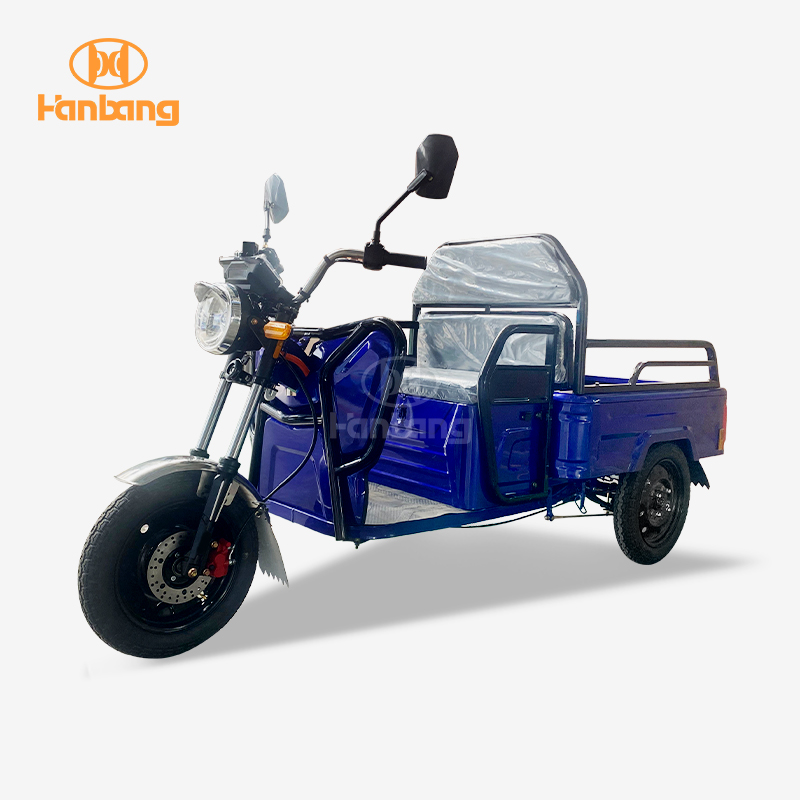
Customisation is helpful, but it costs money to make sure everything is legal. The approved design can be changed by adding accessories or changing the motor rating. The price difference between a compliant build and one that has been changed is usually between 400 and 800 USD or EUR per unit. Even the ZHANLONG's backrest that folds down into a seat is just for convenience and not a way to get paid passengers. Only trust what the proof says about a product as being okay.
Container Planning and Landed Cost
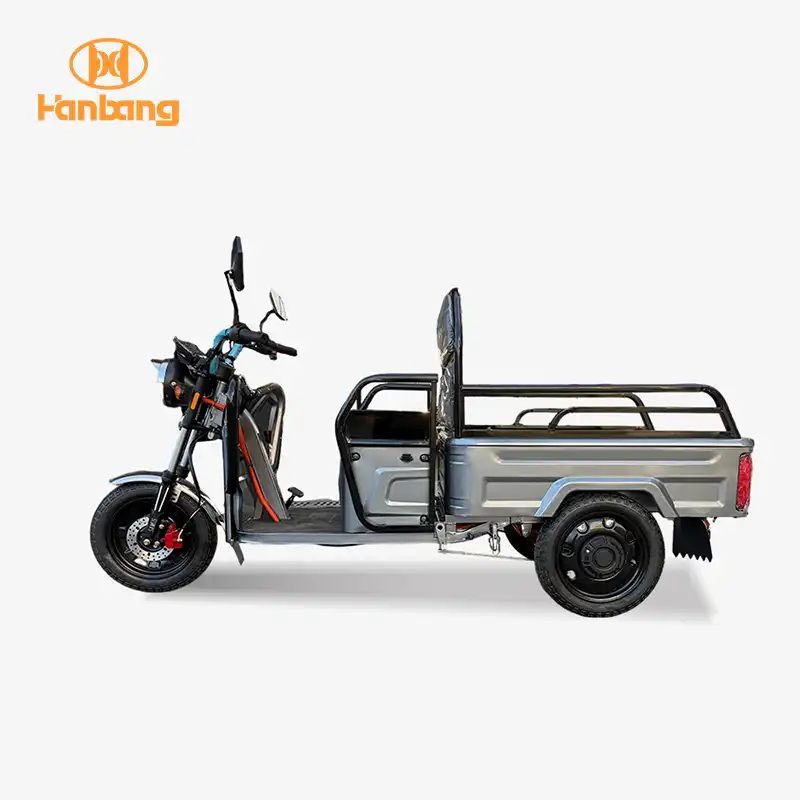
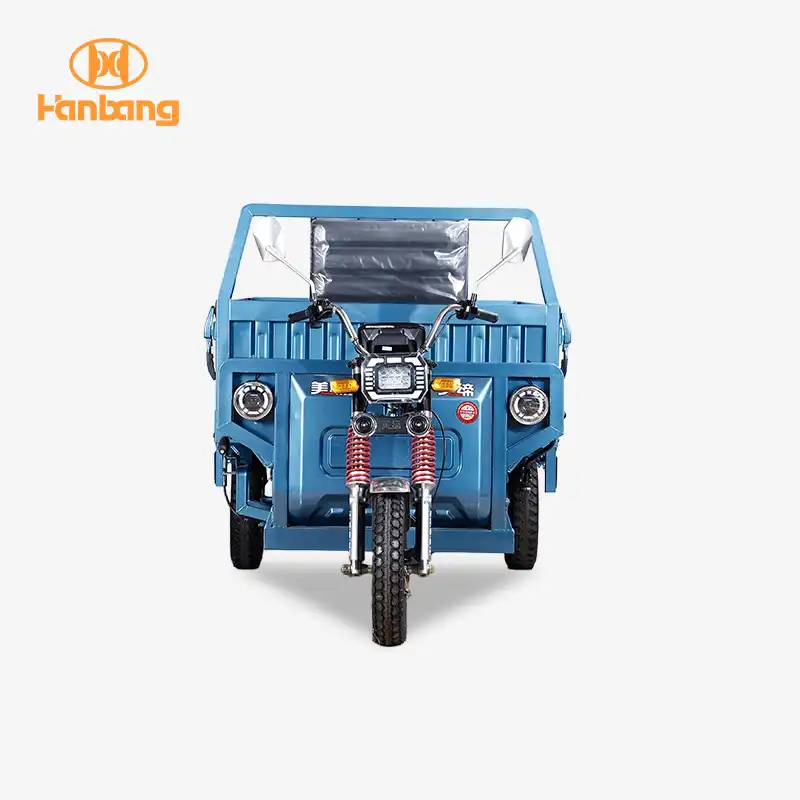
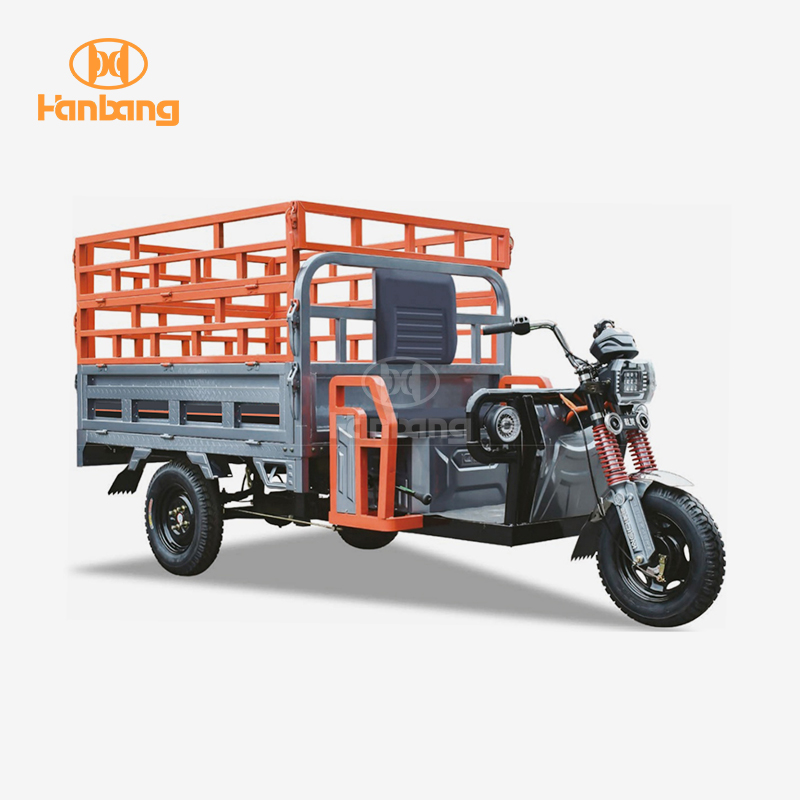
Orders for export are sent as "knocked-down" pieces instead of whole cars. Hanbang's LETU can carry 48 semi-knocked-down (SKD) units or 80 fully knocked-down units per container. The JIEBAO can carry 44 or 60 units, the ZHANLONG 36 or 55 units, and the WEIBA 30 or 45 units. Check with your country's government to see how putting together SKD (fully knocked-down) kits is handled. This could change the steps for registration and final inspection.
Conclusion
The EEC and the CCC give different answers. The EEC talks about EU type approval, while the CCC controls the Chinese market. It is important for importers to get EU documents that match the exact build, get written confirmation of customisation, and plan container loads early. That list is easier to use if you work with a manufacturer like Hanbang that has EU EEC export approval. Treat paperwork as part of the product when you order an EEC electric three wheel cargo motorcycle.
FAQ
Can I register in the EU with a CCC certificate?
No, CCC is a Chinese trademark, and in order to be registered in the EU, it must first be approved by the EU.
Is "EEC" still the right word?
It is still used in common trade, but approvals now are based on Regulation (EU) No. 168/2013.
What kinds of papers should I ask the seller for?
The type approval certificate, the conformity certificate, and the test reports that back them up.
How many ZHANLONG units can fit in a box?
36 with half-knocked-down form or 55 with full knocked-down form.
Can people sit on the ZHANLONG folding seat?
The feature is not for passenger service; it is a backrest that folds into a seat for times when you don't need it.
Not Sure Your Paperwork Matches Your Order? Ask Hanbang First
Certification questions are easier to solve before a purchase order than after a container lands. Since 2010, Hanbang has built electric tricycles on a 150,000-square-meter intelligent production base with stamping, welding, painting and final assembly workshops, supported by nearly 200 patents and EU EEC export certification. Our products reach about 50 countries, and our team adapts specifications to each market's needs. Share your destination country, preferred model and target volume, and we will help you check the documents, configuration and container plan together. Which model are you considering for your market? Email us at nicole@xzmeidi.com or message WhatsApp +86 13115031091, and let Hanbang prepare a clear, tailored quotation for you.
References
1. European Commission, Vehicle categories, Single Market and Industry (accessed 2026).
2. Regulation (EU) No 168/2013 on the approval and market surveillance of two- or three-wheel vehicles and quadricycles, Official Journal of the EU, 2013.
3. U.S. International Trade Administration, China Compulsory Certificate Program (accessed 2026).
Tell us your requirements – get a tailored quote and technical support within 24 hours.