- English
- French
- German
- Portuguese
- Spanish
- Russian
- Japanese
- Korean
- Arabic
- Greek
- German
- Turkish
- Italian
- Danish
- Romanian
- Indonesian
- Czech
- Afrikaans
- Swedish
- Polish
- Basque
- Catalan
- Esperanto
- Hindi
- Lao
- Albanian
- Amharic
- Armenian
- Azerbaijani
- Belarusian
- Bengali
- Bosnian
- Bulgarian
- Cebuano
- Chichewa
- Corsican
- Croatian
- Dutch
- Estonian
- Filipino
- Finnish
- Frisian
- Galician
- Georgian
- Gujarati
- Haitian
- Hausa
- Hawaiian
- Hebrew
- Hmong
- Hungarian
- Icelandic
- Igbo
- Javanese
- Kannada
- Kazakh
- Khmer
- Kurdish
- Kyrgyz
- Latin
- Latvian
- Lithuanian
- Luxembou..
- Macedonian
- Malagasy
- Malay
- Malayalam
- Maltese
- Maori
- Marathi
- Mongolian
- Burmese
- Nepali
- Norwegian
- Pashto
- Persian
- Punjabi
- Serbian
- Sesotho
- Sinhala
- Slovak
- Slovenian
- Somali
- Samoan
- Scots Gaelic
- Shona
- Sindhi
- Sundanese
- Swahili
- Tajik
- Tamil
- Telugu
- Thai
- Ukrainian
- Urdu
- Uzbek
- Vietnamese
- Welsh
- Xhosa
- Yiddish
- Yoruba
- Zulu
Complete Guide to EEC Electric Cargo Tricycles for Beginners
It doesn't have to be hard to start your trip with electric cargo travel. Electric cargo tricycles that are certified by the European Commission are a useful and inexpensive option for companies that want to use environmentally friendly delivery methods. Hanbang electric three-wheel cargo tricycles are perfect for logistics companies, small business owners, and city departments because they meet European safety standards and have been tested to last. These vehicles change how businesses in cities and rural areas handle daily transportation problems because they produce no pollution, have low operating costs, and are well-built. Before you put money into something, this book tells you everything you need to know.
Understanding Hanbang Electric Three Wheeler Cargo Tricycles
What Makes EEC Certification Important
If your electric cargo bike has EEC approval, it means that it meets the strict safety and environmental standards of the European Union. Vehicles with this label can legally go from one EU member state to another without needing any extra permissions or changes. The LETU model from Hanbang has full EEC, CCC, and ISO 9001 certifications, which gives foreign fleet owners and dealers peace of mind. This compliance gets rid of paperwork problems and speeds up the registration of vehicles, so you can use your transport solutions as soon as they arrive.
Technical Specifications That Matter
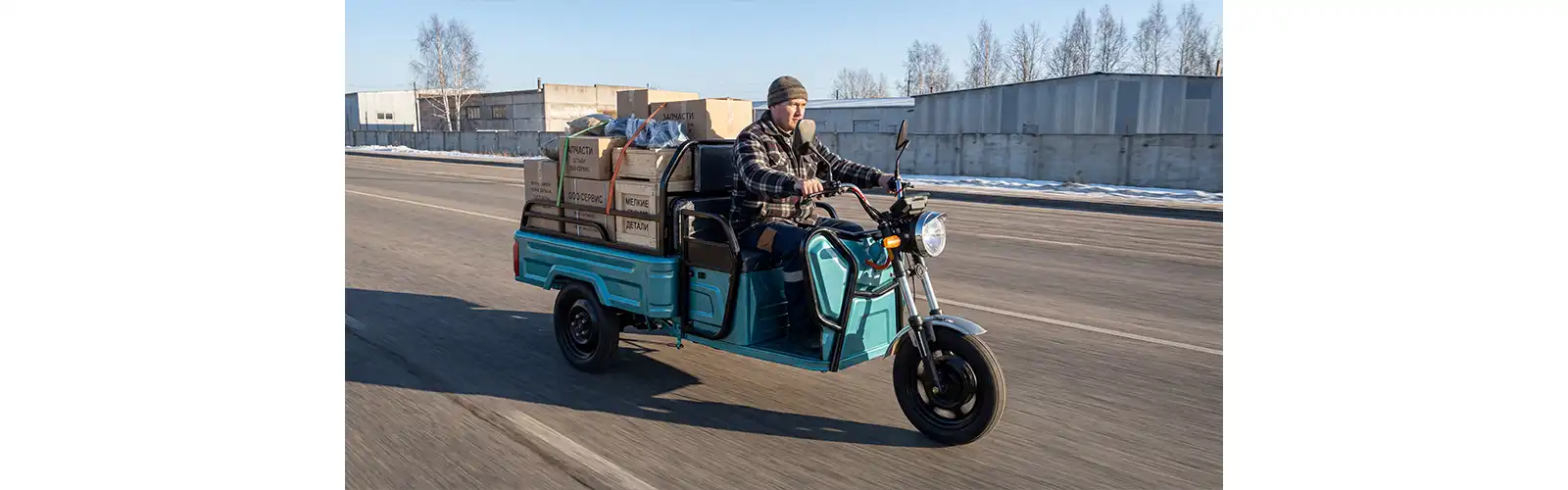
Knowing about important technical factors helps you choose the right car for your needs. The Hanbang LETU has a 60/72V 1000W motor and an 18-tube controller that work together to give it consistent torque for delivery routes in cities. There are two types of batteries: 72V 32Ah and 72V 20Ah. Depending on the load and weather, these batteries can work for 30 to 40 km. The overall small size of 2485×875×1540mm makes it easy to get through narrow alleys, and the 1.1×0.85m cargo box can hold standard delivery packages. This balance between size and capacity takes into account the real-world logistics problems that food delivery platforms and courier services face.
How Electric Drive Systems Work
Electric cargo tricycles work with a simple system for getting power to them. The battery pack gives power to the motor processor, which controls how power is sent based on how much speed is applied. The 1000W motor turns electrical energy into mechanical spinning, which is sent through a 130-ton rear axle with an integrated gear shift. This set-up gives the best power spread for all kinds of loads, from empty returns to deliveries with full loads. The hydraulic spring shock absorber system—specifically the 31# specification—muffles rough road surfaces, keeping goods and vehicle parts from wearing out too quickly. A regular wall outlet is all it takes to charge it every day, and a full charge usually happens overnight, within 6 to 8 hours. Hanbang electric three wheeler cargo tricycles follow this same fundamental architecture but with refined tuning that ensures consistent performance across varied terrains and load conditions, making them a reliable choice for daily commercial use.
Battery Technology and Charging Infrastructure
The LETU type is powered by lead-acid batteries, which have been shown to be a good mix between price and performance for business use. The 72V system keeps the right voltage even when it's under load, so there is no power loss on long delivery routes. Lithium-ion batteries have longer cycle lives, but lead-acid batteries require less money to start up, which is important for businesses that are growing. It's still easy to charge: just plug it into any 110V or 220V outlet at your store or warehouse. Because these charging stations are easy to get to, they don't need to be specialized. This cuts down on both the cost of installation and the difficulty of running them.
Maintenance and Longevity Expectations
Regular maintenance on Hanbang electric three-wheeler cargo tricycles is a lot easier than on gasoline-powered ones. You won't have to change the oil, take out the spark plugs, or check the gearbox fluid. Some important upkeep jobs are checking the tire pressure every month, inspecting the brake system every three months (front disc brake and rear drum brake), and adding more gear oil to the rear axle every six months. To keep the best electrical contact, battery connections should stay clean and free of rust. Hanbang gives each vehicle a detailed user manual and instructional videos that show how to do common maintenance tasks. Spare parts are available through global distribution networks, so when a part needs to be replaced, there is little downtime.
Advantages of Hanbang Electric Cargo Tricycles Over Traditional Alternatives
Environmental Benefits Drive Compliance
Electric cargo tricycles are the best choice for cities that are setting up low-emission zones because they don't produce any pollution at all from their tailpipes. Cities in Europe and the Americas are making it harder or impossible for cars with internal combustion engines to be in city areas during work hours. Electric three-wheelers don't have to worry about these limits at all, so they can still carry packages while gasoline competitors are getting fined more and more. Another important benefit is that it makes less noise, so deliveries can happen early in the morning or late at night without bothering people in nearby neighborhoods. This practical flexibility lets you stretch your shipping windows, which makes it easier to help customers.
Operational Cost Savings Add Up Quickly
The price of electricity is about one-fifth of the price of gasoline per kilometer. A company with five tricycles that go on daily 30-kilometer routes can save a lot of money each year just on fuel. Maintenance costs drop even more because electric motors have fewer moving parts than combustion engines, which means they don't need as much regular maintenance. Regenerative stopping makes brake systems last longer by reducing the wear on the parts. Electric cars often have lower risk profiles, which means that their insurance costs are lower as well. This is another way that you can save money. Every time a delivery is made, these cumulative price cuts directly increase profit margins.
Performance Reliability in Real-World Conditions
Field testing in a variety of locations proves that the LETU type is durable. The high-strength steel frame can handle being loaded and unloaded every day without any structural fatigue. The 3.00-12 tires are durable and can handle a range of road surfaces, from smooth streets to rough country paths. The built-in gear shift on the back axle gives you a mechanical edge when going up mild hills or starting from a stop with big loads. Because they are so small—less than 2.5 meters long—they can get through crowded market areas that bigger vans can't reach. This ability to move around directly leads to faster arrival times and more deliveries per day.
Sanitation departments like how flexible the platform is for picking up trash in historic districts with narrow streets. Agricultural groups use Hanbang electric three-wheeled cargo tricycles to get crops from the fields to local markets. The covered cargo box keeps the goods safe from dust and weather. Small-scale wholesalers find that the payload capacity is enough to restock stores all over town, and they can make multiple trips on a single charge. This wide range of uses across businesses shows how useful well-designed electric goods transport is in general.
Buying Guide: How to Choose and Purchase Hanbang Electric Three Wheeler Cargo Tricycles
Matching Specifications to Your Requirements
Start by writing down your normal daily routes, including the distance, number of stops, average payload weight, and type of terrain. The LETU's 30–40 km range and 500 kg payload capacity are perfect for daily trips of 25–35 km with light loads. Businesses that need a longer range should look at the 72V 32Ah battery instead of the 20Ah option. Terrain is also important. In cities, flat areas maximize range, while hilly areas decrease it proportionally. Make a list of your "worst-case scenario" needs, and then choose specs that give you a 20% practical buffer.
Understanding Warranty and After-Sales Support
The size of the cargo has just as much of an effect on vehicle choice as weight capacity. The LETU's 1.1×0.85m cargo box can fit normal courier package sizes, but if you need to ship something bigger, you may need to make some special changes. Hanbang offers full OEM and ODM customization, so you can choose the size of the cargo box, any height extensions, weather protection covers, and branding elements. Getting involved with technical specifications early on can save you a lot of money in the long run.
Pricing and Bulk Order Considerations
A full guarantee covers your investment during the most important early stages of operation. Hanbang gives specific warranty terms for motor parts, battery performance degradation thresholds, and the frame's structural integrity. For Hanbang electric three-wheel cargo tricycles, these terms are particularly well-defined, giving fleet operators clear expectations from day one. Planning for the long-term costs of ownership is easier when you know what's covered and, just as importantly, what needs regular upkeep. Access to technical documentation, remote troubleshooting help, and coordinated distribution of spare parts through regional service centers are all parts of after-sales support.
Before completing large orders, international buyers should check to see where the local service centers are. Electric tricycles don't need much upkeep, but being able to get help with technology issues makes them easier to use. Hanbang has a global delivery network that includes almost 50 countries in Africa, the Americas, Europe, and Southeast Asia. This network sets up solid support infrastructure in key areas.
Ordering Process and Customization Options
When you buy directly from the maker, you don't have to pay the markups that distributors add, so the cost per unit is much lower. When buying more than one car at the same time, bulk order savings make the deal even better. A logistics company with a fleet of 10 units can negotiate prices that are 15 to 20 percent lower than single-unit rates. This has a big effect on the amount of capital that is needed. Payment terms, delivery plans, and help with customs paperwork depend on the size of the order. Terms are usually better for bigger orders.
When making a budget, you shouldn't just think about the buying price but also the total cost of ownership. Figure out the costs over five years, including the cost of energy, repairs, insurance, and the replacement of the battery. Even when the initial purchase prices are about the same, Hanbang electric three-wheeler cargo tricycles always have lower TCO than petrol equivalents. This long-term view helps people make better decisions about what to buy.
Maximizing Efficiency and Maintenance of Your Hanbang Electric Cargo Tricycle
Daily and Periodic Maintenance Protocols
Setting up regular maintenance schedules for your vehicle makes it last longer and stops it from breaking down when you least expect it. Daily checks should include looking at the tires to make sure they are properly inflated and free of damage, making sure the brakes work before leaving, and making sure the cargo box is safe. Every week, you have to clean the battery leads, check the electrical links for corrosion, and look for wear on the suspension parts. As part of the monthly maintenance, the thickness of the brake pads is measured, the gear oil level is checked, and the battery voltage is tested in great detail.
Keep track of all the repair work you do on each car in a logbook. This keeps track of things so that patterns can be seen, like how brakes wear out faster on certain routes. This lets people take action before a part fails and causes downtime. Digital fleet management systems can do these tracking tasks automatically and let you know when it's time for a service.
Battery Care for Extended Service Life
Taking good care of batteries is important because they have a direct effect on practical economics. Whenever possible, don't let batteries run completely dead. Keeping the charge above 20% greatly increases the cycle life. When possible, charge batteries in places that keep the temperature stable, since charging batteries in very hot or cold places doesn't work as well. Use a wire brush to clean the battery terminals once a month to get rid of oxidation and make sure there is the best electrical contact. If you don't use a car for a long time, you should disconnect the batteries and keep them fully charged in a cool, dry place.
In industrial use, lead-acid batteries can usually handle 400 to 600 charge cycles, which is equal to 18 to 24 months of daily use. Planning for replacement within this time frame keeps problems from happening at bad times for business. Lithium battery upgrades offer 1500–2000 cycles, but they cost more at first. You should weigh this trade-off based on how busy your business is and how much money you have on hand.
Troubleshooting Common Issues
When problems happen, knowing how to do simple troubleshooting cuts down on downtime. If the car won't start, use a voltmeter to make sure the battery wires are tight and the voltage meets the requirements. Less range usually means that the battery is dying or that the tires aren't inflated enough, which makes rolling resistance higher. When the rear axle makes strange noises, it's usually because the gear oil level is low. This is easy to fix by checking and adding more oil. The loss of brake performance is a sign that the pads need to be inspected and possibly replaced. For the EEC Electric Three-Wheeler Cargo Tricycle Motorcycle, these same basic checks apply, but owners should also consult the specific manual for controller error codes, as that model's electronic system may have additional diagnostic steps beyond conventional cargo tricycles.
When problems are too big for basic troubleshooting, Hanbang's technical support team can help with online testing. Staying in touch with your authorized dealer will make sure you have access to genuine replacement parts that meet the standards of the original equipment. This will protect your vehicle's performance and warranty coverage.
Leveraging Global Service Networks
Jiangsu Hanbang Vehicle Industry Group runs a full-service infrastructure that helps customers all over the world. When repairs are needed, wait times are cut down because regional service centers keep popular replacement parts in stock. Technical training programs teach fleet managers and maintenance workers the right way to do repairs. This increases the company's own capabilities and decreases its reliance on outside service providers. This sharing of knowledge is especially helpful for people who run large fleets of vehicles in different places.
When manufacturing flaws show up, processing warranty claims through established channels protects your investment. As long as the right paperwork is kept and repair plans are followed, the guarantee will still be valid for your Hanbang electric three-wheeler cargo tricycle.
Future Trends and Strategic Benefits of Investing in Hanbang Electric Cargo Tricycles
Regulatory Environment Favoring Electric Adoption
Governments around the world are enforcing stricter pollution standards, which is great for the acceptance of electric vehicles. Every year, urban low-emission zones get bigger, making it harder for fossil fuel cars to get into city areas, which are where most deliveries happen. If your business buys Hanbang electric three-wheeler cargo tricycles early, it will be ahead of the rules and won't have to pay a lot of money to replace its fleet when compliance deadlines come up. Many places have incentive programs that help people buy zero-emission commercial cars by giving them purchase rebates, tax credits, or faster permits. This makes the investment more profitable.
Environmental laws are changing so that they look at the whole lifetime, not just pollution from tailpipes. Compared to other options, electric cargo tricycles are better for the environment when it comes to manufacturing, operation, and recycling at the end of their useful life. This all-around sustainability is having a bigger effect on how cities buy things and how businesses need to run their supply chains.
Innovation Roadmap and Product Development
Hanbang's dedicated research and development (R&D) team is always improving product performance based on what customers say and how technology changes. New features are being added all the time, such as better battery management systems that make charging more efficient, better cargo box setups that meet the needs of specific industries, and the ability to connect to GPS tracking and fleet management platforms. These small changes keep deployed cars competitive for the whole time they're in use, which protects your investment from becoming obsolete too soon, and this continuous improvement applies equally to the EEC Electric Three-Wheeler Cargo Tricycle Motorcycle, ensuring that even this specialized vehicle benefits from ongoing upgrades in energy efficiency, cargo adaptability, and smart connectivity.
More than 200 U.S. and international patents show that the company is committed to innovation beyond just putting things together. This base of intellectual property allows for quick changes to meet the needs of new markets, whether expanding to new areas needs new certifications or catering to specific customer groups needs unique setups.
Total Cost of Ownership Analysis
Full TCO estimates show that electric luggage tricycles are a great investment. At first, the prices may be close to or slightly higher than petrol equivalents, but the operational savings quickly change the equation. The price of fuel drops by about 80%, the cost of repairs drops by 70%, and insurance rates drop by about 15% to 20% on average. When all costs are taken into account, electric choices usually cost 40 to 50 percent less than traditional options over the course of five years.
As secondary markets grow, the values of well-kept electric cargo tricycles will stay high. Businesses that are upgrading their fleets can get back a lot of money by selling used vehicles, which also helps their overall financial performance. This kept value shows that the market knows electric powertrains last a long time and have ongoing operating benefits.
Integration With Smart Fleet Management
Modern transportation operations need to be able to see how the fleet is doing in real time, track its position, and plan for future repair. IoT systems can easily connect to electric cargo tricycles and keep track of their battery life, position, usage trends, and maintenance needs. This stream of data lets route optimization cut down on energy use, predictive service scheduling cut down on downtime, and performance analytics find ways for drivers to get better. When telematics is added to vehicle fleets, they go from being simple transportation assets to data-generating platforms that help improve operations all the time. Management teams get actionable insights that weren't available with regular vehicles before. This leads to year-over-year increases in driving efficiency.
Conclusion
Electric luggage tricycles are useful and cost-effective ways for businesses to deal with a variety of transportation issues. Hanbang's EEC-certified models meet real-world needs, from delivery services in cities to transporting goods on farms. They do this by combining regulatory compliance with tried-and-true engineering. The LETU model's 1000W motor, 30–40 km range, and customizable configurations make it a good choice for short-distance logistics. It's also affordable thanks to its lead-acid battery technology and direct factory pricing. Knowing the basics of technology, how much it will cost to maintain, and the total cost of ownership will help you make smart decisions about what to buy. As regulations push for zero-emission transportation and operating cost pressures rise, Hanbang electric three-wheel cargo tricycles offer real benefits today while setting up your business for the transportation world of tomorrow.
FAQ
1. What license requirements apply to operating EEC electric cargo tricycles?
Different places and types of vehicles have different license requirements. Most L2e category vehicles need standard car licenses (Class B in most areas), but some higher-performance models may need motorcycle endorsements. Check the local Department of Motor Vehicles rules in the area where you will be working before you send out drivers. This will help make sure they follow the rules and keep operations running smoothly.
2. How does payload affect operational range?
When vehicles are fully loaded, their range is usually 30–40% shorter than when they are empty. The LETU is reported to have a range of 30 to 40 km with light loads on flat ground. Range is reduced by the same amount for heavy loads, hilly paths, or lots of stops. When deploying for the first time, plan routes cautiously and keep track of real performance to set reliable operational parameters that work for your drive conditions and habits.
3. Can I customize cargo box dimensions for specialized applications?
Hanbang offers full OEM and ODM customization to meet the specific needs of each business. Manufacturing trucks can be designed with custom cargo box sizes, height extensions, cooling units, and unique mounting systems. Early on in the procurement planning process, talk to the technical teams about whether custom configurations that meet your exact needs are possible, how long they would take to make, and how much they would cost.
Partner With a Trusted Hanbang Electric Three-Wheeler Cargo Tricycle Manufacturer
Your company should have transport options that meet all the rules, work well, and make money in the long run. Jiangsu Hanbang Vehicle Industry Group brings to every client partnership 14 years of experience making high-quality vehicles, more than 200 intellectual property patents, and a track record of exporting to 50 countries. Our LETU model has performance that is EEC-certified and is backed by a full warranty and a global service infrastructure. Our factory-direct prices and ability to take large orders will help you reach your growth goals, whether you need five vehicles for local business or 500 units for regional distribution networks. Email our team at nicole@xzmeidi.com to talk to experienced technical advisors about your specific needs. You can look at full product details, get personalized quotes, and get in touch with authorized Hanbang electric three-wheeler cargo tricycle providers in your area at hanbangev.com. Let's work together to make your transportation future green.
References
1. International Council on Clean Transportation. (2023). "Global Electric Vehicle Policy Comparison and Impact Assessment." ICCT Policy Analysis Series.
2. European Commission Directorate-General for Mobility and Transport. (2022). "EU Vehicle Type-Approval Framework for L-Category Vehicles." Official Journal of the European Union.
3. McKinsey & Company. (2023). "Last-Mile Delivery Economics: The Electric Transition in Urban Logistics." Transportation Practice Publications.
4. International Energy Agency. (2023). "Global EV Outlook: Electric Vehicle Battery Technology and Market Trends." IEA Clean Energy Technology Reports.
5. Society of Automotive Engineers. (2022). "Maintenance Best Practices for Commercial Electric Light-Duty Vehicles." SAE Technical Standards Documentation.
6. World Bank Group. (2023). "Sustainable Urban Mobility in Emerging Markets: Electric Vehicle Adoption Patterns." Transport and Digital Development Global Practice.
Tell us your requirements – get a tailored quote and technical support within 24 hours.