- English
- French
- German
- Portuguese
- Spanish
- Russian
- Japanese
- Korean
- Arabic
- Greek
- German
- Turkish
- Italian
- Danish
- Romanian
- Indonesian
- Czech
- Afrikaans
- Swedish
- Polish
- Basque
- Catalan
- Esperanto
- Hindi
- Lao
- Albanian
- Amharic
- Armenian
- Azerbaijani
- Belarusian
- Bengali
- Bosnian
- Bulgarian
- Cebuano
- Chichewa
- Corsican
- Croatian
- Dutch
- Estonian
- Filipino
- Finnish
- Frisian
- Galician
- Georgian
- Gujarati
- Haitian
- Hausa
- Hawaiian
- Hebrew
- Hmong
- Hungarian
- Icelandic
- Igbo
- Javanese
- Kannada
- Kazakh
- Khmer
- Kurdish
- Kyrgyz
- Latin
- Latvian
- Lithuanian
- Luxembou..
- Macedonian
- Malagasy
- Malay
- Malayalam
- Maltese
- Maori
- Marathi
- Mongolian
- Burmese
- Nepali
- Norwegian
- Pashto
- Persian
- Punjabi
- Serbian
- Sesotho
- Sinhala
- Slovak
- Slovenian
- Somali
- Samoan
- Scots Gaelic
- Shona
- Sindhi
- Sundanese
- Swahili
- Tajik
- Tamil
- Telugu
- Thai
- Ukrainian
- Urdu
- Uzbek
- Vietnamese
- Welsh
- Xhosa
- Yiddish
- Yoruba
- Zulu
Can the EEC Electric Cargo Tricycle Truck Be Used for Food Delivery?
Without a doubt, the Hanbang electric cargo tricycle truck is a useful and quick way to bring food. The ZHANLONG line has a 72V 45Ah battery and an operating range of 60 to 70 km, so it works reliably on daily delivery routes. Its small (3085 x 1180 x 1400 mm) size makes it easy to get through crowded city streets, and the 1.6 x 1.1 m cargo box can handle a wide range of packing needs. With EEC, CCC, and ISO 9001 certifications, this three-wheeled transport truck meets the high safety and quality standards needed for professional food logistics around the world.
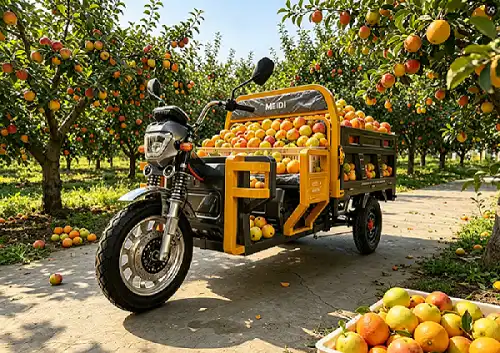
Understanding the EEC Electric Cargo Tricycle Truck and Its Suitability for Food Delivery
For food service, vehicles need to have certain features that balance speed, volume, and dependability. Electric three-wheeled cargo cars have become a good option to traditional delivery methods. This is especially true in cities where traffic jams and pollution rules make it hard to do business.
Key Specifications That Support Food Transport
The ZHANLONG model has a 60/72V 1500W motor that gives it steady movement on a range of surfaces. This power flow works well for stop-and-go delivery patterns in cities where quick reaction time is important. The car has two speed settings—25 km/h for areas with lots of pedestrians and 45 km/h for main roads—so drivers can change how well it works depending on the traffic.
The size of the battery has a direct effect on the supply range and the freedom of the schedule. The 72V 45Ah system gives the vehicle 60–70 km of range on a single charge, which is enough for most transportation zones in cities and suburbs during the workday. Operators can work the morning and afternoon shifts without having to stop in the middle of the day to recharge, which keeps service gaps steady.
Safety Features That Protect Cargo Integrity
Moving food around needs to be done carefully so that it doesn't get damaged. The 37# exterior spring shock absorption system keeps vibrations from getting into the cargo area as little as possible, keeping fragile things safe and the quality of the presentation. Front and back drum brakes give the truck consistent stopping power, even when it's carrying the most weight. This lowers the chance of sudden changes that could damage the packing.
The dynamic weight distribution is taken care of by the strengthened chassis construction as drivers load and unload goods along their routes. This structural stability keeps the goods from moving when the vehicle turns or stops. This is especially important when moving stacked packages or temperature-sensitive items that need to be handled carefully.
Compact Design for Congested Delivery Zones
When delivering food in cities, drivers often have to go through tight alleys, apartment buildings, and other places where cars can't go. The tricycle's narrow 1180mm width lets it fit through places that regular cars can't, and its tight turning radius makes it easier to get around in tight loading areas and customer entrances. Drivers spend less time looking for parking and walking to their final transport stops, which makes every path more efficient.
Comparing EEC Electric Cargo Tricycle Trucks with Traditional Delivery Vehicles
Managers of delivery fleets have to make tough choices about which cars to buy based on their performance, cost, and how much they cost to run. Figuring out how electric luggage tricycles compare to other options can help you understand what role they play in different business plans.
Total Cost of Ownership Analysis
Traditional transport tricycles that run on gasoline have higher operating costs because they need more upkeep and use more gas. Regular upkeep is needed for many parts of the engine, such as changing the oil, replacing the spark plugs, and keeping the clutch in good shape. Based on operational statistics from the industry, electric drivetrains get rid of these ongoing costs, which cuts monthly repair budgets by about 60 to 70%.
The price of energy is another big difference. Prices for electricity are usually about one-fifth of what it costs to run a car on gasoline. A delivery fleet that drives 100 km every day can save a lot of money. For example, a single car could save $200 to $300 a month on fuel costs, which add up over the size of the fleet.
Performance Advantages Over Two-Wheel Electric Options
Electric bikes and scooters are cheaper to buy, but they can only take small packages, so they can only be used for small deliveries. The ZHANLONG's 1.6x1.1m luggage box has enough space for large orders, catering, and consolidating routes with multiple stops. Payload capacity lets you carry bigger loads without affecting performance, while two-wheeled options have trouble keeping their balance and distributing weight in the same situations.
Protection from the weather is another useful thing to think about. The covered cab design protects drivers from rain, wind, and extreme temperatures, so activities can happen all year long, no matter what the weather is like. This ability to work in all seasons keeps service consistent and driver comfort high, which lowers driver tiredness and turnover.
Operational Range Compared to Four-Wheel Electric Vans
Electric cars can hold more goods than EEC electric cargo tricycle truck, but they are much more expensive to buy and need to be charged more often. Their bigger battery systems need more money to be spent on charging stations and need to be charged more often. Four-wheeled vehicles can't go into historic neighborhoods, pedestrian zones, or places where vehicle size limits are becoming more popular in European and American city centers.
The bicycle shape is good because it has enough space and is easy for people to get to. Its 60–70 km range is about the same as the average daily delivery route length for most urban food logistics operations. Plus, the lower price point makes it possible to add more vehicles to the fleet with the same amount of money. For the price of one electric van, businesses can use three cargo tricycles, which gives them working freedom and backup.
When it comes to food delivery, these examples show how electric cargo tricycles fill a special need. Their capacity is higher than that of smaller vehicles, and they have cost benefits and access features that bigger vehicles can't match. The procurement teams can compare these trade-offs based on their route densities, supply amounts, and the features of their service areas.
Practical Insights Into Using the EEC Electric Cargo Tricycle for Food Delivery
Using electric cargo tricycles in the real world shows how well they work under normal operating conditions and what methods work best for using them in food logistics processes.
Operational Advantages in Urban Environments
Electric vehicles don't release any pollution when they run, so they can go into low-emission zones and environmentally protected places where gas-powered vehicles aren't allowed or face fines. Many cities and towns now require zero-emission transportation in downtown areas and residential areas. This means that electric cars are not only better, they are required in some business areas.
Getting rid of noise is important, especially when deliveries are happening early in the morning or late at night. The quiet motor operation lets deliveries happen in home areas without bothering people, which helps food companies keep their service hours longer. This feature is useful for food delivery services that work before dawn and restaurant sources that work during the time it takes to make dinner.
Battery Management for Consistent Performance
Understanding charging trends makes vehicles more available and keeps people from getting "range anxiety." Using normal tools, it takes 6 to 8 hours to fully charge the 72V 45Ah battery. Setting up charging schedules for the night makes sure that cars are fully charged when they start each shift. Battery swap systems can be used in places with more than one shift, but the ZHANLONG's range is usually enough for single-shift activities that don't need to be interrupted in the middle of the day.
Temperature changes how well a battery works; when it's cold, the range is cut by 10–15%. In northern climates, winter activities may need to change routes or strategically place backup cars. On the other hand, moderate temperatures don't change much from season to season, so they provide steady performance all year long.
Maintenance Practices That Extend Service Life
Electric drivetrains don't need to be serviced as often as gas engines, but they still need to be maintained regularly. Because delivery work involves stopping a lot, brake systems need to be checked regularly. Every 3,000 km, drum brakes should be checked, and pads should be changed when wear signs show that service is needed.
Checking the tire pressure keeps the driving traits and stops uneven wear. The front 3.75-12 tires and the back 4.00-12 tires should be checked once a week, and the pressure should be changed based on how much weight is being carried. When tires are properly inflated, they last longer and keep the vehicle's estimated economy.
Battery connections need to be cleaned every so often to keep them from rusting, which slows down charge. Visual checks done once a month find link problems before they slow things down. These easy preventative steps will make the battery last longer and keep its range constant over its lifetime.
Procurement Guide: Acquiring EEC Electric Cargo Tricycle Trucks for Your Food Delivery Fleet
Long-term operational success and financial performance are affected by strategic choices about buying. Businesses can get the right cars at good prices and build trusting relationships with support staff when they understand the buying process.
Pricing Structures and Volume Considerations
Direct pricing from the maker gets rid of the markups that distributors add, which saves money and is especially useful for buying more than one car. Jiangsu Hanbang Vehicle Industry lets you buy directly from the factory, and fleet sales can get savings based on the number of vehicles ordered. Businesses that want to grow can discuss different price levels based on the amount of promise they have. This way, as their fleet size grows, they can get better unit economics.
Payment terms depend on the size of the order and the qualifications of the buyer. Standard terms usually call for a 30% fee, with the rest due before the shipment. However, repeat customers may be able to arrange longer terms. Third-party providers offer leasing and financing options that spread the costs of acquisition over the working cash flow instead of needing big capital outlays up front.
Certification Verification and Compliance
For businesses that want to do business in EU member states where strict car standards apply, EEC approval is a must. CCC certification shows that quality control is used in manufacturing, and ISO 9001 certification shows that quality management methods are followed in a planned way. These certificates are important not only for following the rules, but also for getting insurance and protecting yourself from harm.
Ask for proof of certification when you're talking about buying something, and check certificates directly with the organizations that issued them when you're thinking about making big investments. This extra work keeps you safe from cars that don't follow the rules, which could lead to operating restrictions or problems getting insurance.
After-Sales Support and Service Networks
Most warranties for EEC electric cargo tricycle truck cover power parts for 12 months and wear parts for 6 months. Make it clear what parts are included, how work is normally done, and how guarantee claims are handled. Knowing these facts keeps disagreements from happening when help is needed.
The length of downtime when fixes are needed depends on how readily available the parts are. Form partnerships with area service providers who can help you find parts and do regular upkeep. Hanbang has relationships with distributors that help with technical service. Each car buy comes with full installation manuals and instructional videos.
Customization Options for Brand Integration
The ZHANLONG line can be customized through OEM and ODM, which lets businesses ask for changes that meet their working needs. Custom paint jobs, logo applications, and branded cargo box designs can turn plain cars into moving ads that strengthen brand recognition in service areas.
Within the limits of production, technical specs can be changed. Changing the motor power, increasing the battery capacity, and changing the cargo box can all be done to fit different uses. Talk about your customization needs during the initial buying talks to find out if it's possible, what the lead time impacts will be, and how the prices will change.
Real-World Case Studies and User Feedback for Food Delivery Applications
Written accounts from groups that are actually using electric cargo tricycles can teach us a lot about how they work in real life and the problems that users face when they try to use them.
Urban Food Logistics Implementation
A regional food delivery service that works in three medium-sized American towns got fifteen ZHANLONG electric cargo tricycles to replace their old gasoline ones. The change cut the fleet's monthly fuel costs by $4,200, and over the next twelve months, upkeep costs fell by 65%. Drivers said it was easier to maneuver in crowded areas, and the quiet operation let them make deliveries earlier in the morning without getting complaints from customers.
At first, the service had trouble with its charging infrastructure, so two depots had to get specialized lines installed. After this initial investment, operations became stable, and cars were able to reliably complete daily runs of 55–65 km without worrying about running out of gas. The rental manager said that drivers were very happy with the new cars once they tried them out and saw how smooth the acceleration was and how much less shaking there was compared to older cars.
Rural Agricultural Distribution
Five electric cargo tricycles were bought by a farm company in the Midwest so that they could bring local food to restaurants and farmers' markets. The 1.6x1.1m cargo box could fit normal produce cases, and the backrest could be folded up so that it could be used for both large shipping and smaller packages. The costs of running the business were 70% less than with pickup trucks that were used for similar trips before.
During harvest season, when the supply radius grew to serve temporary markets, range limits became clear. The group fixed this problem by planning a smart route and putting a backup car in a charging station that was far away. Operating in cold countries during the winter cut the possible range by about 12%, which meant that routes had to be changed in January and February.
Verified Operator Feedback
Forums and networks for professionals in the same field show common themes in the feedback they get. Electric tricycles are popular because they are easy to maintain and don't cost much to run. Many operators also like that they don't require as much technical knowledge as gas engines. Because it's easy for anyone to get to, smaller companies can do regular maintenance themselves instead of hiring specialized mechanics.
Some owners of Hanbang electric cargo tricycle truck say that limited carrying capacity means they have to plan their loads carefully, especially when they have to serve a lot of people at once. The ZHANLONG's cargo box is the right size for most food delivery jobs, but companies that carry large things or a lot of orders may need to add bigger vehicles for some routes.
People who work as drivers say that they are comfortable because the covered cab and smooth electric operation keep them from getting tired during long shifts. This means better service and less employee turnover, both of which are very important in transport businesses that need a lot of workers.
Conclusion
Food delivery businesses have found that electric luggage tricycles are useful because they are environmentally friendly, cost less to run, and work well for managing goods in cities. The Hanbang ZHANLONG line meets the needs of delivery companies by offering guaranteed quality, the right range and capacity specs, and direct factory support. Electric three-wheelers are a good compromise between small two-wheelers and bigger four-wheelers. However, each activity has its own needs that require careful vehicle selection. When deciding what to buy, it's helpful to think carefully about the route's features, the amount of space needed, and the total cost, which includes the initial purchase price.
FAQ
What payload capacity does the ZHANLONG support for food delivery operations?
The 1.6x1.1m cargo box's capacity is about 1.76 cubic meters, which is good for normal food containers, insulated bags, and bulk packing. Specific weight limits rely on the model, but most electric cargo tricycles in this class can safely carry 300–500 kg. This amount of space is enough for most deliveries of restaurant supplies, food orders, and paths with multiple stops for meal delivery without going over the structure's limits.
How does cold weather affect battery performance and delivery range?
Changes in temperature have an effect on battery chemistry. Both lithium and lead-acid devices lose power when it's cold. When temperatures drop below freezing, operators usually see a 10–15 percent drop in range. This effect is lessened by parking cars in climate-controlled buildings between shifts. When planning routes, they should take seasonal changes into mind, especially in northern climates where operations need to be changed for the winter.
Can the ZHANLONG navigate steep terrain with full loads?
Under normal load conditions, the 60/72V 1500W motor has enough power for mild slopes. On routes with steep curves that don't change, you may need to lower your load or choose a different car. The built-in gear shift system lets drivers change how much power is delivered for different types of terrain, so performance stays the same in both urban and residential settings.
What charging infrastructure is required for fleet operations?
Standard 220V electricity service lets you charge overnight, and a full run takes 6 to 8 hours. Dedicated lines at base sites are good for fleet operations, but sometimes small changes to the existing infrastructure are all that's needed. Businesses with more than one shift should look at their charging plans or think about installing battery swap systems to keep their vehicles available.
Transform Your Food Delivery Fleet with Hanbang Electric Cargo Solutions
Jiangsu Hanbang Vehicle Industry makes the ZHANLONG Hanbang electric cargo tricycle truck, which is of enterprise-level quality and has approvals from EEC, CCC, and ISO 9001. Our 150,000-square-meter smart factory makes reliable three-wheel cars that are sent to more than 50 countries around the world. To talk about fleet needs, get full specs, and look into volume prices for delivery operations, email our commercial team at nicole@xzmeidi.com. As a well-known Hanbang electric cargo tricycle truck maker, we can meet your needs for customization, give you detailed technical information, and make sure parts are always available through our network of distributors. Visit hanbangev.com to review our complete product range and connect with regional representatives.
References
1. International Energy Agency (2023). Global EV Outlook 2023: Urban Freight Electrification Trends. IEA Publications.
2. National Association of City Transportation Officials (2022). Urban Goods Delivery: Vehicle Classification and Operational Characteristics. NACTO Research Report.
3. European Alternative Fuels Observatory (2023). L-Category Electric Vehicles in Last-Mile Logistics: Performance Analysis. EAFO Technical Documentation.
4. Transportation Research Board (2022). Electric Cargo Cycles for Urban Freight: Comparative Cost and Efficiency Study. TRB Special Report 341.
5. U.S. Department of Energy (2023). Battery Performance in Cold Weather Conditions: Impact on Electric Vehicle Range. DOE Vehicle Technologies Office.
6. World Resources Institute (2022). Zero-Emission Delivery Zones: Policy Implementation and Vehicle Requirements in Global Cities. WRI Sustainable Cities Report.