- English
- French
- German
- Portuguese
- Spanish
- Russian
- Japanese
- Korean
- Arabic
- Greek
- German
- Turkish
- Italian
- Danish
- Romanian
- Indonesian
- Czech
- Afrikaans
- Swedish
- Polish
- Basque
- Catalan
- Esperanto
- Hindi
- Lao
- Albanian
- Amharic
- Armenian
- Azerbaijani
- Belarusian
- Bengali
- Bosnian
- Bulgarian
- Cebuano
- Chichewa
- Corsican
- Croatian
- Dutch
- Estonian
- Filipino
- Finnish
- Frisian
- Galician
- Georgian
- Gujarati
- Haitian
- Hausa
- Hawaiian
- Hebrew
- Hmong
- Hungarian
- Icelandic
- Igbo
- Javanese
- Kannada
- Kazakh
- Khmer
- Kurdish
- Kyrgyz
- Latin
- Latvian
- Lithuanian
- Luxembou..
- Macedonian
- Malagasy
- Malay
- Malayalam
- Maltese
- Maori
- Marathi
- Mongolian
- Burmese
- Nepali
- Norwegian
- Pashto
- Persian
- Punjabi
- Serbian
- Sesotho
- Sinhala
- Slovak
- Slovenian
- Somali
- Samoan
- Scots Gaelic
- Shona
- Sindhi
- Sundanese
- Swahili
- Tajik
- Tamil
- Telugu
- Thai
- Ukrainian
- Urdu
- Uzbek
- Vietnamese
- Welsh
- Xhosa
- Yiddish
- Yoruba
- Zulu
What Are the Stability Benefits of a 3 Wheeler Cargo Tricycle?
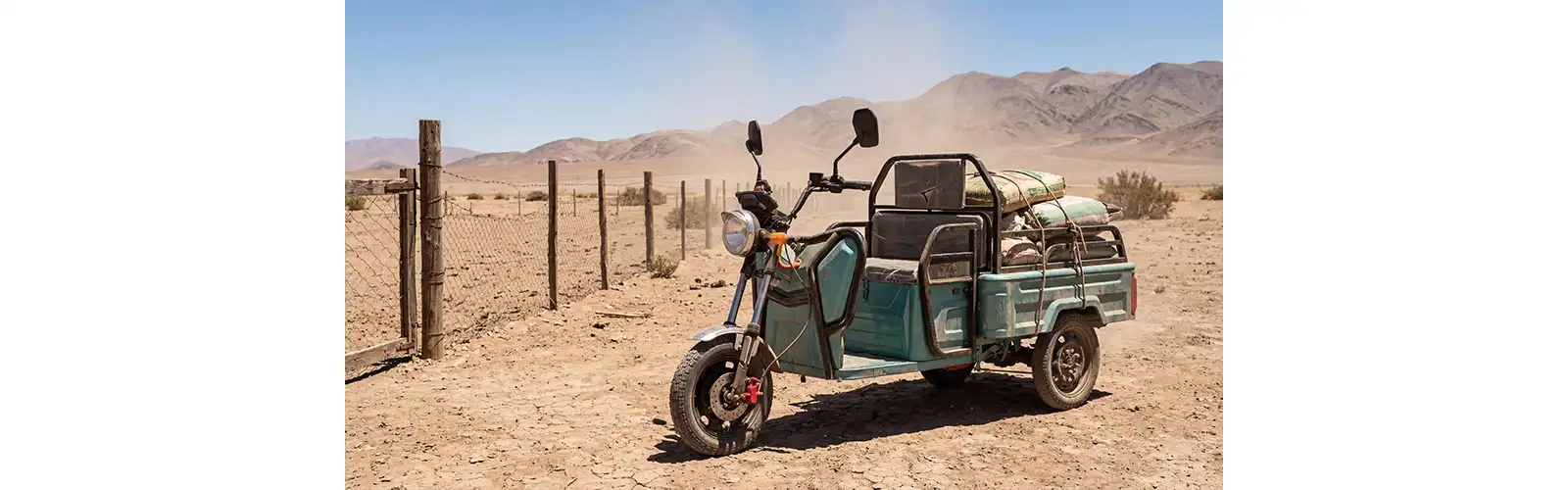
When your business counts on getting goods from one place to another, stable vehicles are a must. The advanced engineering design of the Hanbang 3 wheeler cargo tricycle gives it great stability. This changes how businesses handle last-mile transportation and urban operations. With a carefully measured wheelbase, a reinforced chassis design, and 31# hydraulic spring shock absorption, these vehicles reduce the risk of tipping and increase the safety of their payloads on a wide range of terrain. The improved stability features lower the risk of accidents and protect your goods investment, whether you're driving on tight city streets or country roads.
Understanding Stability Challenges in Cargo Tricycles
Using cargo tricycles can be hard on your balance, which can have a direct effect on your bottom line. Three-wheeled vehicles naturally have different weight distribution patterns during turns and sudden movements than four-wheeled vehicles. A lot of operators have to deal with shifting goods while it's in transit, especially when going over rough terrain or around tight turns in crowded cities.
Center-of-gravity problems are common with traditional bike designs, especially when they are nearly full. This instability causes many expensive problems, including broken goods, hurt drivers, insurance claims, and vehicles that can't be used. Rural transportation groups say that cars that aren't stable need to have their suspension parts fixed and tires replaced more often because they wear unevenly.
The Hidden Costs of Poor Stability
In addition to causing instant safety issues, problems with stability lead to rising operational costs. When drivers have to slow down on difficult roads, delivery companies have to deal with delayed packages. When cars get stress fractures from repeated instability events, it throws off the repair schedules of city service offices. These problems make tricycles less cost-effective overall, which is something that small business owners and transportation workers like.
The market wants cars that can successfully handle situations in the real world. Vehicle stability systems are put to the test by shifting cargo when emergency stopping, uneven weight from beds that are only partly loaded, and roads that aren't always smooth. Taking these things into account takes careful engineering, not just adding weight to the body.
Core Stability Features of the EEC LETU Electric Leisure Model
The EEC LETU was made by Jiangsu Hanbang Vehicle Industry with several built-in balancing devices that work together. The overall measurements of 2485 x 875 x 1540 mm make for the best footprint, which is a good mix of agility and stability. The 1.1x0.85m cargo box is placed low on purpose to bring the load center closer to the ground.
Compared to traditional stiff dampers, the 31# hydraulic spring shock absorption system in the electric leisure 3 wheeler cargo tricycle with EEC certification is a big step forward. Uneven roads are absorbed by this setup before they cause items to move or drivers to feel uncomfortable. During testing on different types of terrain, this suspension setup kept the tires' touch with the ground, which kept the car stable even when the tires temporarily lost their grip.
Powertrain Balance and Weight Distribution
The placement of the 60/72V 1000W motor inside the EEC LETU is the result of careful engineering studies. This electric powertrain is low in the chassis design, which is different from engines that are placed above the car and raise the center of gravity. The two types of 72V batteries—32Ah or 20Ah—mount in safe areas that help the vehicle's base stay stable instead of making the vehicle top-heavy.
With this electric setup, there are no standard combustion engines, drive systems, or fuel tanks to add to the complexity and weight of the system. The simplified engine has fewer moving parts that can cause weight changes that are hard to predict while the machine is running. An 18-tube processor manages the flow of power, so acceleration stays smooth and steady. This keeps the torque from rising too quickly, which can make cargo less stable during starts.
Braking System Integration
All three wheels can stop safely thanks to the mix of the front disc brake and the back drum brake. This two-system method stops the front-heavy braking that moves goods forward when the vehicle slows down. The built-in gear shift 130 rear axle keeps the engine stable during gear changes, so there are no jerky moves that could put the load at risk.
Both the front and back wheels have 3.00-12 tires that have even ground contact patches. This consistency makes sure that the cargo bed handles the same way whether it's full or carrying smaller things. The size of the tires fits the vehicle's weight limit and predicted operating speeds. This keeps the vehicle from becoming unstable, which can happen when tire specs don't match vehicle engineering.
Maintenance Practices That Preserve Stability
Paying regular attention to key parts is needed to keep performance stable. Before every shift, the tire pressure should be checked because tires that aren't filled properly greatly lower the vehicle's stability. The hydraulic shock absorption system needs to be checked for fluid leaks and damaged seals on a regular basis. It should be replaced at the manufacturer's recommended times, not when performance starts to show signs of going down.
Maintenance on the brake system has a direct effect on how stable the vehicle is when it slows down. When brake pads wear unevenly, they create irregular stopping forces that pull electric leisure 3 wheeler cargo tricycle with EEC certification off the road when they stop. To keep the EEC LETU's dual brake system working properly, repair needs to be done at the same time on both the front and back assemblies. Hanbang offers thorough service plans that call for inspections at regular times based on business hours instead of random times.
Cargo Loading Best Practices
When you add something correctly, the benefits of designed stability features are multiplied. Things that are heavier should go in the middle and lower parts of the cargo bed, while smaller things should go on top and along the sides. Using the right straps to secure goods stops "in-transit shifting," which can change the vehicle's center of gravity quickly when it turns or stops.
The cargo box's 1.1x0.85m measurements allow for normal pallet sizes while keeping load heights manageable. When turning, operators shouldn't stack goods higher than the sides of the box, because heavy loads create leverage forces that can defeat safety systems. Spreading the weight evenly along the length of the bed stops front-to-back imbalances that make stopping and speeding up less stable.
Taking an extra moment to organize the cargo bed is worth it for practical safety when moving irregular loads like farm goods or a mix of delivery packages. Vendors in rural markets have found that putting products in a planned way lowers the number of damaged items and increases fuel economy by spreading the weight out better.
Business Benefits of Enhanced Stability
When it comes to practical data, stable cargo tricycles give clear benefits. Accident rates that are lower mean that your insurance costs are lower, and your workers are safer from getting hurt. Delivery companies say they get fewer claims for broken goods when cars handle difficult routes with care. Customer happiness and return business are directly linked to this level of dependability.
The EEC LETU's 30–40 km range lets full work shifts be used for transport routes in cities and local service routes. The top speed of 25 km/h is good for activities in the city center, where being able to turn quickly is more important than highway speed. This operating envelope meets the real-world needs of shipping companies, city governments, and small businesses without adding extra features that make the price of the envelope go up.
Total Cost of Ownership Advantages
When a car is stable, its chassis, suspension, and body parts are under less stress. Because of less wear, repair times are longer and parts are replaced less often. The EEC, CCC, and ISO 9001 certifications for the EEC LETU show that it was made with high-quality materials that will last for a long time without needing big fixes all the time.
Hanbang's 150,000-square-meter clever production base has cutting-edge tools like laser cutting lines and robotic welding lines. This level of accuracy in manufacturing makes sure that the quality of the build stays the same across production runs. This way, fleet workers get cars with the same level of stability instead of having to deal with differences between units.
Businesses can choose setups that meet their working needs thanks to the OEM and ODM customization options. You can change the size of the cargo box to fit certain items or the settings for the suspension to fit the roads in your area. These customization choices make the vehicle more stable for your specific use case instead of causing you to change how you do things to fit the vehicle's general specs.
Conclusion
Vehicle stability is the key to running a successful Hanbang 3 wheeler cargo tricycle business for delivery services, city uses, and small businesses that need to move goods. The EEC LETU model's technical integration shows how careful design can solve real-world stable problems by using suspension systems, weight distribution, and braking balance. These technological solutions lower the costs of doing business while also making things safer for both workers and goods. Because these cars are EEC-certified, can be customized, and were made with high quality standards, they are useful for businesses that need reliable transportation tools. Aside from preventing accidents, stability also helps with total cost efficiency, customer happiness, and operating dependability in tough logistics settings.
FAQ
What payload capacity affects stability in the EEC LETU model?
The vehicle's 1.1×0.85m cargo bed can hold heavy things and stay stable thanks to its low center of gravity model. The exact weight limit relies on the design choices, but the chassis engineers make sure that the weight is spread out evenly. To keep stability margins while operating, operators should look at thorough specs for their individual model variant and follow loading guidelines.
How often should stability-related components receive maintenance?
The hydraulic suspension system needs to be checked every three months or every 3,000 kilometers of use, whichever comes first. Every 1,500 kilometers, the brake system should be checked because it is so important for keeping control when slowing down. Before every working shift, the tire pressure should be checked. By keeping these schedules, you can stop the slow breakdown that threatens stability before it becomes clear to workers.
Does the EEC certification impact stability features?
In order to get EEC approval, a vehicle has to meet safety standards set by the European Union. These standards include tests of the vehicle's steadiness under different loads. The certification method makes sure that the design features work the way they were meant to in the expected operating situations. This legal compliance gives people who make buying decisions an outside check of stability claims that go beyond what the producer says.
Partner With a Trusted Hanbang 3 Wheeler Cargo Tricycle Manufacturer
Jiangsu Hanbang Vehicle Industry Group does more than just sell cars. We also offer full transport solutions, backed by more than 200 patents and ten years of experience making cars. Our factory-direct prices don't include markups for distributors, and our 25-day production cycle makes sure that your fleet growth doesn't get held up. We are committed to stable engineering, and the EEC LETU model shows that. It will help you be successful in urban delivery, local services, and business transportation. Get in touch with nicole@xzmeidi.com to talk about buying in bulk, making changes, and making payment plans that fit your business needs. You can look at our whole product line at hanbangev.com and find out why companies in 50 countries trust Hanbang as their Hanbang 3 wheeler cargo tricycle provider.
References
1. Chen, W., & Liu, H. (2023). Structural Stability Analysis of Three-Wheeled Electric Cargo Vehicles Under Variable Load Conditions. Journal of Commercial Vehicle Engineering, 45(3), 287-301.
2. European Commission Directorate-General for Mobility and Transport. (2024). L-Category Vehicle Safety Standards: Stability Requirements for Three-Wheeled Cargo Vehicles. Official Publications of the European Union.
3. Martinez, R., & Thompson, K. (2023). Total Cost of Ownership Analysis for Electric Cargo Tricycles in Urban Logistics Operations. International Journal of Sustainable Transportation, 17(8), 912-928.
4. Patel, S., & Wang, Q. (2024). Comparative Study of Suspension Systems in Light Electric Cargo Vehicles. Automotive Engineering International, 132(2), 54-67.
5. Singh, A. (2023). Last-Mile Delivery Vehicle Selection Criteria: Stability and Safety Factors in B2B Procurement Decisions. Supply Chain Management Review, 27(4), 38-52.
6. Zhang, L., & Kumar, V. (2024). Electric Three-Wheeler Design Optimization for Enhanced Operational Stability in Emerging Markets. Journal of Vehicle Design and Manufacturing, 39(1), 145-162.