- English
- French
- German
- Portuguese
- Spanish
- Russian
- Japanese
- Korean
- Arabic
- Greek
- German
- Turkish
- Italian
- Danish
- Romanian
- Indonesian
- Czech
- Afrikaans
- Swedish
- Polish
- Basque
- Catalan
- Esperanto
- Hindi
- Lao
- Albanian
- Amharic
- Armenian
- Azerbaijani
- Belarusian
- Bengali
- Bosnian
- Bulgarian
- Cebuano
- Chichewa
- Corsican
- Croatian
- Dutch
- Estonian
- Filipino
- Finnish
- Frisian
- Galician
- Georgian
- Gujarati
- Haitian
- Hausa
- Hawaiian
- Hebrew
- Hmong
- Hungarian
- Icelandic
- Igbo
- Javanese
- Kannada
- Kazakh
- Khmer
- Kurdish
- Kyrgyz
- Latin
- Latvian
- Lithuanian
- Luxembou..
- Macedonian
- Malagasy
- Malay
- Malayalam
- Maltese
- Maori
- Marathi
- Mongolian
- Burmese
- Nepali
- Norwegian
- Pashto
- Persian
- Punjabi
- Serbian
- Sesotho
- Sinhala
- Slovak
- Slovenian
- Somali
- Samoan
- Scots Gaelic
- Shona
- Sindhi
- Sundanese
- Swahili
- Tajik
- Tamil
- Telugu
- Thai
- Ukrainian
- Urdu
- Uzbek
- Vietnamese
- Welsh
- Xhosa
- Yiddish
- Yoruba
- Zulu
Striking the Right Balance with Electric Three Wheeler Truck
Finding the sweet spot where carrying capacity, working range, cost effectiveness, and environmental responsibility meet is the key to achieving the best balance with electric three wheeler truck technology. By handling the particular needs of modern logistics and transport companies, Hanbang electric three wheeler truck solutions have redefined this balance. Whether you're in charge of last-mile delivery fleets in crowded cities or the moving of farming goods across country areas, these vehicles always do their job without sacrificing affordability or sustainability.
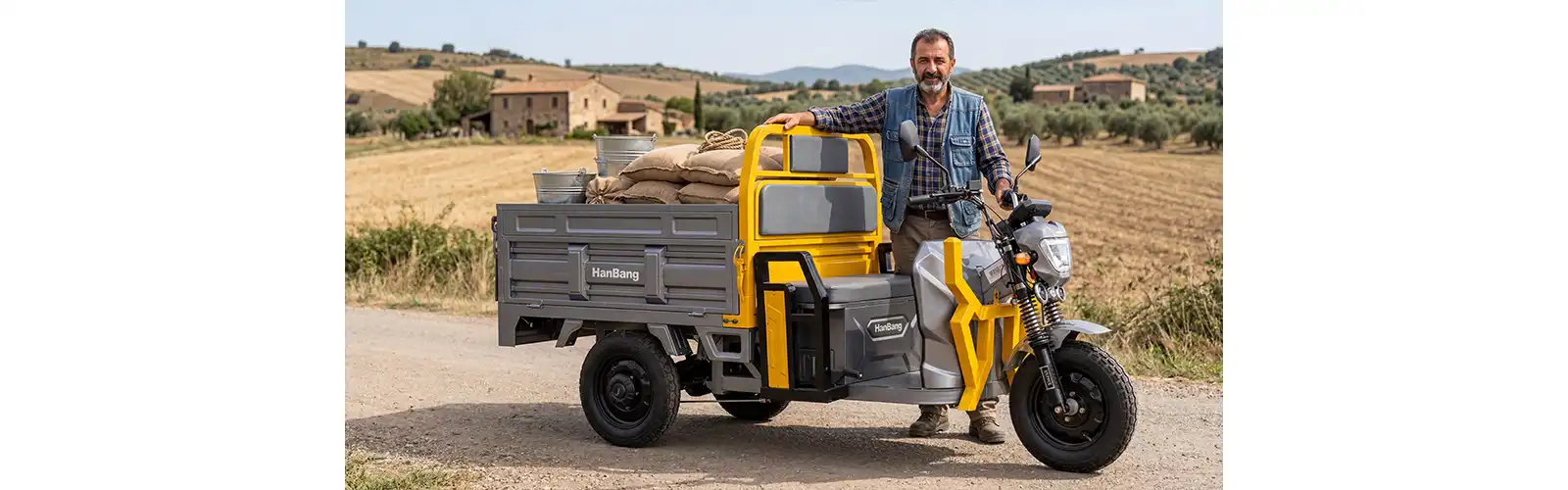
Understanding Hanbang Electric Three Wheeler Trucks: Specs and Core Features
The JIEBAO model shows Hanbang's engineering approach to business electric mobility. It combines strong specifications with useful design features that deal with operational problems that happen in the real world. This car's brain is a 60/72V 1500W motor matched with a 24-tube controller system. This system manages power smoothly, which increases the life of parts and keeps acceleration fast. The 72V 32Ah battery setup gives you 30–40 km of range per charge, which is based on heavy urban service scenarios rather than ideal test-track conditions.
Dimension and Load Configuration
The vehicle has a small size, measuring 2595 mm x 1030 mm x 1160 mm, making it ideal for tight delivery routes and crowded loading zones. With measurements of 1.3 x 1m, the cargo box can be loaded in a number of different ways to carry packages, farm produce, or repair tools. The vehicle can quickly switch from carrying people to carrying goods thanks to its foldable chair. This makes the most of the vehicle's usefulness for all of its different operating needs during the workday.
Suspension and Braking Systems
In cities with crumbling infrastructure and country areas with dirt access roads, the 37# hydraulic spring shock absorption system can handle roads that aren't level. This suspension setup keeps goods safe while it's being moved and keeps drivers from getting tired after long shifts. The front disc brakes and back drum brakes work together to make the braking system reliable, even when the vehicle is heavy. The built-in gear shift 160 rear axle distributes torque in a way that makes it easier to start from a stop when the load is full, which is very important for delivery jobs that involve starting and stopping a lot.
Certification and Compliance Framework
EEC, CCC, and ISO 9001 certifications are more than just pieces of paper; they prove that safety standards, quality management practices, and performance goals have been met. The EEC certification lets you drive on public roads in all member states of the European Union. In North America, similar certifications allow for legal registration and operation on all markets. These approvals give fleet managers peace of mind that cars meet insurance requirements and government standards. This gets rid of the compliance concerns that come with new vehicle technologies.
Advantages of Choosing Hanbang Electric Three Wheeler Trucks Over Traditional Alternatives
Changing from traditional tricycles that run on gas to EEC electric cargo tricycle 3 wheeler trucks isn't as simple as just switching power sources. It's a big change in how operations work, how they affect the world, and how much upkeep they need. Knowing these benefits helps you make the choice to invest in the first place and helps you plan for the long run of your fleet.
Zero Emission Urban Access
Emission-free running lets you get into areas that don't allow or limit internal combustion cars as much. Ultra Low Emission Zones and Zero Emission Zones in big cities charge daily fees or don't let regular cars go at all, which makes it hard for transport and service businesses to do their jobs. Electric tricycles get rid of these barriers to entry and also cut down on noise pollution, which is a big plus for early morning or evening transport windows in household areas. The lack of exhaust fumes also keeps drivers from being exposed to dangerous pollutants for long periods of time during long shifts in enclosed cargo areas.
Total Cost of Ownership Analysis
Getting rid of fuel is the most clear way to cut costs, but the benefits go further than that and include lower operating costs as well. Electric motors have fewer working parts than internal combustion engines, which means they don't need to be serviced as often and don't cost as much to repair parts. Not having to change the oil, replace the spark plugs, or fix the exhaust system means that the car is more available and has less downtime. Even when regional differences in utility rates are taken into account, the cost of electricity per kilometer is usually 60–70% less than the cost of gasoline or oil. Over the course of a normal five-year service life, these saves often add up to more than the price of the car itself.
Performance Consistency
The amount of power an electric motor delivers stays the same no matter the temperature, altitude, or time it takes for the engine to start up. These are all things that have a big effect on how well a combustion engine works. When drivers stop, the throttle responds right away, which cuts down on delivery times at each stop. The top speed of 25 km/h is right for transportation needs in cities, where normal speeds rarely go over 20 km/h because of traffic jams and lots of stops. This speed limit also lowers the severity of accidents and insurance rates, and it meets most city license requirements without the need for special business driver classifications.
These practical benefits get bigger over time and for all kinds of fleets. If you get rid of fuel costs and upkeep costs for a fleet of ten vehicles, you'll save money every year that you can use to buy more vehicles. This creates a positive cycle of fleet growth without corresponding increases in capital spending.
Optimizing Procurement of Hanbang Electric Three Wheeler Trucks for B2B Clients
To successfully electrify a fleet, you need to do more than just choose the right vehicles. You also need a complete buying strategy that covers funding, deployment logistics, training routines, and ongoing support structures. The Hanbang electric three wheeler truck procurement process can be changed to meet the needs of both small businesses buying single units and big logistics companies moving whole teams.
Flexible Acquisition Models
Direct buy choices are good for businesses that have the money and want to save money and own the assets in the long run. Businesses that focus on managing their cash flow or that operate in markets with uncertain regulatory settings can benefit from leasing deals because they give them budget freedom. With customized financing terms, payments can be set up to work with yearly changes in income that are common in businesses that depend on agriculture or tourists. The custom order production cycle of 25 working days lets the fleet grow in a way that fits with the company's growth plans, rather than causing early capacity adds or delayed expansion.
Customization Capabilities
Standardized cars don't always meet all practical needs without making any sacrifices. Hanbang's engineering team customizes motor power specs, cargo box layouts, color schemes, and logo elements based on what the customer wants. For high-value items, delivery companies can ask for enclosed cargo boxes with locking devices and lights inside. For bulk produce, farmers might choose open beds with reinforced bottoms and side walls that can be taken off. Maintenance teams for cities could ask for specific mounting places for tool shelves and equipment racks. This method to customization makes sure that vehicles fit in perfectly with current operating workflows, instead of making process changes to work around equipment limits.
Global Distribution and Support Infrastructure
A large network of dealers in the Americas, Africa, Europe, and Southeast Asia makes it easy to get in touch with people in those areas for initial consultations, car demos, and ongoing technical support. This spread-out structure gets rid of the contact problems and wait times that make buying tools from other countries harder. Regional parts distribution centers keep brake pads, tires, and controls, which are high-wear parts, in stock so that they can be replaced quickly without having to wait for cross-border shipping. Full installation guides, how-to videos, and free replacement parts for frequently worn parts make it easier for support staff to learn and reduce early-stage operating disruptions.
Ensuring Long-Term Performance: Maintenance and Usage Best Practices
The quality of the original build has as much to do with how long a vehicle lasts as how it is used and maintained. Using structured methods increases the return on investment and stops parts from breaking down early and causing unexpected downtime.
Battery Management Protocols
How you charge and remove lithium batteries has a direct effect on how long they last. Setting up charge schedules at the store that fill batteries to 80–90% of their full capacity instead of 100% can increase cycle life by 30% or more. Cell damage that gets worse over time can be avoided by avoiding deep shocks below 20% capacity. The built-in Battery Management System checks the voltages and temperatures of each cell, but workers should write down any danger signs and deal with them right away instead of waiting to look into them. In places where it gets cold, storing batteries in heated areas or using battery temperature management features stops them from losing power during the winter, when lithium chemistry works less well.
Scheduled Mechanical Inspections
Every month, the width of the brake pads, the pressure in the tires, the soundness of the suspension parts, and the safety of the electrical connections should all be checked. To keep the braking function of the hydraulic spring shock absorbers, the fluid level needs to be checked on a regular basis. Electrical connections that are too loose cause resistance, which in turn causes heat and speeds up terminal rust. A quick five-minute check can save hours of fixing later. Keeping thorough repair logs can help you find trends that point to premature wear, which could mean that the driver needs more training or that the route conditions mean that the vehicle's specs need to be changed.
Operational Efficiency Practices
Driving habits have a big effect on the range of a car and the wear and tear on its parts. The range is increased while brake wear is decreased by using smooth accelerating and regenerative stopping. The right load distribution keeps the frame from getting stressed and makes the vehicle easier to control. Keeping the right tire pressure lowers rolling resistance, which increases range by 5 to 8 percent and stops tires from wearing out too quickly. By teaching drivers these efficiency principles, you can turn them from simple workers into active asset protectors. A lot of fleet owners use gamification systems to keep track of how efficient their drivers are. This creates good incentives for drivers to do things that lower running costs.
Why Hanbang is the Preferred Global Supplier for Electric Three Wheeler Trucks?
When choosing an electric car provider, you need to look at more than just the product specs. You also need to look at the company's long-term manufacturing skills, quality systems, support infrastructure, and ability to stay in business. Hanbang's strong business background gives customers faith that the EEC electric cargo tricycle 3 wheeler truck units they buy today will still be able to get parts and repair years from now.
Manufacturing Excellence and Scale
Since 2010, Jiangsu Hanbang Vehicle Industry Group has built 150,000 square meters of smart production sites that can make a wide range of products. The whole process of making a car is done in four specialized workshops: pressing, welding, painting, and final assembly. Important tasks are not outsourced. Six high-end laser cutting units make sure that accurate parts are made, and two automatic intelligent robot welding lines with more than 20 robots provide consistent weld quality that can't be matched by human methods. The 1,800-meter high-end standard painting line puts on finishes that don't rust and make vehicles last longer in tough conditions. Annual production capacity reaching 300,000 units shows that the company has the size to support global marketing while keeping prices low by making the production process more efficient.
Quality Systems and Intellectual Property
Systematic quality management techniques are supported by ISO 9001 certification, but Hanbang's method goes beyond checking off compliance boxes. During production, there are many check points that find problems before they get to the assembly stage. This cuts down on guarantee claims and failures in the field. More than 10 provincial-level high-tech product approvals and nearly 200 domestic and foreign intellectual property patents show that investments in innovation are ongoing. This collection of patents shields customers from disagreements over intellectual property and shows off engineering skills that will help with the creation of new products in the future.
Global Market Presence and Experience
Products that are sent to almost 50 countries in the Americas, Africa, Europe, and Southeast Asia show that they can be adjusted to different regulatory settings, climates, and operating needs. This foreign knowledge helps with design choices that make the product more useful in a variety of situations. For example, vehicles meant for tropical markets have better ventilation, while vehicles made for cold climates have features that control temperature. Customer feedback from a variety of apps feeds into cycles of ongoing growth that help all buyers in the future. The reputation for "reliability and durability" comes from how well it has worked in the field over millions of working kilometers, not from marketing claims.
Conclusion
Hanbang electric three wheeler trucks are a tried-and-true solution to the pressing practical and environmental problems that plague modern shipping and transportation. The Hanbang JIEBAO model strikes a balance between useful standards, following the rules, and saving money in a way that helps businesses grow over time and in a variety of situations. These vehicles always do a good job, whether they're used for last-mile delivery logistics, farm transport, city services, or tourist operations. They also save money on fuel and maintenance. You can be sure that your investments in vehicles will pay off over their many-year work lives thanks to their extensive support infrastructure, ability to be customized, and high-quality manufacturing systems. As rules on emissions get stricter and the price of fuel stays unstable, electric tricycles move from being a secondary choice to becoming essential parts of the fleets of forward-thinking businesses.
FAQ
What license requirements apply to operating electric three wheeler trucks in the United States?
Different states and types of vehicles have different licensing rules. Vehicles that can only go 25 km/h are usually considered low-speed vehicles and need regular driver's licenses instead of business licenses. Depending on the weight of the goods and the number of passengers, some states require extra approvals. Checking the rules at the local Department of Motor Vehicles makes sure that you are following the rules in your area before deploying your Hanbang electric three wheeler truck fleet.
How long does battery charging take and what infrastructure is needed?
Standard 220V wall outlets can fully charge the 72V 32Ah battery configuration in 6 to 8 hours, so overnight charging at the base is a good option for most activities. Partially charging during breaks for lunch or route interruptions increases the working range so that shifts last longer. There is no need for expensive wall boxes or special charging infrastructure. Any building or garage with standard electricity service can charge multiple cars at the same time.
What warranty coverage and after-sales support does Hanbang provide?
Each car comes with a full protection that covers the motor, driver, and battery systems. The exact terms are spelled out when the car is bought. After-sales help includes full installation guides, upkeep videos with step-by-step instructions, and free replacement parts for parts that wear out quickly. The technical support team is available to help with practical questions and troubleshooting throughout the lifecycle of a car.
Transform Your Fleet with Hanbang Electric Three Wheeler Truck Solutions
Our team at Hanbang knows how hard it is to electrify a fleet and how important it is to choose cars that live up to their performance claims. The JIEBAO electric luggage bike is the result of over a decade of improving the manufacturing process and getting feedback from thousands of users around the world. As a top Hanbang electric three wheeler truck provider, we can offer factory-direct prices that don't include markups for distributors and can also make changes to the trucks to fit your needs. Email our sales team at nicole@xzmeidi.com to talk about your fleet needs, get full specs, or set up demonstration units to see how well they work before you commit.
References
1. International Energy Agency (2023). "Global EV Outlook 2023: Electric Vehicle Market Trends and Policy Analysis." IEA Publications.
2. Smith, J. & Wang, L. (2022). "Total Cost of Ownership Analysis for Electric Commercial Vehicles in Urban Logistics." Journal of Sustainable Transportation, 15(3), 234-251.
3. European Commission Directorate-General for Mobility and Transport (2023). "EU Regulation 168/2013: Type-Approval Requirements for Two or Three-Wheel Vehicles and Quadricycles."
4. Miller, R.D. (2023). "Battery Management Systems in Commercial Electric Vehicles: Best Practices for Longevity." Electric Vehicle Engineering Quarterly, 8(2), 112-129.
5. United States Department of Transportation (2023). "Low-Speed Vehicle Regulations and State-by-State Classification Standards." Federal Highway Administration Technical Report.
6. Chen, H., Rodriguez, M., & Kumar, S. (2022). "Emission Zone Policies and Their Impact on Commercial Vehicle Operations in North American Cities." Urban Mobility Research, 19(4), 445-462.