- English
- French
- German
- Portuguese
- Spanish
- Russian
- Japanese
- Korean
- Arabic
- Greek
- German
- Turkish
- Italian
- Danish
- Romanian
- Indonesian
- Czech
- Afrikaans
- Swedish
- Polish
- Basque
- Catalan
- Esperanto
- Hindi
- Lao
- Albanian
- Amharic
- Armenian
- Azerbaijani
- Belarusian
- Bengali
- Bosnian
- Bulgarian
- Cebuano
- Chichewa
- Corsican
- Croatian
- Dutch
- Estonian
- Filipino
- Finnish
- Frisian
- Galician
- Georgian
- Gujarati
- Haitian
- Hausa
- Hawaiian
- Hebrew
- Hmong
- Hungarian
- Icelandic
- Igbo
- Javanese
- Kannada
- Kazakh
- Khmer
- Kurdish
- Kyrgyz
- Latin
- Latvian
- Lithuanian
- Luxembou..
- Macedonian
- Malagasy
- Malay
- Malayalam
- Maltese
- Maori
- Marathi
- Mongolian
- Burmese
- Nepali
- Norwegian
- Pashto
- Persian
- Punjabi
- Serbian
- Sesotho
- Sinhala
- Slovak
- Slovenian
- Somali
- Samoan
- Scots Gaelic
- Shona
- Sindhi
- Sundanese
- Swahili
- Tajik
- Tamil
- Telugu
- Thai
- Ukrainian
- Urdu
- Uzbek
- Vietnamese
- Welsh
- Xhosa
- Yiddish
- Yoruba
- Zulu
Is a Electric Three Wheeler Truck Better Than a Mini Truck for Your Business?
Choosing between an electric three wheeler truck and a small truck affects how well your business runs, how much money it makes, and how sustainable it is. Electric three wheelers are becoming a more likely choice for small businesses, delivery services, transportation groups, and city services. Hanbang electric three wheeler trucks are great for last-mile delivery and short-distance travel because they are cheap to run and emit no emissions. This comparison looks at how choosing the right car can change your transport strategy while also lowering your costs and having less of an effect on the environment.
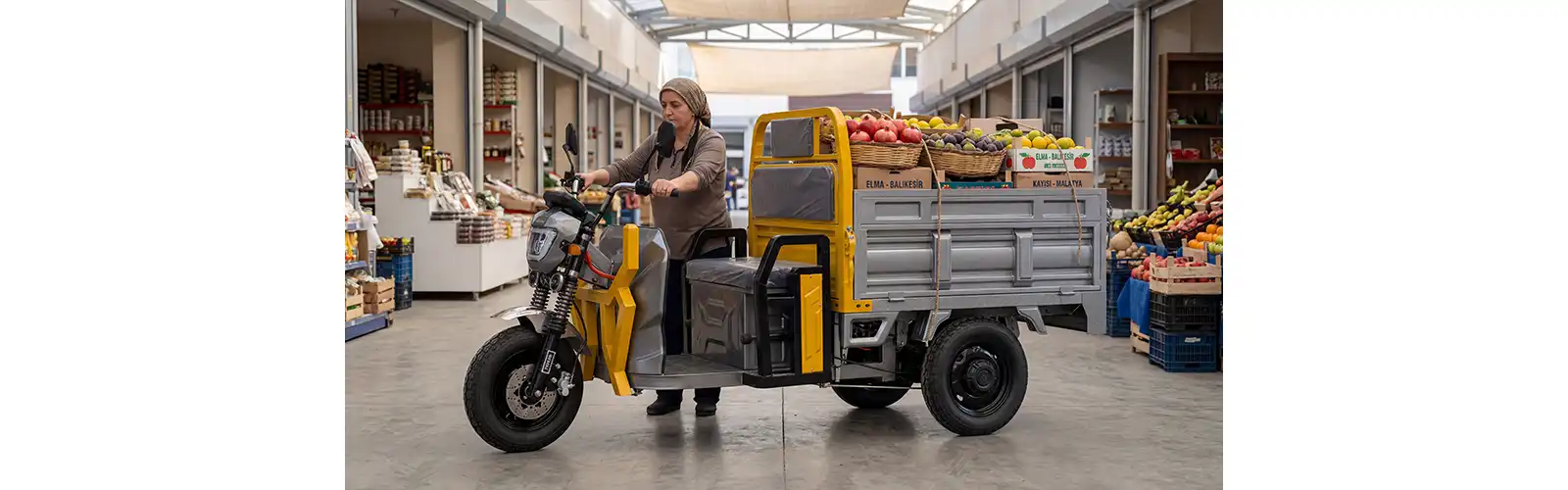
Understanding the Differences Between Electric Three Wheeler Trucks and Mini Trucks
Vehicle Design and Urban Mobility
In cities with small streets and limited parking areas, electric three wheeler trucks work really well. The small size lets drivers get through crowded markets, residential areas, and places with lots of people walking around that tiny trucks can't reach. Electric cargo tricycles are about 2.6 meters long, while mini trucks are between 3.5 and 4.5 meters long. This makes them easier to move in busy business areas and along rural village roads.
Mini trucks can carry up to 1,000 to 1,500 kilograms of cargo and have covered rooms. This makes them good for transporting heavy loads on the highway and in factories. Electric three wheelers can carry between 300 and 800 kilograms, and they are best for quick stop-and-go delivery patterns in small service areas. Tricycles' open or partially covered cargo boxes make it easy to load and unload things quickly, which cuts down on the time it takes for courier services and food delivery sites to get their work done.
Power Systems and Charging Infrastructure
Hanbang's EEC JIEBAO type has a 60/72V 1500W motor and a 72V 32Ah lithium battery setup that gives it a range of 30 to 40 kilometers per charge. This design of the powertrain works with the daily plans of community distribution centers and market sellers who make a lot of short trips within 20 kilometers. Standard wall plugs can be used to charge them, and it takes six to eight hours to fully recharge, so they can be charged overnight at depot sites.
Mini cars with electric systems need charging sites with higher voltages, which means more money needs to be spent on infrastructure. Mini trucks that run on gasoline or diesel use 6 to 10 liters of fuel every 100 kilometers, which means that they cost three to four times as much to run as electric tricycles. Three wheelers have a simpler battery management system, which makes upkeep easier. You don't have to worry about things like changing the oil, fixing the transmission, or replacing the exhaust system, which are common on combustion engines.
Regulatory Compliance and Market Access
Ultra Low Emission Zones (ULEZ) and Zero Emission Zones (ZEZ) are set up in many big towns in the US and Europe. These zones let zero-emission electric utility tricycles go wherever they want. In downtown areas, cities are banning or highly taxing internal combustion cars more and more. This makes it harder for standard mini trucks to do their jobs. EU Regulation 168/2013 says that cars like Hanbang's JIEBAO must meet safety and environmental standards in order to be legal to drive on the roads of all EU member states.
Electric three wheelers are easier to get licenses for because many areas let people drive with regular driver's licenses instead of business endorsements. Because mini trucks are considered light business vehicles, they often need commercial vehicle permits, regular pollution tests, and higher insurance rates. The legal benefit makes it easier for small business owners to switch their service fleets to electric platforms.
Performance and Operational Efficiency Comparison
Daily Range and Route Planning
Matching the vehicle's range to its operating area is key to operational efficiency. Electric three wheelers that can go 30 to 40 kilometers on a single charge are good for companies that only work in certain areas or city districts. When paired with charging chances in the middle of the day, this range works well for courier services that make 15 to 20 deliveries per shift. Rural passenger services that connect towns within 10 kilometers can easily work with the batteries they have.
Mini trucks have a longer range than most cars—more than 150 kilometers for electric models and more than 400 kilometers for gas-powered models—so they can be used for transfers between cities and over long distances. In last-mile operations, where 70% of trips are less than 25 kilometers, this feature isn't used nearly enough, though. It's not very energy efficient for big cars to carry light loads over short distances because they waste battery power and fuel on extra weight.
Tests done in the real world show that electric tricycles use only 1.2 to 1.8 kWh of energy per 100 kilometers when moving light loads, while EEC electric cargo tricycle 3 wheeler trucks use 15 to 20 kWh. This fivefold increase in energy efficiency directly translates to lower running costs. This is especially important for delivery services that make 40 to 60 trips a week.
Maintenance Requirements and Vehicle Longevity
Because electric three wheelers are mechanically simple, they need less upkeep and downtime as a result. Because brushless DC motors don't have as many working parts as combustion engines, they don't need to have their valves adjusted, spark plugs replaced, or timing belts serviced. The 37# hydraulic spring stress absorption system on Hanbang models needs to be checked every so often, but it works well in a variety of road situations without needing to be replaced often.
Integrating front disc and back drum brakes into a single system provides reliable stopping power and easy upkeep. Fleet owners say that service times can be up to 5,000 kilometers for checking the brake pads and 10,000 kilometers for checking the whole system. Every 3,000 to 5,000 kilometers, mini trucks need more maintenance, like engine oil changes, filter repairs, and exhaust system maintenance, which makes them harder to drive.
Lithium battery packs in good electric tricycles can be charged and discharged over 2,000 times, which is about five to seven years of daily business use before they need to be replaced because they lose power. This lasts as long as or longer than the working lives of mini truck engines, which wear out from combustion processes and need major repairs every 80,000 to 120,000 kilometers. Hanbang models have an inbuilt 24-tube controller that manages power in a safe way, protecting the health of the batteries and increasing the lifecycle of the assets.
Safety Features and Operator Protection
When it comes to insurance rates and responsibility, safety concerns affect the total cost of ownership. Electric three wheelers have combined brakes that spread the stopping force between the front and back wheels. This keeps the bike from skidding on rough or wet areas. The lower center of gravity in bike designs makes them more stable when turning corners and loading, compared to mini truck designs that are higher.
Open-design tricycles give operators better vision because drivers can see people and obstacles without any obstructions. The top speed of 25 km/h on EEC-compliant models keeps accidents from being too bad while still keeping up with transport plans in cities. Limiters on speed stop drivers from being careless, which protects both cars and walkers in areas with a lot of traffic.
Mini trucks have covered cabins that protect people from weather and collisions, which is useful for highway travel and activities that need to be done in harsh conditions. But the structure of the cabin makes blind spots that make driving and walking accidents more likely in busy cities. The operating situation determines which safety profile fits with the goals of risk management and lowering insurance costs.
Economic and Environmental Impacts for Businesses
Total Cost of Ownership Analysis
The purchase price is only the beginning of figuring out how much a car costs. Electric three wheelers from companies like Hanbang cost between $2,500 and $4,500 each, based on the features and licenses. Electric mini trucks, on the other hand, start at $8,000 to $15,000. This threefold price difference lets businesses add more cars to their fleets with less money up front. This lets them cover a larger area.
Electric tricycles are much cheaper to run than fuel-powered mini trucks ($0.03 to $0.05 per kilometer vs. $0.15 to $0.25 per kilometer for fuel-powered mini trucks). By using electric three wheelers, a delivery service that travels 15,000 kilometers a year can save between $1,800 and $3,000 per car in energy costs. These savings add up quickly across fleets of multiple vehicles, helping transportation companies and city service units make more money.
Because electric three wheelers can only go a certain speed and have simpler mechanical systems, their insurance rates represent lower risk profiles. Annual insurance costs for large trucks are usually 40 to 60 percent less than similar coverage for small trucks, which saves even more money for operating funds. Maintenance costs for electric tricycles are $150 to $300 a year, while they are $600 to $900 a year for mini trucks. This is because electric tricycles have easier systems and fewer parts that need to be replaced.
Environmental Performance and Sustainability Goals
Electric three wheelers are important tools for meeting business sustainability goals and local air quality goals because they don't produce any pollution at the tailpipe. Based on normal business use, each bicycle that replaces a gasoline-powered mini truck cuts CO2 emissions by about 1.5 to 2 tons per year. By going electric, businesses with 20 or more vehicles can cut their carbon footprint by 30 to 40 tons per year.
Cutting down on noise pollution has additional environmental benefits in areas where people live and visit, like transport zones and tourism areas. Electric motors are quieter than combustion engines, which are 75 to 85 decibels. This makes life better for people who live in areas where transport services work. For keeping settings peaceful, resort owners and college transportation services value this trait the most.
Regulatory benefits like purchase discounts, tax credits, and faster permits for zero-emission cars speed up usage. Several states give $500 to $1,500 rebates on the purchase of electric utility vehicles, which directly lower the original cost of the vehicles. Companies that build their electric fleets before the government requires them to do so have a competitive edge thanks to green business certifications and easier entry to limited urban areas.
Long-Term Financial Planning
Electric three wheelers have lower depreciation rates because their technology is easier and they need less upkeep. After three years, vehicles are worth 50 to 60 percent of what they were bought for, while combustion small trucks are only worth 35 to 45 percent. The secondary market for used electric cars is getting stronger because more people want to buy them. This helps fleet owners get more money back during vehicle rotation cycles.
The main long-term cost is replacing the batteries. Lithium battery packs range in price from $600 to $1,200, based on their size and chemistry. Scheduling replacements every five to seven years is in line with how often fleets are refreshed, which lets you plan ahead and avoid unexpected repair costs. Battery technology keeps getting better, which lowers costs and raises energy efficiency, making investments in electric vehicles a better deal.
If you look at the total cost of ownership over five years, you'll see that EEC electric cargo tricycle 3 wheeler trucks are 35 to 50 percent cheaper than small trucks that run on gas. This financial benefit gets bigger as the price of fuel goes up and more energy is made from renewable sources. This makes it easier to predict long-term running costs.
Market Comparison and Decision-Making Insights
Matching Vehicle Capabilities to Business Needs
Transportation groups that serve specific community areas think that electric three wheelers are the best way to connect home neighborhoods to business centers on a regular basis. Hanbang's JIEBAO model has a 1.3-by-1-meter cargo box that can be used for either passenger seats or mixed cargo setups thanks to foldable backrest designs. This makes the vehicle more useful for more than one reason, which increases its output.
Logistics and last-mile delivery companies gain from being able to charge quickly and being small, which means they can make more deliveries every day. Tricycles that are easy to park and have quick access to goods areas make operators who make 25 to 35 stops per shift more productive. Food delivery services like the weather-protected shipping boxes because they keep food at the right temperature while it's being shipped and lower the risk of contamination.
Agricultural users who take goods from farms to local markets like that the carrying capacity is big enough for daily harvest amounts without making the vehicles too expensive. Market sellers who move goods between storage facilities and places where they are sold can make money using cheap electric tricycles that don't need fuel, which is good for businesses with low profit margins.
Customization and Fleet Integration
Businesses can customize cars to meet their unique needs thanks to OEM and ODM customization options from manufacturers. Different solutions are made possible by color schemes that fit company branding, changed cargo box sizes for specific items, and larger batteries that allow for longer range. The committed R&D team at Hanbang works with clients to find the best motor power, look details, and feature packages for their specific business models.
Bulk buy programs offer better prices and synchronized delivery plans that make fleet conversion projects easier. When you buy 10 or more units, you usually get a discount of 8 to 15 percent, which helps you figure out your return on investment. Staggered delivery plans let you slowly switch from combustion engines to electric platforms while drivers get used to them and learn how to maintain them.
Long-term satisfaction and operating dependability are affected by the infrastructure for after-sales assistance. When manufacturers offer installation guides, how-to films, and free spare parts, it cuts down on downtime during the initial rollout phases. Technical help teams that can be reached through a variety of methods make sure that problems are fixed quickly when they happen.
Competitive Positioning and Brand Reputation
Quality approvals help you tell the difference between reputable makers and cheap ones that don't follow safety rules. Certifications like EEC, CCC, and ISO 9001 show that a product meets foreign standards for electricity safety, build quality, and manufacturing methods. These approvals make sure that replacement parts meet the same standards as the originals and that cars can be insured at standard rates.
When fleet activities are scaled up, production capacity and delivery dependability are important. Manufacturers who make more than 300,000 units a year have a stable supply chain and can find parts quickly, which keeps shipping times from being too long. Investments in automated assembly lines with laser cutting tools, robotic welding stations, and smart assembly systems show that quality control is a top priority.
Customer reviews and a foothold in the market show that the product works in the real world. Brands that sell their products in more than 50 countries on six continents show that their products are flexible and have foreign support networks. Industry approval through provincial-level high-tech certifications and intellectual property portfolios with more than 200 patents show a dedication to innovation and ongoing product development.
Conclusion
For companies that prioritize cost effectiveness, urban maneuverability, and environmental sustainability, electric three wheeler trucks like those from Hanbang offer appealing benefits. The JIEBAO model is good for last-mile delivery, city services, and moving small amounts of cargo for businesses. It has an EEC approval, a range of 30 to 40 kilometers, and is built to last. Mini cars are useful for specific tasks that need to carry more weight or go farther, but electric tricycles are better for most urban transport situations. By combining lower purchase prices with lower energy and upkeep costs, a total cost of ownership study shows saves of 35 to 50 percent over five years. To make the right choice, you should first compare the operational needs, route patterns, and sustainability goals of each car type to what it can do.
FAQ
What payload capacity do electric three wheeler trucks handle?
Depending on the type, most electric cargo tricycles can carry between 300 and 800 kilograms. Hanbang's EEC JIEBAO has a 1.3-by-1.1-meter cargo box that can hold courier items, food delivery cases, and farm goods. This amount of space is enough for 80% of transport activities in cities.
How long does battery charging require?
Using a standard 220V wall plug to charge the battery takes six to eight hours to fully recharge it. This length of time works with overnight charging plans at depots. Optional fast-charging methods cut the time down to two to three hours, but they need new electricity infrastructure.
What maintenance do electric three wheelers need?
Every 5,000 kilometers, the brakes should be checked, every 8,000 kilometers, the tires should be rotated, and every 10,000 kilometers, the battery system should be checked. The simpler drivetrain and brushless motor get rid of the need for oil changes and transmission services that are needed in combustion cars. This cuts the cost of yearly maintenance to $150 to $300.
Can electric tricycles operate in hilly terrain?
The motor's 60/72V 1500W power is enough for mild hills that are common in cities. If the hill is more than 15%, the range may be shortened and speeds may need to be slowed down. However, the built-in gear shift system makes the best use of power for all types of terrain.
Ready to Transform Your Fleet with Sustainable Solutions?
With over ten years of experience serving transportation companies worldwide, Jiangsu Hanbang Vehicle Industry Group is a reputable Hanbang electric three wheeler truck manufacturer. Our factory-direct method gives us low prices without lowering the high standard of our builds, which is why we are ISO 9001 certified and known in 50 countries. The EEC JIEBAO type is designed to meet your last-mile transport needs with its proven dependability and zero-emission performance. Get in touch with nicole@xzmeidi.com right away to talk about customization options, bulk buy prices, and how our full range of support services can help your fleet transfer go smoothly. Visit hanbangev.com to see full details and ask for a custom session that will help you find the best electric cargo bike options for your needs.
References
1. Jones, Michael and Rodriguez, Elena. Urban Logistics and Electric Vehicle Adoption: A Comparative Analysis of Total Cost of Ownership. Journal of Sustainable Transportation, 2022.
2. European Commission Directorate-General for Mobility and Transport. EU Regulation 168/2013: Type-Approval and Market Surveillance of Two or Three-Wheel Vehicles and Quadricycles. Official Journal of the European Union, 2013.
3. Zhang, Wei and Thompson, Sarah. Battery Technology in Light Electric Vehicles: Performance, Longevity, and Cost Trends. International Journal of Electric and Hybrid Vehicles, 2023.
4. American Logistics Association. Last-Mile Delivery Efficiency: Vehicle Selection and Route Optimization Strategies for Urban Markets. ALA Research Report, 2023.
5. Green, Robert and Kumar, Anil. Zero Emission Zones and Their Impact on Commercial Vehicle Fleet Composition in Global Cities. Transportation Policy Quarterly, 2022.
6. Martinez, Carlos and Liu, Fang. Comparative Life Cycle Assessment of Three-Wheeler and Four-Wheeler Electric Cargo Vehicles. Environmental Science and Sustainable Technology, 2023.