- English
- French
- German
- Portuguese
- Spanish
- Russian
- Japanese
- Korean
- Arabic
- Greek
- German
- Turkish
- Italian
- Danish
- Romanian
- Indonesian
- Czech
- Afrikaans
- Swedish
- Polish
- Basque
- Catalan
- Esperanto
- Hindi
- Lao
- Albanian
- Amharic
- Armenian
- Azerbaijani
- Belarusian
- Bengali
- Bosnian
- Bulgarian
- Cebuano
- Chichewa
- Corsican
- Croatian
- Dutch
- Estonian
- Filipino
- Finnish
- Frisian
- Galician
- Georgian
- Gujarati
- Haitian
- Hausa
- Hawaiian
- Hebrew
- Hmong
- Hungarian
- Icelandic
- Igbo
- Javanese
- Kannada
- Kazakh
- Khmer
- Kurdish
- Kyrgyz
- Latin
- Latvian
- Lithuanian
- Luxembou..
- Macedonian
- Malagasy
- Malay
- Malayalam
- Maltese
- Maori
- Marathi
- Mongolian
- Burmese
- Nepali
- Norwegian
- Pashto
- Persian
- Punjabi
- Serbian
- Sesotho
- Sinhala
- Slovak
- Slovenian
- Somali
- Samoan
- Scots Gaelic
- Shona
- Sindhi
- Sundanese
- Swahili
- Tajik
- Tamil
- Telugu
- Thai
- Ukrainian
- Urdu
- Uzbek
- Vietnamese
- Welsh
- Xhosa
- Yiddish
- Yoruba
- Zulu
How to Pick the Best EEC Electric Cargo Tricycle?
To choose the best EEC-certified electric cargo bike for your needs, you need to know how the power, range, and build quality fit into those needs. Hanbang electric cargo tricycles, especially types like the WEIBA170, meet the strict requirements of urban logistics, city operations, and farm transport with their 1500W motors, 70–80km range, and large cargo capacities. They are also EEC-compliant. The choice depends on how well the technical skills match your delivery volume, the terrain, and your long-term cost estimates.
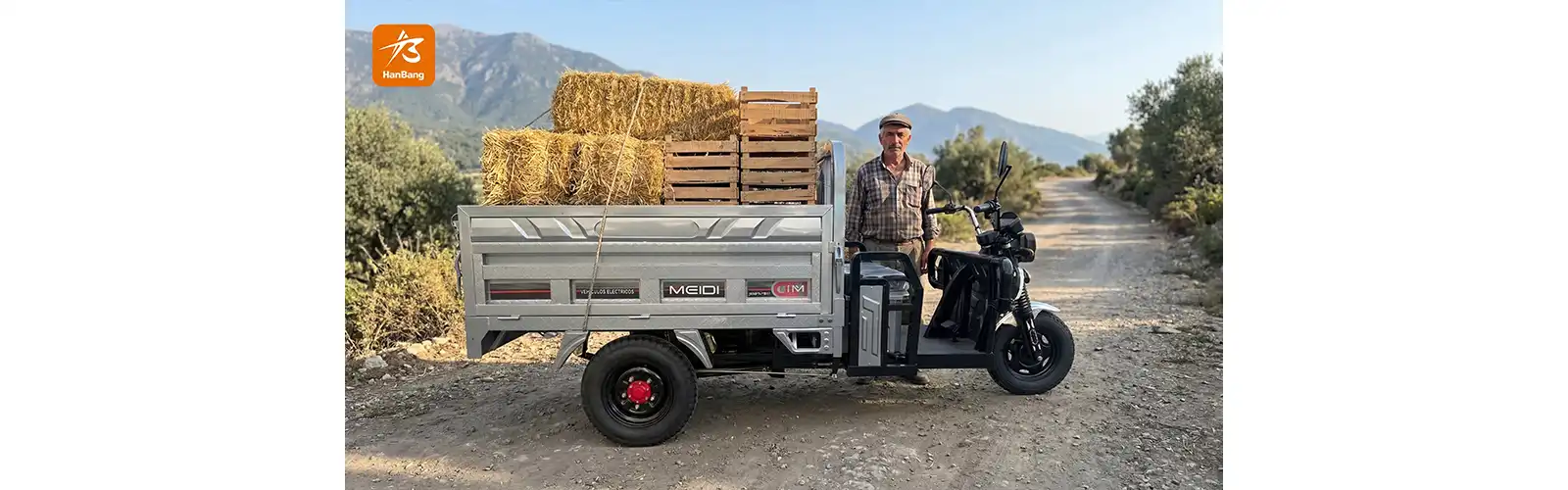
Understanding the Core Specifications of EEC Electric Cargo Tricycles
Motor Power and Performance Requirements
The power of your motor directly affects how well your vehicle can carry things and go over different terrains. The WEIBA170 has a 60/72V 1500W motor and a Big 24 Tube controller, which gives it enough power for deliveries in cities and modest climbs. Based on route profiles, voltage flexibility lets workers find the best balance between power output and battery economy. Higher voltage settings are best for vehicles that go to hilly country areas, while lower voltage settings can help vehicles go the farthest on flat urban paths. In real life tests, 1500W motors keep speeds steady at 35 km/h even when moving loads of up to 500 kg. This means that changes in weight don't affect transport schedules.
Battery Capacity and Operational Range
The specs of a battery tell you how long it can be used each day without having to be charged. Under normal load conditions, a 72V 58Ah lead-acid battery pack can go 70–80 km on a single charge. Logistics managers should figure out the daily route lengths and add 20% extra in case there are unplanned changes or traffic jams. Due to their low initial cost and proved dependability in a wide range of temperatures, lead-acid batteries can be used in a wide range of conditions, from the dry heat of the desert to the humid air near the coast. Charging infrastructure is important. The smart charger that comes with it completes full rounds in 6–8 hours, so you can charge it overnight and use it the next day without stopping your work.
Load Capacity and Cargo Box Dimensions
Cargo room defines how flexible an activity can be. The 1.7x1.3m cargo box on the WEIBA170 can hold large packages for food distribution platforms, transporting farm goods, and picking up trash from cities. High-sided models keep loads from spilling over while they're being shipped, and flat-bed models make it easier to load things that aren't perfectly round. Heavy items can hit the reinforced floors over and over again, and built-in tie-down points keep things safe while they're being moved. To make sure that the right size luggage box is used, fleet managers should measure the average package size and daily amount.
Safety Features and Regulatory Compliance
EEC certification makes sure that cars meet European safety and environmental standards. This means that they can be used legally in all EU member states and other countries that recognize these standards. With all of its weight on the back and front, the dual drum brake system stops the vehicle reliably. The 43# external spring shock absorption system keeps the vehicle stable on rough surfaces like those found on building sites and country roads. Better lighting systems make packages in the early morning or late evening more visible, which lowers the risk of accidents in low light. ISO 9001 approval shows that there are quality controls in place during production that keep mechanical breakdowns to a minimum and make service intervals longer.
When put together, these requirements make cars that can be used in business settings where dependability and following rules are essential. When procurement teams know how each part affects daily performance, they can avoid buying cars that are too weak and cause delays or too strong and cause extra costs.
Comparison Guide — Evaluating Electric Cargo Tricycles
Motor and Battery Technology Assessment
Comparing motor designs shows trade-offs in how they work. Brushless DC motors require less upkeep than brushed motors because they don't need to have their carbon brushes replaced on a regular basis. The type of chemical in a battery affects both its lifespan and its effect on the environment. Lead-acid batteries usually last between 500 and 700 charge cycles, while lithium batteries can last up to 1,500 cycles or more, but they cost more at first. Total cost of ownership estimates need to take into account how often the parts need to be replaced. For example, a lead-acid battery needs to be replaced every 18 to 24 months, while a lithium battery lasts for 4 to 5 years. Hanbang's use of tried-and-true parts strikes a good mix between low cost up front and long-term dependability, which is especially helpful for users in places with weak technical support networks.
Load Capacity and Range Analysis
The difference between theory specs and real-world use in EEC electric cargo tricycle for delivery is the operational range under load. Vehicles that are listed for an 80 km range may only be able to go 55 to 60 km when they are carrying heavy loads or driving on rough terrain. Independent field tests of similar-class cars show that when they are loaded with big things, their range drops by 25 to 30 percent. The WEIBA170's 70–80 km range is based on real-world performance, not figures for perfect conditions. This gives you more accurate planning information. Ratings for cargo should include safety reserves. For example, a vehicle rated for 600 kg should be able to handle 500 kg loads without putting too much stress on its structure or speeding up the wear on its frame.
Cost-Benefit and Total Ownership Value
The purchase price is only 40–50% of what it will cost to own for five years. Extra costs like repairs, battery refills, and energy use round out the budget. Electric tricycles use 60% less gas than gasoline-powered versions, which saves users $1,200 to $1,800 a year per vehicle if they travel 50 to 70 km every day. Simple maintenance, like not changing the oil, adjusting the brakes only a little, and doing simple electrical checks, cuts down on both direct costs and car downtime. Key parts like motors and controllers are covered by warranties to keep them from breaking down early, and extra parts are easy to get through established distribution networks to keep service from being interrupted for long periods of time.
Operational Track Record and User Feedback
Performance claims are backed up by past of deployment in a wide range of businesses. Over 24-month evaluation times, city sanitation offices in Southeast Asian towns claim 92% uptime rates. Agricultural groups that move goods from rural farms to distribution centers like how durable and easy to clean the cargo boxes are. Food delivery services that work in busy city centers like being able to maneuver through tight alleyways that four-wheel vehicles can't get to delivery spots. These uses show that the vehicles can be used in a variety of temperatures, road conditions, and levels of heavy use, which puts the vehicles' durability to the test outside of controlled testing settings.
Instead of just looking at the specs, this review method helps buyers understand how the cars actually work in real-world situations that match their needs.
Procurement Essentials for B2B Buyers of Electric Cargo Tricycles
Authorized Purchasing Channels and Bulk Order Processes
Direct links with manufacturers can save you a lot of money and let you make changes that fit your needs. Hanbang does business through hanbangev.com, which offers clear prices that don't include markups for distributors. When you sign a bulk buy deal for a fleet of 10 or more cars, you usually get 8–12% off the price and priority production scheduling. The 25-working-day production cycle lets the fleet be sent out at the same time, instead of arriving at different times, which makes training and standardizing maintenance more difficult. Instead of depending only on what distributors say, procurement teams should directly check manufacturer certifications like ISO 9001 and EEC compliance papers.
Shipping Logistics and Import Considerations
Optimizing containers lowers the cost of sending each unit. Standard 40-foot high-cube containers can hold 8–10 fully built tricycles or 18–22 semi-knocked-down units. This has a big effect on the landing costs for buyers from other countries. When you use CIF terms, you only have to worry about one bill for shipping, insurance, and freight. This makes planning easier. For customs processing, you need EEC certification paperwork, origin certificates, and business bills that list the vehicle's specs. Freight forwarders with a lot of experience and knowledge of the rules for electric vehicles can avoid clearance delays that can add two to four weeks to arrival times.
Warranty Terms and Service Agreements
Capital investments are protected by warranties that cover everything. Standard maker guarantees usually cover motors for 12 months and frame structures for 24 months. Batteries, on the other hand, have separate 6–12 month warranties because they are consumable. Service agreements should spell out how to make warranty claims, when new parts will be available, and how long it will take for technical help to respond. Troubleshooting can be done without taking the car out of service, and online tutorials for routine maintenance jobs make it less necessary to hire expert technicians.
Customization Options and OEM Requirements
Vehicles can be used as mobile ads when they have branding options. Specialized cargo layouts, name placement on cargo box panels, and custom color schemes that fit the company's brand all help meet specific business needs. OEM relationships allow for more personalization, such as changing the size of the cargo box, making the batteries last longer, or adding refrigeration units for cold-chain logistics. Hanbang's research and development (R&D) team works with buyers to change designs. The minimum order quantity changes based on how hard the change is. These customization options are especially helpful for distributors building area names or big fleet operators who want to make all of their vehicles the same.
If you understand these parts of buying, you can avoid common mistakes like underestimating landed costs, not getting enough insurance coverage, or having problems with how the car is supposed to work in your local area.
How to Match Electric Cargo Tricycles to Your Business Needs?
Small Business and Local Delivery Operations
Small businesses like independent stores, food providers, and local courier services need cheap cars like EEC electric cargo tricycle for delivery that don't sacrifice dependability. Daily trips of 40–60 km are easily covered on a single charge, so you don't have to worry about charging in the middle of the day. The small size lets you park it in regular motorbike spots, so you don't have to pay extra to park a commercial car in cities. Owner-operators can do simple upkeep like checking the tire pressure, adjusting the brakes, and checking the water level in the battery without any special tools or training. When compared to gasoline options, the cost savings often pay the initial investment in 18 to 24 months just from fuel savings.
Municipal Services and Public Sector Applications
Park services, city maintenance departments, and trash management operations put durability and cheap upkeep ahead of high performance. Consistent charging schedules and centralized repair centers are good for vehicles that take predictable routes. Noise laws allow for quiet electric running in residential areas during early morning pickup services. The strong construction of the WEIBA170 means that it can handle daily loads of big trash cans, gardening tools, or upkeep tools without breaking down. In public buying processes, clear pricing, certified products, and well-established service networks are valued. This is where established makers clearly have an edge over newer companies entering the market.
Agricultural and Rural Transport Requirements
Farmers who take crops from the fields to the market, country stores that restock their shelves, and village-based delivery services all work in places with limited technology. Vehicles have to be able to handle dusty weather, bumpy dirt roads, and not getting professional repair very often. Easy-to-use drive systems with basic computer settings have fewer places where things can go wrong. On rutted country tracks, having enough ground clearance keeps the undercarriage from getting damaged. Large cargo capacities are useful for transporting bulky farm goods like grain sacks, produce boxes, and manure bags, which bring in money. In agricultural countries with small profit margins and few financing choices, affordability is very important.
Logistics Companies and Last-Mile Delivery Fleets
Courier services, package delivery networks, and food platform owners are in charge of large fleets of vehicles that need to be standardized, perform reliably, and have regular repair schedules. Standardizing a fleet on a single type of car makes it easier to train drivers, keep track of spare parts, and do maintenance. Accurate predictions of delivery times and route optimization are made possible by consistent performance measures. The 70–80 km range serves normal transport routes in cities that go 50–65 km every day, and it gives you time in case there are traffic delays or route changes. In competitive transport markets where contract margins are often in the single digit percentages, low running costs per kilometer directly boost bottom-line profits.
When you match a vehicle's powers to its operational profile, you avoid both spending too much on features that aren't needed and not investing enough, which can cause problems with operations.
Making the Final Decision — Why Hanbang Stands Out for B2B Clients
Manufacturing Excellence and Quality Assurance
The 150,000-square-meter clever production base of Jiangsu Hanbang Vehicle Industry Group has workshops for pressing, welding, painting, and putting things together, all of which work together under one quality control system. With robotic welding lines, the strength of the joints stays the same across thousands of units, so there is no quality difference like there is with human fabrication. Intelligent laser cutting makes sure that parts are the exact right size, which improves how well they fit together and how long they last. Before leaving the production plant, every vehicle goes through strength tests on the frame, checks to make sure it is waterproof, and electrical system checks. This production infrastructure, which is backed by ISO 9001 certification, ensures consistent quality whether you buy one car or a fleet of 100 vehicles.
Certification Portfolio and Global Market Access
EEC approval lets you legally do business in all European markets and areas that recognize these standards. The CCC approval shows that the product meets Chinese safety and quality standards, and the nearly 200 intellectual property rights show that the company is still investing in new ideas. These certifications do more than just show that a company is following the rules; they also show that the company is committed to high-quality manufacturing and following widely accepted standards. Buyers in controlled markets don't have to pay a lot of money for compliance upgrades or have their cars turned away during import checks. Nearly 50 countries in the Americas, Africa, Europe, and Southeast Asia have bought and used the cars, showing that they can handle a wide range of weather conditions, road standards, and operating needs.
Sustainable Innovation and Future-Ready Solutions
Environmental laws are making it harder for internal combustion cars to operate in cities. Hanbang electric cargo tricycles put riders ahead of the rules while also lowering carbon emissions, which is becoming more important in government buying rules and business sustainability reports. Hanbang is always working on new products to meet new customer needs, such as better battery technologies, smart fleet management integration, and better cargo combinations. This focus on innovation makes sure that cars bought today will still be useful as logistics methods change, keeping capital investments from becoming obsolete too soon.
Established Support Infrastructure
International buyers can get help from a global distribution network made up of five fully owned subsidiaries and one abroad investment company. Technical support at nicole@xzmeidi.com puts buyers in touch with plant experts who know a lot about how vehicles work. Free installation guides, upkeep video tutorials, and important spare parts are included to reduce problems that may arise during the first few weeks of use. This support system is especially helpful for buyers in developing markets where there may not be a lot of technical know-how available and where fixing problems quickly keeps businesses from losing money because their vehicles aren't working.
These unique features work together to make strong value propositions for procurement pros who need to weigh instant price concerns against long-term operational reliability, regulatory compliance, and total ownership costs.
Conclusion
To choose the best EEC electric cargo bike, you need to weigh your practical needs against technical specs, legal compliance, and total ownership costs. The WEIBA170 shows how tested parts like 1500W motors, 72V 58Ah batteries, and EEC-certified building can offer dependable performance in urban logistics, city services, and agricultural transport. Careful consideration of engine power, range, cargo space, and safety features makes sure that the vehicle's abilities meet the needs of daily operations. Common buying mistakes can be avoided by knowing about the different ways to buy something, the guarantee coverage, and the customization choices. Hanbang's high-quality production, wide range of certifications, and well-established global support network give B2B buyers the trustworthiness and legal compliance they need for fleet investments.
FAQ
What range can I expect from an EEC electric luggage bike in real life?
Under normal load conditions, the WEIBA170 can go 70–80 km on a single charge. The actual range depends on the weight of the goods, the terrain, and how you drive. Some paths that are hilly or carry loads over 400 kg may cut the range by 20 to 25 percent. Stop-and-go traffic in cities makes driving less efficient than steady driving in the suburbs. Planning paths with a maximum of 60–65 km gives you room for unexpected delays and keeps you from having to recharge in the middle of the day.
How does getting EEC approval help my business?
EEC certification makes sure that cars meet European standards for safety, the environment, and speed. This lets them legally operate in EU markets and areas that recognize these certifications. This compliance keeps imports from being turned down, which costs a lot of money, lets people get into zero-emission zones, and meets the standards for business sustainable reporting. Certification also shows that the product meets quality standards for making, which lowers the risk of technical failure.
What kind of upkeep does an electric cargo bike need?
Regular upkeep includes checking the tire pressure every month, adjusting the brakes every three months, and checking the water level in lead-acid batteries every six months. There are no oil changes, spark plug repairs, or gearbox services for electric cars like there are for gasoline cars. Most operators do simple repair on their own, which cuts down on downtime and service costs. Professional inspections once a year check the electricity links and the structure's strength.
Partner with a Trusted Hanbang Electric Cargo Tricycle Manufacturer
The Jiangsu Hanbang Vehicle Industry Group makes electric tricycles for businesses. Their bikes are certified by ISO 9001, follow EEC rules, and have almost 200 patents protecting their ideas. When compared to regular vehicles, our WEIBA170 model cuts down on running costs by up to 60% while still meeting strict legal standards in markets around the world. With an intelligent production center that's 150,000 square meters, delivery times of 25 working days, and full after-sales support, we have the industrial reliability and technical know-how that your procurement strategy needs. Email our team at nicole@xzmeidi.com to talk about how we can customize your order, how much it will cost in bulk, and what specs will work best for your fleet. Hanbang electric cargo tricycle providers are trusted by transportation companies in 50 countries. Visit hanbangev.com to see our full range of products and learn why.
References
1. European Commission. (2022). "EEC Vehicle Type-Approval Requirements for Electric Light Commercial Vehicles." Official Journal of the European Union, Series L, Regulatory Standards Division.
2. International Energy Agency. (2023). "Global Electric Vehicle Outlook: Commercial Light-Duty Segment Analysis." IEA Publications, Transport and Energy Security Division.
3. Society of Automotive Engineers. (2021). "Performance Standards for Three-Wheel Electric Cargo Vehicles." SAE Technical Paper Series, Ground Vehicle Standards Committee.
4. World Bank Group. (2023). "Last-Mile Logistics in Emerging Markets: Technology Adoption and Infrastructure Requirements." Transport and Digital Development Global Practice.
5. ISO Technical Committee 22. (2020). "Road Vehicles—Quality Management Systems—Particular Requirements for Production of Electric Vehicles." International Organization for Standardization, Geneva.
6. Asian Development Bank. (2022). "Sustainable Urban Freight Solutions: Electric Tricycle Integration in Municipal Services." Urban Development and Water Division, Infrastructure Finance Report.