- English
- French
- German
- Portuguese
- Spanish
- Russian
- Japanese
- Korean
- Arabic
- Greek
- German
- Turkish
- Italian
- Danish
- Romanian
- Indonesian
- Czech
- Afrikaans
- Swedish
- Polish
- Basque
- Catalan
- Esperanto
- Hindi
- Lao
- Albanian
- Amharic
- Armenian
- Azerbaijani
- Belarusian
- Bengali
- Bosnian
- Bulgarian
- Cebuano
- Chichewa
- Corsican
- Croatian
- Dutch
- Estonian
- Filipino
- Finnish
- Frisian
- Galician
- Georgian
- Gujarati
- Haitian
- Hausa
- Hawaiian
- Hebrew
- Hmong
- Hungarian
- Icelandic
- Igbo
- Javanese
- Kannada
- Kazakh
- Khmer
- Kurdish
- Kyrgyz
- Latin
- Latvian
- Lithuanian
- Luxembou..
- Macedonian
- Malagasy
- Malay
- Malayalam
- Maltese
- Maori
- Marathi
- Mongolian
- Burmese
- Nepali
- Norwegian
- Pashto
- Persian
- Punjabi
- Serbian
- Sesotho
- Sinhala
- Slovak
- Slovenian
- Somali
- Samoan
- Scots Gaelic
- Shona
- Sindhi
- Sundanese
- Swahili
- Tajik
- Tamil
- Telugu
- Thai
- Ukrainian
- Urdu
- Uzbek
- Vietnamese
- Welsh
- Xhosa
- Yiddish
- Yoruba
- Zulu
EEC Electric Cargo Tricycles - Reliable Transport Solutions
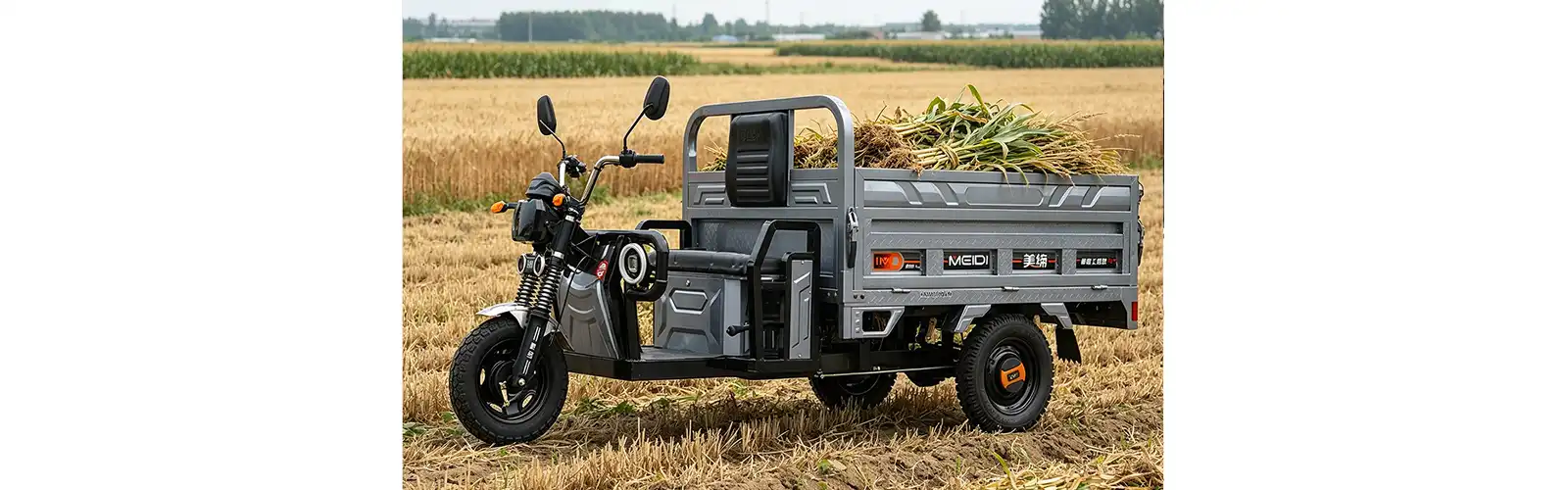
When you need to make deliveries quickly and gas prices go up, Hanbang's electric luggage tricycles are a good option. The WEIBA170 model has a strong 60/72V 1500W motor and a large 1.7×1.3m load box. It has an EEC license that makes it legal to ride on European roads and a range of 70 to 80 km per charge. Hanbang electric cargo tricycles solve the problems that logistics companies, city fleets, farm dealers, and small business owners face in global markets. The company has been making these bikes for more than ten years and has almost 200 patents for their inventions.
Understanding Hanbang Electric Cargo Tricycles: Specifications & Performance
Core Technical Specifications of the WEIBA170
The WEIBA170 stands out because it is 3200mm long, 1380mm wide, and 1680mm high. It has a lot of cargo room without making it hard to move around in cities. Its 1500W brushless motor gives it steady speed on a wide range of surfaces, from city streets to access roads in the country. The 72V 58Ah lead-acid battery system comes with a clever charger that can fully charge the batteries in 6 to 8 hours if they are charged overnight.
The Big 24 Tube processor efficiently distributes power, keeping the batteries from dying on stop-and-go delivery routes. Front and back drum brakes stop the bike reliably, even when it's carrying the most weight. A 43-pound external spring absorbs shock and makes rough roads and dirt paths smooth. The built-in gear shift 180 rear axle lets the bike go up hills up to 20 degrees, which is very important for neighborhoods with hills and country that isn't level.
Range and Battery Performance in Real-World Conditions
The WEIBA170 can go 70–80 km on a single charge under normal load conditions, so it can handle full-day delivery plans without needing to be charged in the middle of the shift. This range estimate is based on traffic trends in cities, average product weight, and temperatures in the area between 15°C and 30°C. In colder places, the range may be cut by about 15%, but lighter loads can make it possible to go farther than 80 km.
How long a battery lasts depends on how often it is charged and how hard it is used. As long as workers follow the manufacturer's instructions and keep the water levels in lead-acid cells at the right level, the cells can usually handle 500 to 700 charge cycles before their capacity drops to 80%. This is equal to two to three years of daily business use. After that, the cost of replacing the batteries will still be much lower than the total cost of fuel for gasoline-powered options.
Safety Systems and Ergonomic Design Features
When drivers work long shifts, their comfort has a direct effect on how much they get done. The cabin of the WEIBA170 is carefully built, and the seats can be adjusted to provide back support during long trips. Clear sight lines and carefully placed lights make it easier to see in tight alleys and busy loading zones.
Safety standards like EEC, CCC, and ISO 9001 show that strict testing procedures were followed. Each car goes through tests to make sure the frame is solid, the waterproofing is good, and the brakes work well before it leaves the 150,000-square-meter intelligent production center. Front anti-slip tires that are 4.00-12 and back tires that are 4.50-12 keep their grip on wet areas and loose gravel, which lowers the risk of an accident in bad weather.
Procurement Essentials: Buying and Ordering Hanbang Electric Cargo Tricycles
Transparent Pricing and Financing Options
With factory-direct prices, there are no markups for distributors. This saves money and helps with return on investment estimates. Tiered discounting systems are used for large orders, which makes fleet increases financially possible for businesses that are growing. Customization requests, like changing the size of the cargo box, getting a bigger battery, or getting your own logo on the vehicle, are included in the final quotes without any extra costs.
Financing plans can be changed to fit different cash flow situations for businesses. Leasing programs split the cost of purchases over 24 to 36 months, which keeps operating cash available for things like inventory and running costs. Some distributors in the region work with local banks to offer equipment loans with low interest rates. This is especially helpful for small businesses and farming groups.
International Shipping Logistics and Order Timelines
Jiangsu EEC electric cargo tricycle for delivery automatic production lines keep a 25-working-day manufacturing cycle going from when an order is confirmed to when quality testing is finished. Shipping containers to big U.S. ports usually takes 25 to 35 days, but for urgent needs, air freight choices cut the time in transit to 7 to 10 days. Shipments get to European destinations 20 to 30 days after they are sent along known Mediterranean and Atlantic lines.
In some markets, CKD (Completely Knocked Down) and SKD (Semi-Knocked Down) versions lower the amount of shipping and import taxes that need to be paid. These partially put together units come with detailed assembly guides and training videos, so techs with basic mechanical skills can put them together locally. This method helps importers from other countries and area wholesalers who set up assembly lines in target markets.
Warranty Policies and After-Sales Support Framework
Electrical parts are covered by the standard guarantee for 12 months, and solid chassis parts are covered for 24 months. Most battery guarantees last for 12 months or 500 charge cycles, whichever comes first. For companies that see a lot of use, extended warranty packages offer extra safety for up to 36 months as long as certain upkeep requirements are met.
After-sales help includes full maintenance guides in several languages, online tools for troubleshooting, and email and chat platforms for connecting with expert support teams. To keep downtime to a minimum, essential extra parts are sent with all new orders. For example, replacement brake shoes, fuses, and controller parts take care of the most common repair needs. Authorized service networks in major export markets allow for nearby repairs, which cuts down on shipping delays for warranty claims.
Hanbang Brand and EEC Manufacturer Credentials: Trust and Innovation
Corporate Background and Manufacturing Excellence
Jiangsu Hanbang Vehicle Industry Group has been in business since 2010 and covers an area of about 133,333 square meters. It has invested close to 1 billion yuan in the business. There are four specialized workshops in the intelligent production base. They are for pressing, welding, painting, and final assembly. Each one is equipped with laser cutting systems, robotic welding lines, and quality checking stations that are run by computers. This fully integrated plant can make up to 300,000 units a year, which is enough to meet large-scale purchasing needs without lowering quality standards.
Five wholly-owned businesses and one foreign investment division of the company run global delivery networks that reach almost 50 countries in Africa, the Americas, Europe, and Southeast Asia. This global reach makes sure that parts are always available and that customers can always get help with their products, no matter where they are deployed. Regional dealers are taught how to do diagnostics and follow maintenance routines. This builds local knowledge that makes them less reliant on direct help from the maker.
Quality Certifications and Production Controls
To get EEC approval, a lot of tests had to be done to make sure they met EU safety and environmental guidelines. This license lets vehicles legally operate in all EU member states, getting rid of regulatory hurdles for importers and fleet owners. The CCC (China Compulsory Certificate) proves that domestic quality standards are met, and the ISO 9001 certification proves that quality management processes are followed throughout production.
Each car goes through a series of screening steps. Before painting, ultrasound tests are done on chassis welding to find structural weaknesses. Electrical systems have to go through voltage shock tests and tests where they are submerged in water. By trying the handling and brakes on different types of roads with different surfaces, you can be sure they work well at full load. Only units that pass all of the checks get the final approval tags and are ready to be shipped.
Sustainable Manufacturing and Environmental Commitment
Hanbang is dedicated to caring for the earth in more ways than just making zero-emission cars. A manufacturing site has solar panel arrays that provide about 30% of the power needed for running the business. When compared to standard solvent-based coatings, water-based paint formulas cut volatile organic compound emissions by 85% in the painting workshop. Stamping companies recycle all of their metal scrap through approved processing partners, so there is almost no waste in steel production.
This focus on the environment is appealing to business buyers who are starting to use sustainable practices. Purchasing managers who need to cut down on Scope 3 emissions—those caused by supply chain activities—find that EEC electric cargo tricycle for delivery help them reach their carbon footprint reduction goals in a measurable way. Fleet orders come with detailed emission reports that can be used for business sustainability disclosures and environmental effect studies.
Future Outlook and Strategic Benefits of EEC Electric Cargo Tricycles
Emerging Trends in Electrification and Smart Logistics
In cities across the US, more and more "zero-emission zones" are being set up to limit burning cars during rush hours. Cities like Los Angeles, New York, and Seattle have announced planned adoption plans that will last until 2030. This makes it legally necessary for fleets to be electric. Hanbang electric cargo tricycles are legal ways to keep service access open even as rules get stricter, protecting income streams that depend on entering new urban markets.
Adding smart transportation is another way that things are changing. Real-time fleet monitoring is possible with GPS tracking units and telematics systems, which can be added to existing vehicles or installed at the factory. Centralized screens let dispatchers keep track of where vehicles are, how much power they have left, and how far along their routes they are. Through performance analytics, this data access makes route planning better, cuts down on empty-mile travel, and boosts driver productivity.
Long-Term Cost Savings and ROI Enhancement
Total Cost of Ownership (TCO) studies show that the economics are strong over 5 to 7-year operating lifetimes. The initial costs of buying something usually pay for themselves in 18 to 24 months through saved fuel and lower upkeep costs. Because electric cars have easier mechanical systems and more people want to buy used ones, their residual values are still higher than their combustion versions.
Flexibility in operations adds value in a roundabout way. Deliveries that happen earlier in the morning and later at night make more trips every day without bothering people who live in private areas. Less driving tiredness from running the business more smoothly and quietly may lead to lower turnover rates and the costs of hiring new people. Insurance rates are usually 10 to 15 percent lower for electric fleets because they are less likely to catch fire and have had fewer claims.
Integrating Electric Tricycles into Existing Fleets
The first step to successful integration is route analysis, which finds the best rollout options. Electric tricycles work best on short trips of less than 60 km per day, which makes them more efficient and prevents range anxiety. With a mixed fleet strategy, electric units are used on expected routes in cities, while regular cars are kept for unpredictable long-distance jobs.
Charging stations don't have to be hard to use or expensive. For medium-sized fleets, standard 220V plugs can charge overnight. For bigger businesses, putting multiple charging stations with load control systems that keep the electrical panels from overloading when charging a lot of cars at once is a good idea. Some parking lots have solar carports that cover parked cars from the weather and directly offset the cost of charging.
Driver training focuses on how these cars are different from regular ones, like how to use regenerative brakes, how to save battery life, and how to check the electrical system before a trip. Experienced workers learn to do their jobs quickly and can usually do them perfectly in 3 to 5 working days. Maintenance workers need to learn about basic electrical safety, but they don't need to learn how to diagnose complicated problems like current fuel injection and emissions control systems do.
Conclusion
Hanbang electric cargo tricycles are a useful way for modern transportation companies to deal with working cost pressures, environmental laws, and entry problems in cities. The Hanbang WEIBA170 has been tested and proven to work well thanks to its strong engineering, many certifications, and fourteen years of manufacturing experience. These cars are reliable and come with a global support system that has been in place for a long time. They can be used for last-mile delivery networks, agriculture distribution routes, city service operations, or business transport needs. When businesses choose to buy electric three-wheelers, they are setting themselves up for future market changes while also saving money right away.
FAQ
What is the typical lifespan of the battery system?
How long a battery lasts depends on how it is used and how well it is taken care of. Lead-acid batteries usually last between 500 and 700 full charge rounds before they lose 80% of their original power. This is when they are used normally in business and charged every day. This is equal to about two to three years of work. You can customize lithium battery changes that make them last up to 1,200 to 1,500 rounds, or 4 to 5 years.
How do maintenance costs compare to gasoline-powered delivery vehicles?
With an electric drivetrain, you don't have to pay for oil changes ($40 to $60 every three months), spark plugs ($80 to $120 a year), transmission services ($150 to $200 a year), or exhaust system fixes ($300 to $500 over the life of the car). The rest of the care is mostly about the brakes, tires, and cleaning the battery terminals every so often. Maintenance usually costs $200 to $300 a year, while it costs $800 to $1,200 a year for combustion versions.
Can multiple units be financed for fleet purchases?
Hanbang works with banking partners and area distributors to make fleet funding possible. Different situations where cash is needed can be met with leasing agreements, machine loans, and custom payment plans. Large orders get better terms, which makes large-scale fleet changes financially possible for businesses that want to grow.
Partner with a Trusted Hanbang Electric Cargo Tricycle Supplier
Change how your fleet works with tried-and-true electric transport options made to last in business settings. Jiangsu Hanbang Vehicle Industry Group's passenger tricycles are made with high-quality parts, full licenses, and a global support network. These tricycles save money and make operations better. This type, the WEIBA170, is used by transport companies, farms, city fleets, and business distributors in almost 50 countries.
You can email our team directly at nicole@xzmeidi.com to talk about your unique needs, get full technical specs, or set up product demonstrations. Whether you're a fleet manager looking at options for electricity, a distributor looking for a maker partner, or a business owner looking for cost-effective transportation options, our experts can help you find the right solutions for your needs. Find out why top companies choose Hanbang electric cargo tricycles for long-lasting value and performance. Go to hanbangev.com to find out all about their products and read case study documents.
References
1. International Energy Agency. (2023). Global Electric Vehicle Outlook: Commercial Fleet Electrification Trends.
2. Society of Automotive Engineers. (2022). Technical Standards for Light Electric Commercial Vehicles.
3. European Commission Transport Directorate. (2023). EEC Type-Approval Requirements for Electric Three-Wheeled Vehicles.
4. U.S. Department of Energy. (2023). Total Cost of Ownership Analysis: Electric vs. Conventional Commercial Vehicles.
5. International Organization for Standardization. (2021). ISO 9001:2015 Quality Management Systems in Vehicle Manufacturing.
6. Journal of Cleaner Production. (2023). Life Cycle Assessment of Electric Cargo Tricycles in Urban Logistics Applications.