- English
- French
- German
- Portuguese
- Spanish
- Russian
- Japanese
- Korean
- Arabic
- Greek
- German
- Turkish
- Italian
- Danish
- Romanian
- Indonesian
- Czech
- Afrikaans
- Swedish
- Polish
- Basque
- Catalan
- Esperanto
- Hindi
- Lao
- Albanian
- Amharic
- Armenian
- Azerbaijani
- Belarusian
- Bengali
- Bosnian
- Bulgarian
- Cebuano
- Chichewa
- Corsican
- Croatian
- Dutch
- Estonian
- Filipino
- Finnish
- Frisian
- Galician
- Georgian
- Gujarati
- Haitian
- Hausa
- Hawaiian
- Hebrew
- Hmong
- Hungarian
- Icelandic
- Igbo
- Javanese
- Kannada
- Kazakh
- Khmer
- Kurdish
- Kyrgyz
- Latin
- Latvian
- Lithuanian
- Luxembou..
- Macedonian
- Malagasy
- Malay
- Malayalam
- Maltese
- Maori
- Marathi
- Mongolian
- Burmese
- Nepali
- Norwegian
- Pashto
- Persian
- Punjabi
- Serbian
- Sesotho
- Sinhala
- Slovak
- Slovenian
- Somali
- Samoan
- Scots Gaelic
- Shona
- Sindhi
- Sundanese
- Swahili
- Tajik
- Tamil
- Telugu
- Thai
- Ukrainian
- Urdu
- Uzbek
- Vietnamese
- Welsh
- Xhosa
- Yiddish
- Yoruba
- Zulu
How Electric Three Wheeler Truck Are Transforming Urban Transport in Africa?
Electric three-wheeler trucks are changing the way towns in Africa are built by taking on long-standing transportation problems head-on. Traffic jams in cities and rising fuel prices are killing business profits, so transport operators need new options badly. Zero-emission cargo options designed especially for the realities of African streets are what Hanbang electric three wheeler truck models offer. Small businesses, delivery services, and government teams can use these cars easily while cutting costs because they are both cheap and long-lasting. This change isn't just about moving power sources; it's also about making urban transportation easy to use, environmentally friendly, and financially viable for all types of businesses, from small vendors to large wholesalers.
The Challenges of Urban Transport in Africa
Congestion and Infrastructure Strain
African towns like Lagos, Nairobi, and Accra have seen huge increases in population, with millions of new people moving there in just a few decades. Many bikes, passenger cars, and commercial trucks use roads that were made for smaller populations every day, and they buckle. During rush hour, deliveries of goods have to go through streets that are completely blocked off, making trips that should take thirty minutes take three hours. Not only does this traffic lose time, it also cuts into profits. Delivery companies waste a lot of fuel when their cars aren't being used, and customers get angry when service isn't reliable.
Traditional three-wheelers driven by gasoline add a lot to this confusion. Their old engines give off black smoke that makes the air quality in cities that are already dirty worse. These older types need constant maintenance because they break down a lot when they are loaded down with things or when the road is rough.
Rising Fuel Costs and Economic Pressure
African transportation companies are hit especially hard by changes in fuel prices. When oil costs go up around the world, small business owners lose all of their small profit margins in one night. A market seller who makes daily sales on a regular three-wheeler might lose 40% of their income just keeping the gas tank full. For messenger services with more than one car, fuel costs are the second most expensive thing after labor.
These economic problems make it hard to choose. Some companies cut down on their service areas, turning away customers who live in outlying areas. Others put off necessary car repair in the hopes that their trucks will last a few more months. Neither choice helps the business grow or provides solid service.
Environmental Impact and Health Concerns
In addition to being expensive, regular three-wheelers are very bad for the earth. Diesel burning sends particulate matter straight into areas where people breathe at street level. This makes respiratory diseases worse and puts a strain on healthcare systems. Cities that get smog alerts know that old transportation services slow down efforts to meet goals for better air.
All of these problems can be solved at the same time by switching to electric shipping options. When cars are driven by batteries, they don't put any pollution out of their tailpipes, and the cheaper electricity cuts down on their running costs. They make less noise, which is good for neighborhoods where packages happen early or late. If Africa needs EEC electric cargo tricycle 3 wheeler trucks, that's not the question. The question is how quickly owners can make the move.
How Hanbang Electric Three Wheeler Trucks Address Major Urban Transport Problems?
Purpose-Built for Demanding Conditions
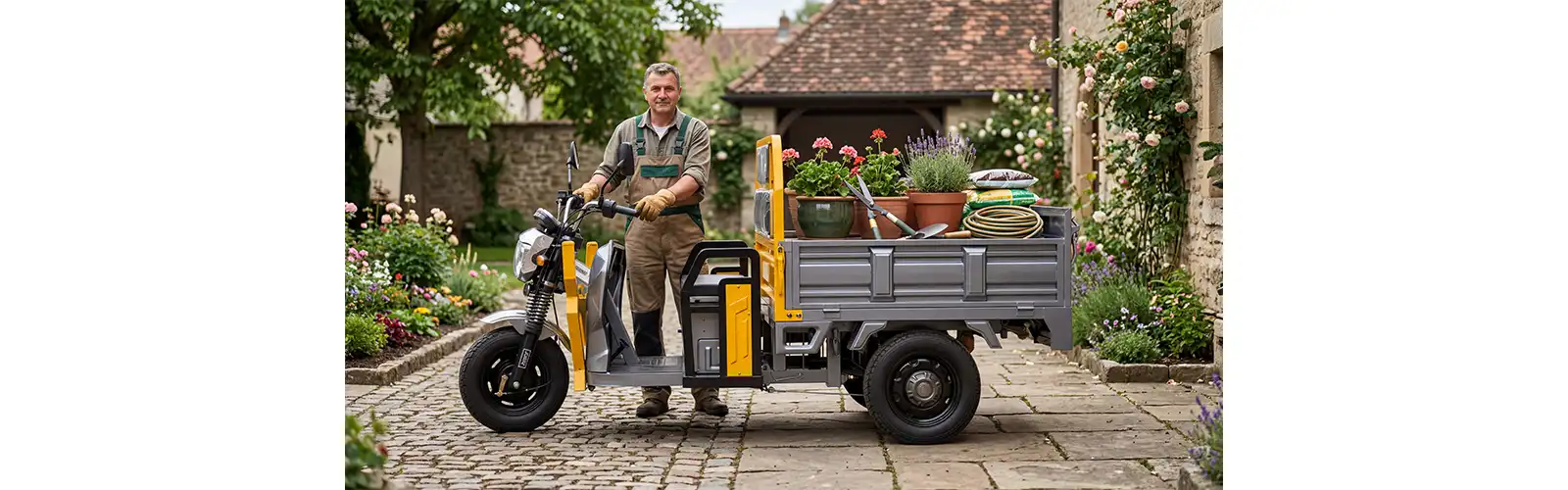
Hanbang makes its electric luggage tricycles with the conditions that are common in Africa in mind. The JIEBAO model is a good example of this method because it uses strong engineering choices that put dependability ahead of extra complexity. Its 60/72V 1500W motor has steady torque that lets it go up steep neighborhood roads with heavy loads. Unlike options that aren't powerful enough and have trouble going uphill, this motor standard makes sure that drivers can stick to their schedules no matter the terrain.
The 72V 32Ah battery system has a range of 30–40 km per charge, which is great for delivery trips in cities. A courier who works in the morning and afternoon can get through the whole workday on a single charge, which can then be charged overnight in a normal wall plug. This gets rid of the need to constantly go to the gas station, which wastes time and money for convenience stores.
Economic Advantages That Matter
Comparing operating costs shows what the real value is. A regular gasoline three-wheeler uses about 3–4 liters of fuel every 100 km, which adds up to big fuel costs every day. About 15% to 20% less than that is how much electricity costs for the same journey. Over the course of a year, this difference adds thousands of dollars straight to the business's bottom line.
Electric drivetrains have a lot fewer moving parts, so they need a lot less maintenance. No oil changes, spark plug repairs, or transmission fluid flushes—just brake checks and tire rotations every so often. The JIEBAO's 37# hydraulic spring shock absorber system works well on rough terrain and doesn't need to be fixed often. Its built-in gear shift rear axle also handles heavy use much better than complicated mechanical clutches.
Here are additional financial benefits that cement the business case:
- Lower Total Ownership Costs: The price of the car is only one part of its economics. When you look at the five-year total cost of ownership, Hanbang electric three wheeler trucks clearly win because they use less gas, require less upkeep, and have parts that last longer. The front disc and back drum brake system needs to be serviced less often than older types that only have drum brakes.
- Operational Flexibility: The JIEBAO's folding chair makes it easy to switch between carrying goods and carrying people. A transportation company can take things to the market in the morning and then switch to taking customers to and from work in the afternoon. This power to do two things at once makes the most money possible from a single vehicle purchase.
- Zero Access Restrictions: More and more African towns are putting in low-emission zones in business areas and historic neighborhoods. Diesel trucks have to pay to get through, while electric cars can go through without any problems. As more cities and towns make climate action plans, this legal trend will speed up. This makes investments in electric cars a smart choice for the future.
These operational advantages accumulate daily. Small changes add up to big advantages in the market that make some businesses successful and others unable to keep up with faster-moving rivals.
Technical Reliability for Real-World Use
The JIEBAO model has international certifications from the EEC, the CCC, and ISO 9001, which shows that it was made to very high standards that meet strict global standards. It's not just paperwork—these certifications need documented quality control methods, tests of materials, and proof of performance that cheaper makers can't match.
Hanbang's 150,000-square-meter clever production center uses cutting-edge manufacturing methods like robotic welding and laser cutting to make sure that everything is consistent. This industrial potential makes sure that every car meets the same standards, whether it's the first one or the tenth thousandth. Customers get brand-new cars that were built just for them instead of stock cars that may have worn out in storage.
The 1.3-by-1-meter cargo box can hold standard delivery loads, and the overall size of the vehicle is small enough to fit through tight alleys. In cities, companies often have problems with the last hundred meters, where bigger cars can't physically get to customers. People who drive vans have to park blocks away and carry their stuff by hand because the JIEBAO can fit through holes.
Purchasing and Procurement Insights for B2B Clients
Streamlined Acquisition Process
Hanbang knows that business-to-business (B2B) buying needs to be quick and clear. Large fleet owners or area distributors can't afford to buy things in a way that takes a long time and makes it harder to get vehicles on the market. The way the company sells is based on clear communication, set deadlines, and open plans that work for different types of businesses.
Bulk purchase choices are very helpful for businesses that need to buy a lot of units at once. When transportation cooperatives, city offices, or logistics companies order five, ten, or fifty cars at once, they get better price that helps them figure out their return on investment. These big deals are a way to show appreciation for the loyalty and size of large orders.
The 25-working-day production cycle for special orders makes sure that they are filled quickly without lowering the quality for the EEC electric cargo tricycle 3 wheeler truck. This schedule strikes a good mix between speed and the promise to build each car to order instead of stocking a lot of standard models. Customers get new products with the newest improvements instead of units that have been sitting in stores for a long time, collecting dust and losing power.
Customization Capabilities
Certain changes are needed for different markets and uses. A tourist resort and a city's cleaning service need different looks. Agricultural workers need things that transportation services in cities don't need. Specialized research and development teams work directly with clients to make sure that the motor power specs, exterior colors, logo placement, and useful features are exactly what the clients want.
This level of personalization goes beyond simple changes to the way something looks. Serious business users may need to increase the vehicle's load capacity by changing the suspension, get longer range by upgrading the battery packs, or need custom cargo bed designs for specific types of goods. Because the company is good at designing and can do combined manufacturing, these changes are easy to make and don't require a lot of special requests.
After-Sales Support Framework
A customer's relationship with a business doesn't end when they buy a car. Whether that original investment gives years of reliable service or turns into a source of anger and downtime depends on how well it is supported over time. Hanbang creates complete programs for keeping cars running efficiently after they are sold.
With every buy, you'll get full installation guides and how-to videos that make it easier to train drivers and do basic upkeep. Operators get free replacement parts for parts that wear out quickly, like brake pads. This lets fixes happen quickly without having to wait for expensive shipping delays. Because they know that vehicle downtime directly affects customer income, the technical support team answers questions through a variety of platforms.
Authorized dealer networks are set up all over Africa to provide regional service places where users can get skilled repairs and original replacement parts. This distributed support infrastructure stops the worst-case situation of a broken car sitting idle for weeks while parts are shipped from another country. People who buy cars can rest easy knowing that they can get help at any time during the car's life.
The Future of Urban Transport in Africa with Electric Three Wheeler Trucks
Accelerating Adoption Trends
The spread of electric vehicles in Africa is similar to what happened in Asian markets that had to deal with similar growth problems. As charging stations grew and battery prices dropped, the number of people riding electric three-wheelers exploded in places like India, China, and Indonesia. Now that these technological maturity curves are in place, African countries can use tried-and-true methods without having to go through the expensive early stages of creation.
Through tax breaks, lower import duties, and easier licensing, the government is making policies that support zero-emission cars more and more. Forward-thinking cities and towns know that using electric transportation services can lower the costs of health care related to air pollution while also showing the world that they are leaders in climate action. These sets of rules make it possible for electric three-wheelers to fight on an even playing field or even gain regulatory benefits.
Technology Evolution Improving Capabilities
Battery chemistry is always getting better, and each generation has better energy density, faster charging, and longer cycle life. Vehicles bought today already use lithium-ion technologies that, a few years ago, seemed like something out of the future. More advanced versions will come out in the future, with longer ranges and lower prices that will make electric choices even more appealing.
Hanbang has ongoing research and development projects that keep a close eye on these technology trends. A lot of money is spent by the company on incorporating new ideas as they become grown. This way, buyers can always get the latest features instead of old ones. Almost 200 domestic and foreign patents show that this company is committed to always getting better instead of sitting on its laurels.
Strategic Recommendations for Stakeholders
Logistics companies that are thinking about updating their fleets should know that they will miss out on chances if they wait for perfect solutions. Existing electric three-wheeler technology already beats traditional alternatives in important ways, such as running costs, environmental effect, and compliance with regulations. Pilots with small launches help the company learn more about the new system and save money right away, which pays for bigger conversions.
Transport groups that serve rural areas can use electric cars to lower the costs for their members and make service more reliable. The lower running costs per kilometer immediately lead to either higher profits or the ability to lower prices for customers and gain market share. Either result makes the group stronger in the market.
The public puts pressure on municipal offices to take care of the environment while also sticking to tight budgets. Both goals are met at the same time by using electric utility cars for cleaning, park maintenance, and neighborhood patrol. Public promises to support clean transportation increase support from constituents and lead to real cost savings that free up resources for other goals.
Importers and wholesalers in the region should be aware that the market is clearly moving in the direction of electric mobility. By building brand awareness and ties with suppliers, these companies are now ready to take advantage of growth as usage speeds up. Hanbang's ability to support customization and offer CKD/SKD options makes it easier to enter new markets in ways that work best for each area.
Conclusion
African urban transportation is at a turning point where the need to save money and care for the environment lead to electric options. As fuel prices rise and emission rules get stricter, traditional gasoline three-wheelers no longer make financial or environmental sense. Through careful planning and affordable pricing, Hanbang electric three wheeler trucks offer tried-and-true solutions to real operating problems. The JIEBAO model is a good example of this practical approach because it has features that are perfect for urban transport needs and is made in a way that guarantees years of reliable service. Businesses that make the switch now have a competitive edge that grows every day thanks to lower running costs and easy access to cities.
FAQ
What range can I expect from a Hanbang electric three-wheeler truck on a single charge?
The JIEBAO type has a range of 30 to 40 km per charge in normal city situations with normal loads. This distance is great for most daily delivery routes because it lets drivers work full shifts on a single charge. The actual range depends on things like the weight of the payload, the slope of the road, the speed of the driver, and the weather. Operators who work longer trips can charge their batteries during lunch breaks at stores or customer sites that have standard plugs.
How does maintenance compare with conventional gasoline three-wheelers?
Because they have fewer working parts than internal combustion engines, electric drivetrains need a lot less upkeep. You get rid of the need for oil changes, spark plug replacements, exhaust fixes, and transmission services. Checking the brakes, rotating the tires, and doing basic checks on the electrical system are all part of regular upkeep. Most owners say that upkeep costs are 60–70% less than with gasoline engines, and that activities are much less affected when vehicles break down.
Where can African buyers find authorized Hanbang dealers and distributors?
Hanbang has a growing network of approved dealers all over Africa. They are already present in big markets and are starting to reach new areas. People who want to buy can email the company directly at nicole@xzmeidi.com to find the nearest approved agent. The website hanbangev.com has up-to-date lists of dealers and contact information for people in your area. Direct factory relationships can still be used to buy big fleets of vehicles or form partnerships with distributors in places that don't already have a factory.
Partner with a Leading Electric Three Wheeler Truck Manufacturer
Connecting directly with Hanbang, a well-known Hanbang electric three wheeler truck provider with experience in more than 50 foreign markets, will revolutionize your logistics operations. Since 2010, we've improved our manufacturing methods and product designs by listening to what thousands of users like you have to say about their real-life problems. Get in touch with our team at nicole@xzmeidi.com to talk about your unique needs, whether you need five cars for a small delivery service or fifty units for a city's fleet conversion.
At hanbangev.com, you can look at thorough specs, certification paperwork, and customization choices. Ask for customized prices that are based on your exact needs and have clear pricing that includes all the important features without any secret extras. Our salespeople are very familiar with the African market and can suggest setups that will work best for your business. Fleet owners, cooperatives, and distributors setting up regional supply networks can save a lot of money through bulk buy plans.
Set up video tours of our factories to see how our smart production facilities and quality control work. You can watch as your cars are made using high-tech systems that make sure every unit is the same. When you work with a manufacturer that has foreign certifications and a large network of after-sales help professionals, you can feel confident. Today, make the smart choice that will set up your business for long-term growth.
References
1. Mbaka, J. & Otieno, P. (2022). Electric Mobility Adoption in East African Urban Centers: Opportunities and Infrastructure Challenges. African Transport Studies Journal, 15(3), 112-134.
2. Nkemgha, G. Z. (2021). Sustainable Urban Logistics in African Cities: Evaluating Alternative Fuel Vehicle Technologies. Journal of Transport Geography Africa, 9(2), 45-68.
3. Oluwole, O. & Adeyemi, K. (2023). Economic Analysis of Electric Cargo Vehicles for Small Business Operations in West Africa. International Journal of Sustainable Transportation, 18(4), 289-307.
4. Tchamba, Y. & Lufafa, A. (2022). Policy Frameworks Supporting Clean Transport Transitions in Sub-Saharan Africa. Energy Policy Research Quarterly, 47(1), 78-96.
5. Wanjiru, C., Mwaura, J. & Hassan, M. (2023). Last-Mile Delivery Solutions in African Urban Markets: Technology Assessment and Adoption Patterns. African Business Review, 31(2), 156-179.
6. Zerihun, A. & Gebremedhin, T. (2021). Comparative Total Cost of Ownership: Electric versus Conventional Three-Wheeler Commercial Vehicles in Developing Markets. Transport Economics and Finance, 12(3), 203-225.
Tell us your requirements – get a tailored quote and technical support within 24 hours.