- English
- French
- German
- Portuguese
- Spanish
- Russian
- Japanese
- Korean
- Arabic
- Greek
- German
- Turkish
- Italian
- Danish
- Romanian
- Indonesian
- Czech
- Afrikaans
- Swedish
- Polish
- Basque
- Catalan
- Esperanto
- Hindi
- Lao
- Albanian
- Amharic
- Armenian
- Azerbaijani
- Belarusian
- Bengali
- Bosnian
- Bulgarian
- Cebuano
- Chichewa
- Corsican
- Croatian
- Dutch
- Estonian
- Filipino
- Finnish
- Frisian
- Galician
- Georgian
- Gujarati
- Haitian
- Hausa
- Hawaiian
- Hebrew
- Hmong
- Hungarian
- Icelandic
- Igbo
- Javanese
- Kannada
- Kazakh
- Khmer
- Kurdish
- Kyrgyz
- Latin
- Latvian
- Lithuanian
- Luxembou..
- Macedonian
- Malagasy
- Malay
- Malayalam
- Maltese
- Maori
- Marathi
- Mongolian
- Burmese
- Nepali
- Norwegian
- Pashto
- Persian
- Punjabi
- Serbian
- Sesotho
- Sinhala
- Slovak
- Slovenian
- Somali
- Samoan
- Scots Gaelic
- Shona
- Sindhi
- Sundanese
- Swahili
- Tajik
- Tamil
- Telugu
- Thai
- Ukrainian
- Urdu
- Uzbek
- Vietnamese
- Welsh
- Xhosa
- Yiddish
- Yoruba
- Zulu
From China to EU: Sourcing Dual-Purpose Electric Tricycles for B2B Fleets
The purchase of an electric tricycle dual-purpose platform for a B2B fleet in Europe is a choice that goes through three departments before the first container ships. The operations team runs the routes, the compliance team registers the vehicles, and the finance team signs the invoice. Answer all three desks up front with a sourcing plan and you escape the six-week rework that catches most first-time importers between order and delivery.send inquiry

What the Operations Desk Needs Before Committing to a Fleet Order
Route Duty First: Range, Speed and the Shift Pattern
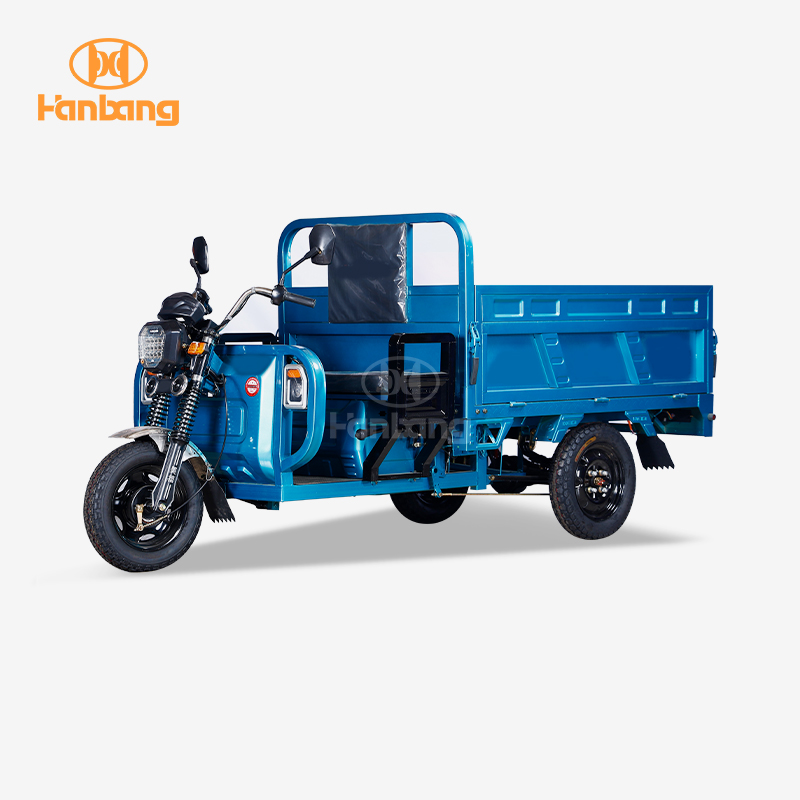
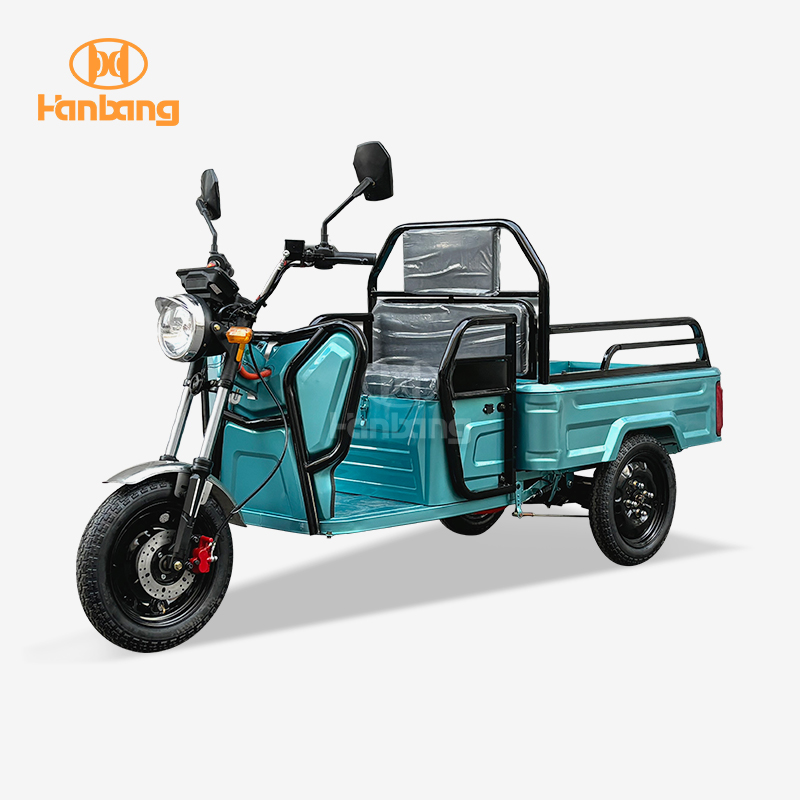
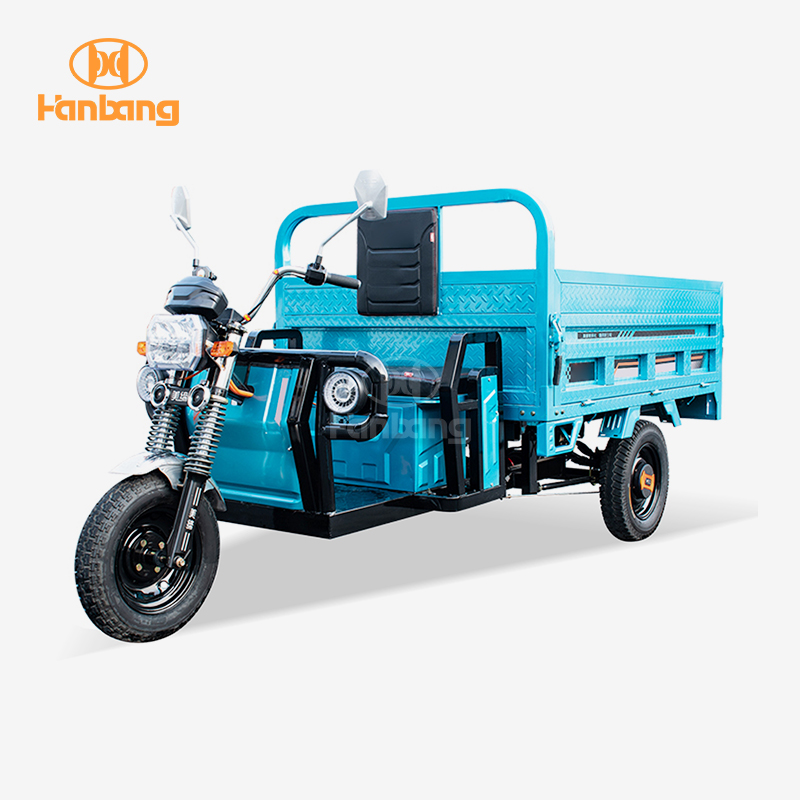
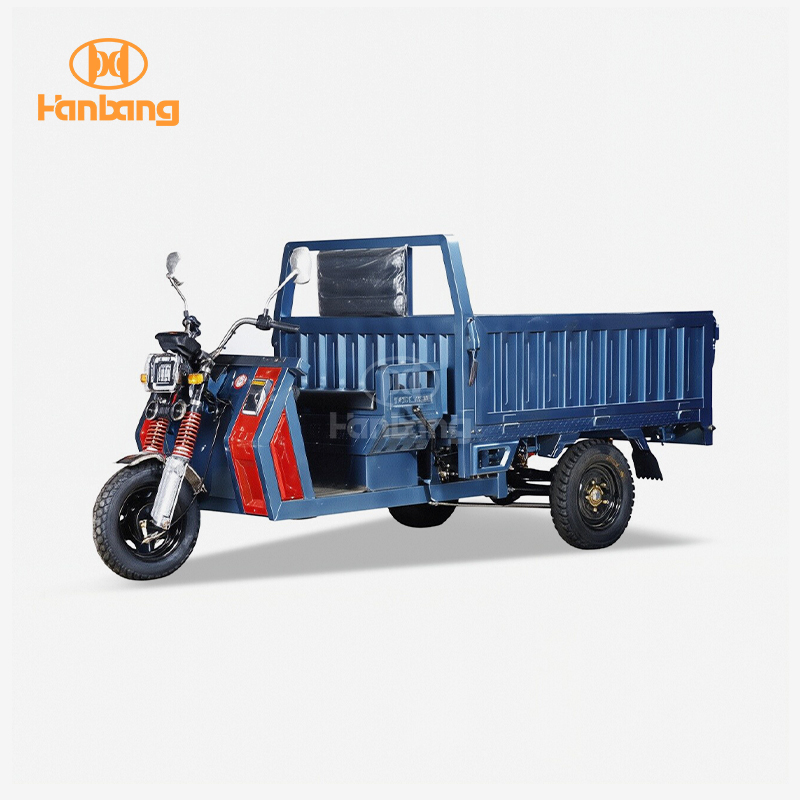
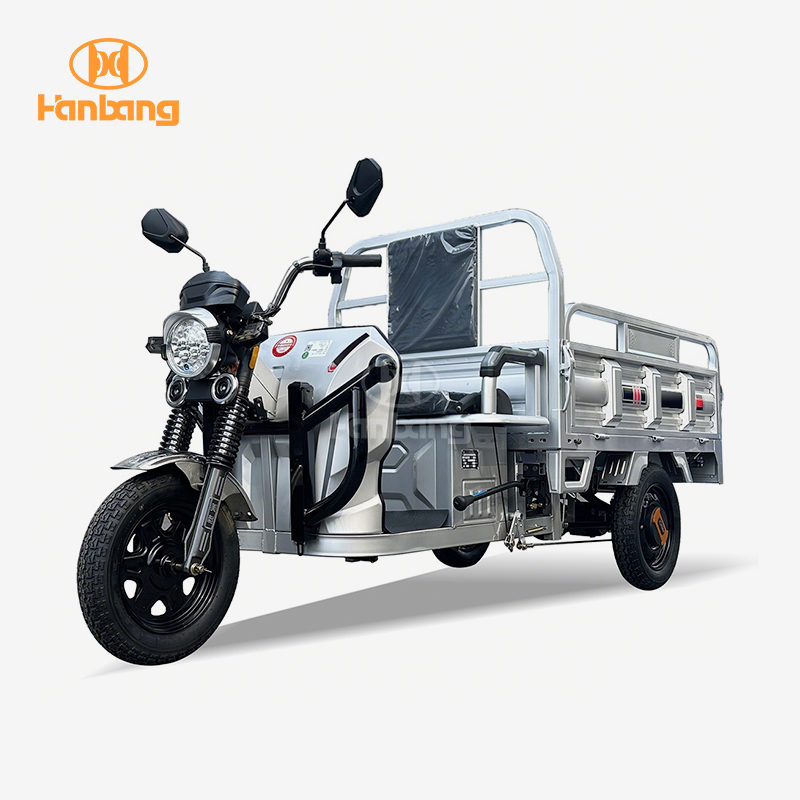
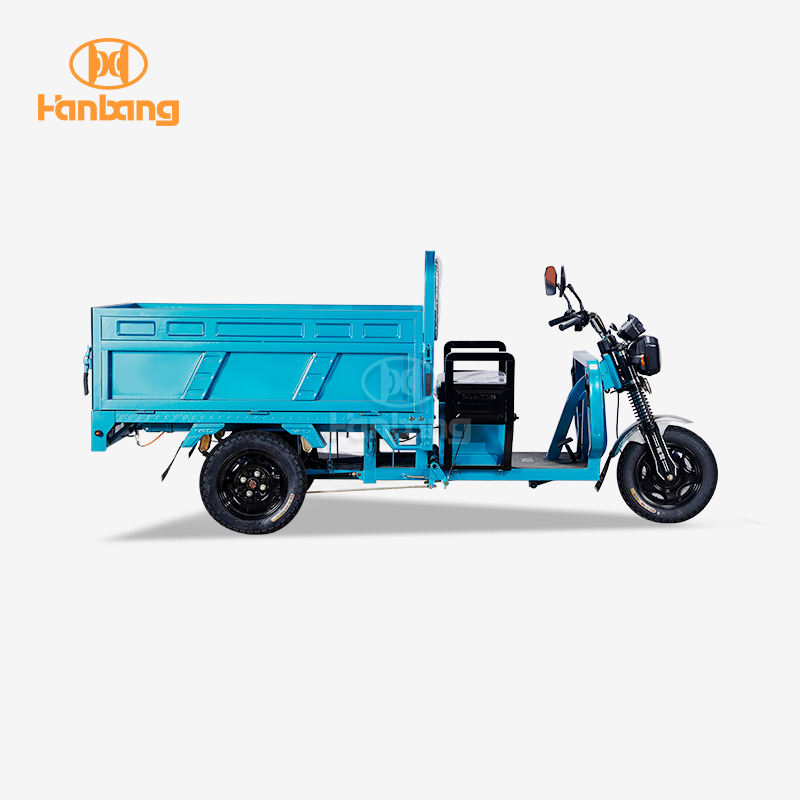
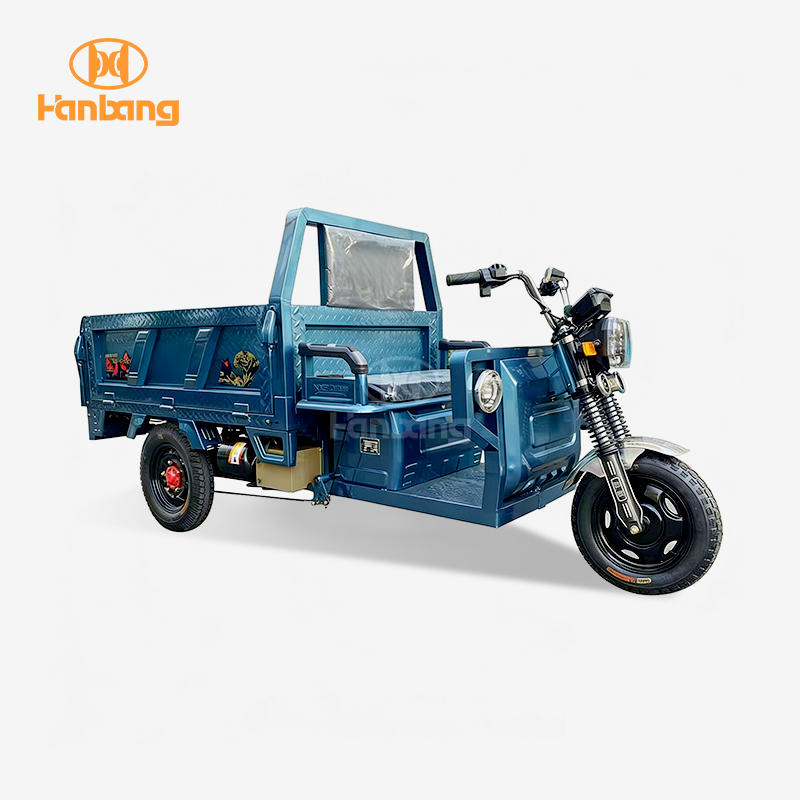
The route duty determines the specification ahead of any other line item. Hanbang’s electric tricycle dual-purpose unit has a 1000W motor and a 60V 52Ah pack, able to make 70 to 80 km on a single overnight charge, and capable of maintaining 45 km/h, suitable for an urban parcels loop with 30 to 50 stops, without needing to plug in at midday [4]. Fleets that operate longer intercity legs should size the battery option first and the paint colour last.
One Cargo Bay, Two Jobs: The Case for a Removable Box
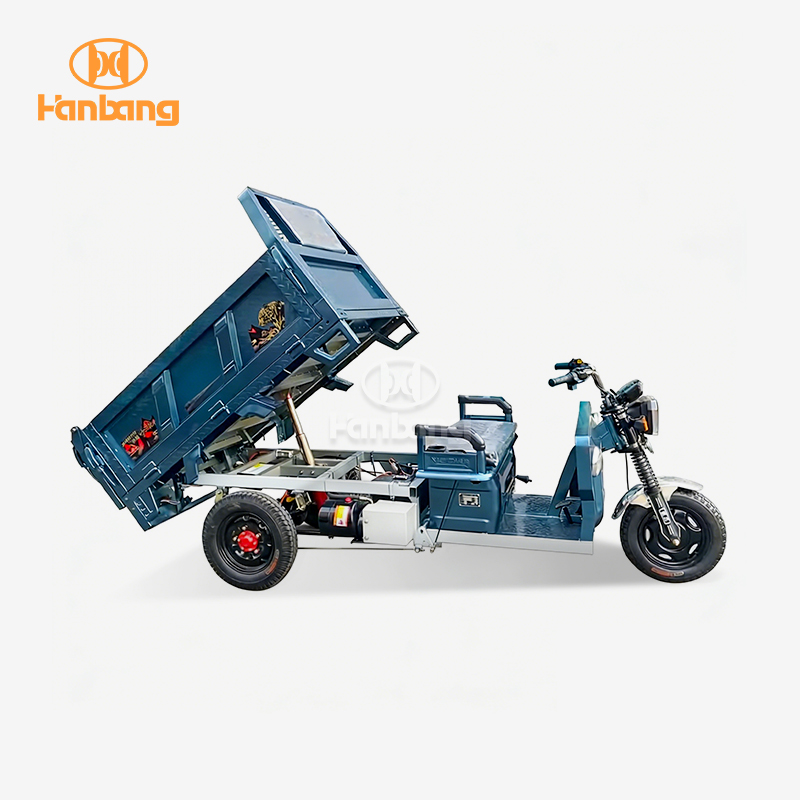
This is where the vehicle obtains its two-rated rating in the cargo bay. A 1.6 by 1.1 metre removable box on a 160 full-floating rear axle holds palletised freight on the morning run, then folds flat for crew gear on the return leg. As per Eurostat road freight data, the urban drops are diminishing in size and the three-wheeler is best suited to the particular duty profile [5]. The trike is 3100mm long and fits in a regular motorcycle bay, leaving van-width beds for those vans that still need them.
Serviceability: Keeping a Five-Unit Fleet on the Road
A fleet purchase is different from a retail one in its downtime tolerance. The platform has external spring shocks and tubeless tires that can be serviced at any normal motorcycle shop in DE, NL, FR or PL; thus, a fleet of five can be operational while one unit waits for parts. With every shipment, Hanbang supplies a wear-parts kit, so the first service visit never has to wait for an ocean journey.
What the Compliance Desk Needs Before the First Container Sails
Type Approval and the Regulation 168/2013 Paper Trail
European registration is about category documentation, not marketing claims. The electric tricycle dual-purpose unit is CCC and ISO 9001 standard. EEC certificate available on request for fleets operating in states requiring L-category type certification at registration. According to EU Regulation 168/2013 [1], the compliance team should know the papers the national authority is looking for before placing the order, not after.
Auditing the Document Pack Before Loading, Not at the Port
There is a per-VIN Certificate of Conformity that travels with each unit. The document pack should be audited by the compliance desk before loading the container, not when the broker calls from the port. Hanbang issues invoice, packing list, bill of lading, CoC and the type-approval file as one set keyed to the same VIN, so a mismatch between vehicle and paper is caught at the factory gate.
Low-Emission Zones: The Quiet Compliance Win
Low-emission-zone laws reward the quiet option. In Europe, entry to cities is becoming stricter every year and urban fleets are responding to this, using shared data produced by ELTIS, the European urban mobility observatory. A zero-tailpipe trike ticks all the boxes at existing LEZ gates and fleet managers who register the category early are spared the retrofit frenzy that diesel-van operators must endure at each zone review.
What the Finance Desk Needs to Sign Off the Sourcing Plan
2026 FOB Reference Range and the Sample-to-Fleet Path
or this vehicle, the factory gate reference for 2026 is USD 460 to 780 per unit FOB China in container quantity. The spread is dependent on battery chemistry and box configuration, not on negotiation theatre. At the end of the route trial a sample order of one or two units becomes a fleet contract; Hanbang offsets the sample price against the bulk invoice, thus the trial costs a deposit, not a premium.
Container Economics: 40HQ Loads and the Landed Cost Line
The economics of containers favour fleets that order in multiples. A 40HQ will hold about twenty complete units of this model, or a mixed load of complete units and knocked-down kits for local final assembly. The landing cost per unit comes down on the full-container line. World Bank urban transport investigation shows that light electric freight vehicles save operating cost per kilometre by more than half compared to diesel in city duty[3] – an impact that shows up on the fleet P&L.
Payment, Lead Time and the 60-Day Delivery Window
Payment and lead-time terms round out the plan. Production takes 25 working days from deposit, ocean freight to Rotterdam or Hamburg adds between 28 and 35 days and port clearance with a complete document pack takes roughly two working days. Imported fleets most typically leak budget into depot storage and finance teams that arrange the delivery window around those three figures avoid paying depot storage when the paperwork catches up.
Conclusion
Bringing an electric tricycle dual-purpose platform from China to the EU is a three-desk drill: operations locks the route spec, compliance clears the category paperwork under Regulation 168/2013, and finance signs a plan built on a USD 460 to 780 FOB band, a 40HQ load of twenty units and a 60-day delivery window. When all three desks sign the same page, the fleet lands on schedule and the first quarter of operational costs pays back the deposit by itself.
FAQ
What is the FOB price range for a dual-purpose electric cargo three wheeler in 2026?
USD 460 to 780 per unit at container quantity, depending on battery and box configuration.
How many units fit in one 40HQ container?
About 20 complete units, or a mixed load of complete units and knocked-down kits.
Is an EEC certificate available for EU registration?
Yes, EEC type approval is available on request alongside standard CCC and ISO 9001.
How long from deposit to EU port?
25 working days of production plus 28 to 35 days of ocean freight to Rotterdam or Hamburg.
Can we trial a sample before committing to a fleet order?
Yes, sample orders of one or two units are credited against the bulk contract invoice.
Put Three Desks on One Spec Sheet with Hanbang
The quickest path to a fleet that survives its first European winter is to provide operations, compliance and finance the same spec sheet. Hanbang is developing its dual-use line on a 200 mu smart base in Jiangsu with four workshops for stamping, welding, painting and final assembly. It ships to over 50 countries with Class-A electric motorbike qualification and EU EEC certification. About 200 patents, five fully owned subsidiaries and one foreign investment company keep spec, documentation and production time aligned to a single VIN. Send the Meidi export desk your route length, destination port and fleet size and the team will get back to you with a 2026 FOB price, the document pack and a sample slot. This week, write to nicole@xzmeidi.com or WhatsApp +86 13115031091 and put one paper in front of all three workstations..
References
[1] Regulation (EU) No 168/2013 on the approval and market surveillance of two- or three-wheel vehicles and quadricycles. Publications Office of the European Union, 2013.
[2] Urban Mobility Framework and city access planning resources. ELTIS - The Urban Mobility Observatory, 2025.
[3] Urban Transport and Electric Freight Vehicle Cost Analysis. World Bank, 2024.
[4] Road Freight Transport Statistics in the EU. Eurostat, 2025.
Tell us your requirements – get a tailored quote and technical support within 24 hours.