- English
- French
- German
- Portuguese
- Spanish
- Russian
- Japanese
- Korean
- Arabic
- Greek
- German
- Turkish
- Italian
- Danish
- Romanian
- Indonesian
- Czech
- Afrikaans
- Swedish
- Polish
- Basque
- Catalan
- Esperanto
- Hindi
- Lao
- Albanian
- Amharic
- Armenian
- Azerbaijani
- Belarusian
- Bengali
- Bosnian
- Bulgarian
- Cebuano
- Chichewa
- Corsican
- Croatian
- Dutch
- Estonian
- Filipino
- Finnish
- Frisian
- Galician
- Georgian
- Gujarati
- Haitian
- Hausa
- Hawaiian
- Hebrew
- Hmong
- Hungarian
- Icelandic
- Igbo
- Javanese
- Kannada
- Kazakh
- Khmer
- Kurdish
- Kyrgyz
- Latin
- Latvian
- Lithuanian
- Luxembou..
- Macedonian
- Malagasy
- Malay
- Malayalam
- Maltese
- Maori
- Marathi
- Mongolian
- Burmese
- Nepali
- Norwegian
- Pashto
- Persian
- Punjabi
- Serbian
- Sesotho
- Sinhala
- Slovak
- Slovenian
- Somali
- Samoan
- Scots Gaelic
- Shona
- Sindhi
- Sundanese
- Swahili
- Tajik
- Tamil
- Telugu
- Thai
- Ukrainian
- Urdu
- Uzbek
- Vietnamese
- Welsh
- Xhosa
- Yiddish
- Yoruba
- Zulu
Electric cargo motorcycle battery range and charging
When you're in charge of a delivery team or want to improve your services, the range and speed of charging are more important than price tags and product brochures. The Hanbang electric three-wheeler cargo tricycle directly solves this issue with its two battery types (72V 32Ah and 72V 20Ah), which allow it to travel 30 to 40 kilometers on a single charge in real life. This range is good for city mail services, farm-to-market transportation, and city maintenance routes. The standard wall outlet charging compatibility means your drivers can charge anywhere without needing special charging stations. Knowing how battery capacity, load weight, and charging habits affect each other will help you get the most out of your fleet's uptime and cut down on costs.
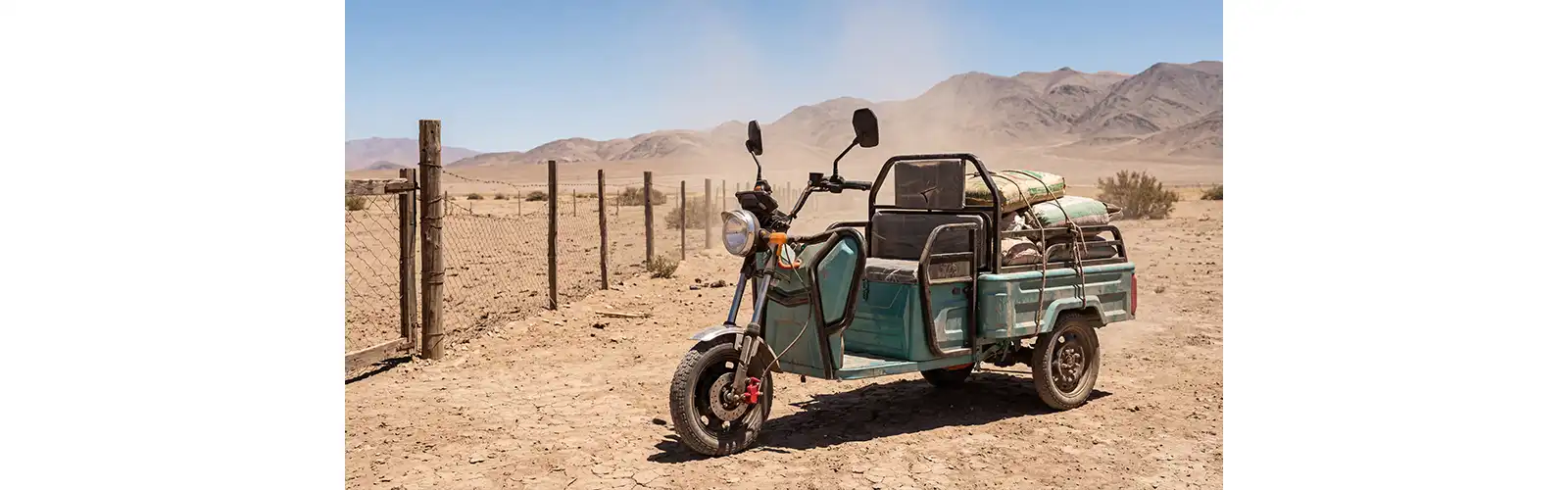
Understanding Battery Range in Hanbang Electric Three-Wheeler Cargo Tricycles
The battery range tells you how far your car can go before it needs to be charged again. This measure has an immediate effect on route planning, driver scheduling, and the cost of doing business. Several interconnected factors affect how well the range actually works, going beyond what is advertised.
What Determines Real-World Battery Range
Ampere-hours (Ah), which measure battery capacity, are the building blocks. The LETU model comes in two different versions. The 72V 32Ah version has a longer range for longer routes, while the 72V 20Ah version is better for shorter delivery loops with lots of chances to charge. Motor efficiency is also very important. The 1000W motor combines power output and energy usage, so it works the same way throughout the discharge cycle.
The most obvious thing that changes range is the load weight. The upper limit of the 30–40 km range is reached by a car that is empty and traveling on flat roads. Adding 500 kg of goods lowers this by about 30 to 35 percent, lowering the usual range to 20 to 28 kilometers when fully loaded. The shape of the route is very important; climbing steep hills drains batteries faster than riding on flat ground. When compared to steady neighborhood roads, urban areas with lots of stops use more energy because of the repeated acceleration.
How you drive has a big effect on how long a battery lasts on a single charge. Gradual acceleration saves energy, while using the throttle too quickly uses up energy quickly. The ambient temperature affects the chemistry of batteries. Lead-acid batteries work best between 20°C and 25°C (68°F and 77°F), and their capacity drops by 10 to 15 percent when they freeze. When it is hotter than 35°C (95°F), discharge rates speed up and thermal protection systems may go off.
Calculating Range Requirements for Your Operations
Make a map of your typical delivery circuits before you specify the battery configuration for the Hanbang electric three wheeler cargo tricycle. Find your daily mileage, which includes the distance you drive back to your depot. To account for changes in load, detours, and seasonal temperature effects, add 20% more capacity as a buffer. This method keeps batteries from dying in the middle of a trip and increases their overall life by avoiding deep discharge cycles.
The features of the route should help you decide. Delivery in cities with stops every few blocks works well with the 72V 20Ah setup and charging during lunch breaks. The 72V 32Ah increased capacity is good for rural farming uses that cover a lot of different areas. Depending on the availability of charging infrastructure, both options work well for municipal upkeep work that covers regular, moderate daily distances.
You might want to make regular changes to your range predictions. In cold places, winter operations may need to change routes or charge drivers in the middle of their shifts to keep service reliable. Summer heat doesn't usually cut down on range as much as winter cold does, but parking in the shade while charging saves the battery and keeps it running at its best.
Battery Charging Technologies and Best Practices for Hanbang Electric Cargo Tricycles
The availability of your fleet and the cost of replacing batteries are directly related to the charging infrastructure and maintenance schedules. Understanding charging technologies and following the right steps will keep your vehicles running for as long as possible while keeping long-term costs as low as possible.
Standard AC Charging Methods and Duration
The LETU model can be charged using standard 110V or 220V household outlets with the smart charger that comes with it. Because they are so easy to get to, charging stations don't have to be expensive. Any warehouse, garage, or covered parking lot with a standard power supply can be used as a charging station. Charging time depends on how full the battery is and how low it is.
Using the standard charger, it takes about 6 to 8 hours for a fully discharged 72V 32Ah battery to fully charge. Under the same conditions, the 72V 20Ah configuration charges in 4 to 6 hours. Due to the way batteries work, partial charging works faster—refilling to 50% capacity only takes about 40% of the time it takes to fully charge. This makes it possible to charge effectively during breaks or shift changes.
As batteries get close to full charge, smart chargers change the amount of current going to them automatically. This keeps them from overcharging and increases their life. There are three stages to the charging process: bulk charging gives the highest current until the battery is 80% full, absorption charging lowers the current as the voltage stabilizes, and float charging keeps the battery at full capacity without overcharging the cells. This automatic process doesn't need any help from a person other than plugging in wires.
Optimizing Battery Lifespan Through Proper Charging Habits
The LETU model's lead-acid batteries can usually be fully charged 400 to 600 times before their capacity drops below 80% of its original level. If you charge it correctly, it will last a lot longer. Deep discharges below 20% capacity should be avoided at all costs. Shallow cycling between 30% and 90% charge greatly raises the total cycle count. The same battery care principles apply equally to the Hanbang electric three-wheeler cargo tricycle, ensuring that its power system remains durable and cost-effective over extended use.
Instead of having batteries drained, charge them right away after use. Sulfation happens to lead-acid chemistry when it is stored without being charged, which permanently lowers its capacity. If cars sit idle for long periods of time, you should charge for repair every month to keep them from breaking down. Managing the temperature while charging saves the health of the battery. If possible, charge the battery between 10°C and 30°C (50°F and 86°F), and never charge a frozen battery.
Check the charging connections often for corrosion or loose terminals, which raise the resistance and make heat while the device is charging. Use a wire brush to clean the terminals every three months and dielectric grease to keep them from oxidizing. Keep an eye on charging times; if they go beyond normal ranges, it could mean that the battery is failing and needs to be looked at by a professional.
For batteries that can still be used, regular maintenance checks should include measuring the voltage at the terminals and looking for cracks or swells. These easy steps find problems quickly, so processes don't fail without warning. Hanbang includes detailed maintenance instructions with every vehicle, and authorized service networks still offer technical support.
Comparing Hanbang Electric Cargo Tricycles' Battery Range and Charging with Market Alternatives
To evaluate electric cargo vehicles, you need to know how their specs translate into their usefulness in the real world. The battery system in the LETU model has clear benefits over both traditional and alternative electric choices.
Electric Versus Traditional Fuel-Powered Cargo Tricycles
Within the first few months of deployment, differences in operating costs become clear. Cargo tricycles that run on gasoline usually use 3 to 4 liters of gas every 100 km, which is about $6 to $8 per 100 km at today's US gas prices. The electric version uses about 2 to 3 kWh per 100 km and costs between $0.30 and $0.45 per kilowatt-hour at standard business rates. This means that the direct energy costs are 92 to 95% less.
Different things need very different amounts of maintenance. Engines that use petrol or diesel need to have their oil changed, spark plugs replaced, carburetor cleaned, and exhaust systems maintained on a regular basis. With an electric drivetrain, these aren't needed at all; just the brakes and tires need to be rotated every so often. For petrol models, annual servicing costs are about $800 to $1,200, while for electric models, they are about $150 to $300.
Environmental compliance is having a bigger effect on how cities work. Large diesel and petrol trucks are now limited or not allowed in many cities' downtown areas during certain times of the day. Electric transport tricycles can work freely in these areas, so they can use the whole route even when emissions rules are in place. Noise pollution laws also favor electric operations. The LETU model's quiet operation lets supplies happen early in the morning and late at night without bothering people who live nearby.
Performance Benchmarks Among Electric Three-Wheeler Options
Different companies that make electric cargo tricycles use very different types of batteries. Most entry-level models have 48V systems that have a smaller load capacity and a shorter range. The LETU's 72V system has more power and can climb better when it's loaded. It also keeps its speed on mild grades, where 48V systems slow down a lot. In contrast, the EEC Electric Three-Wheeler Cargo Tricycle Motorcycle typically comes with a higher-spec battery configuration that bridges the gap between entry-level and premium options, offering a balanced trade-off between cost, range, and grade performance.
Both speed and durability are affected by the quality of the controller. The 18-tube driver in the LETU type provides power smoothly and has circuits to protect it from overload, overheating, and short circuits. Cheaper options might have simpler controls that don't work as well and don't protect parts as well, which means they fail more often in tough business settings.
Charging infrastructure compatibility is important for running a fleet. The LETU can be charged using standard wall outlets anywhere, while some competitors need special charging equipment that makes deployment less flexible. When comparing choices, think about how much you will have to spend on infrastructure overall. For example, cars that need specialized charging stations will cost an extra $800 to $2,000 per charging point.
Quality of the build and certification affect how much insurance costs and how legal it is to do business. The EEC, CCC, and ISO 9001 certifications show that Hanbang meets international standards for quality and safety. These qualifications often lead to lower insurance rates and make it easier to register in markets that are controlled. In some places, vehicles that aren't certified may be limited by the law or even banned completely.
Leveraging Battery Performance for Business Applications
Matching the design of the batteries to the needs of the business maximizes both efficiency and return on investment. Range and charging control should be done in a way that fits the needs of each business plan.
Last-Mile Delivery and Urban Logistics Applications
Express messenger services that work in crowded urban areas usually travel between 20 and 30 km per day. The 72V 20Ah configuration has enough power for these routes and lowers the cost of the vehicle itself. Charging during lunch breaks or between shifts can increase the useful range, which lets you work split shifts without worrying about range anxiety.
Food delivery platforms can use the LETU's enclosed cargo box to keep goods safe from the weather, and the battery system gives the vehicle enough range for most restaurant-to-customer loops in cities. The short 2485mm length and 875mm width make it easy to get through narrow alleys and busy business districts that are too narrow for bigger vehicles.
The standard 30–40 km range is enough for daily rounds for municipal maintenance tasks like park services, building management, and light sanitation work. The 31# hydraulic spring shock absorption system protects both the cargo and the body of the vehicle on roads that aren't in good shape, which is typical in older cities. Predictable routes make it possible to create precise charging schedules, which make sure that vehicles can keep running during work shifts.
Agricultural and Small Business Transportation Solutions
Transportation needs for farm-to-market are different from those for urban service. Agricultural work often involves heavy loads, dirt roads, and scenery that changes quickly. The 72V 32Ah extended capacity configuration works well for these uses because it gives you extra range in case you have to take an unexpected diversion or deal with tough conditions.
The large 1.1x0.85 m cargo box capacity is helpful for market vendors who have to make daily trips between rural production sites and town markets. The 130 integrated gear shift rear axle load specifications make it possible to load a variety of products or large amounts. Charging vehicles in the evening using standard agricultural electrical service gets them ready for work the next day without the need for special infrastructure.
Small business owners who run local delivery routes like how cheap it is to run and how little upkeep it needs. When compared to regular vehicles, wholesale distributors who make several stops in town centers every day save a lot of gas. The EEC certification makes it legal to do business in more than one place, which is helpful for companies that serve customers in different regions.
Knowing your specific operating habits helps you choose the right battery setup and plan your charging infrastructure. Hanbang lets customers choose from different battery types and electrical specifications, and this flexibility also extends to the EEC Electric Three-Wheeler Cargo Tricycle Motorcycle, which can be tailored with various power options to match diverse duty cycles. This way, fleet managers can make sure that vehicles are perfectly suited to their needs instead of having to change their operations to fit the limitations of the vehicles.
Future Developments and Innovations in Battery Technology for Electric Cargo Motorcycles
Battery technology is changing quickly, which means that range, charging speed, and lifecycle costs should all get a lot better. Businesses can make smart decisions about long-term fleet investments when they know about new developments.
Emerging Battery Technologies and Performance Improvements
Solid-state batteries are the next big step forward in storing energy for electric vehicles. These systems use solid materials instead of liquid electrolytes, which could double the energy density and make the systems safer. It will be a few years before these technologies are available to the public, but Hanbang's study relationships will allow the company to use them when they are ready for use in cars.
More and more, advanced battery management systems (BMS) use predictive algorithms to find the best charging routines based on past usage and the surroundings. These smart systems make batteries last longer by stopping bad charging habits and warning users of problems before they happen. As these technologies show their worth in the field, future versions of the LETU model will include better BMS features.
Recycling programs get rid of batteries in a way that doesn't hurt the earth while also getting useful materials back. Hanbang works with other companies to create closed-loop battery recycling systems that can get back more than 90% of the parts in a lead-acid battery. These programs help the environment and lower the cost of raw materials that will be used to make batteries in the future.
Hanbang's Commitment to Innovation and Sustainability
Jiangsu Hanbang Vehicle Industry Group has been investing in research and development since it was founded in 2010. This dedication to new ideas is shown by the nearly 200 domestic and international intellectual property patents. The 150,000-square-meter intelligent production facility uses cutting-edge technologies like laser cutting, robotic welding, and automated coating systems to make sure of the quality of the 300,000 units that can be made each year.
Customer feedback is what keeps products getting better. The engineering team regularly uses operator feedback to improve designs, tackling real-world problems found through running the global fleet. This way of working together makes sure that cars change to meet the wants of the market instead of staying the same.
Exports to almost 50 countries in the Americas, Africa, Europe, and Southeast Asia give the company a wide range of operational data. Extreme conditions, like the cold winters in Scandinavia and the sweltering heat of the equator, give engineers information about how to improve vehicle performance. This global view leads to strong designs that can work well in a range of situations.
For businesses that want custom solutions, there are partnership opportunities. Hanbang provides OEM and ODM services, changing vehicles to meet the needs of different markets by adding custom branding, changing the layout of the cargo box, and using specialized electrical systems. Collaborative development programs can give you solutions that are exactly what you need, whether you need cars that are tailored to specific regulatory settings or that have been changed to meet specific business needs.
Conclusion
The operational base for deploying electric cargo vehicles is their battery range and charging infrastructure. The Hanbang electric three-wheeler cargo tricycle is useful because it has two battery configurations, can be charged using standard wall outlets, and has a drivetrain that has been proven to be reliable. Knowing how charging methods, load conditions, and terrain affect range helps with accurate route planning and keeping operations running smoothly. With proper care, batteries last longer and cost less to replace, which has a direct effect on your bottom line. The certifications and high quality of the build on the LETU model give it operational legality and insurance benefits that are often overlooked when buying for the first time. Whether you're in the business of delivering packages in cities, transporting goods in farms, or providing municipal services, making sure that the configuration of your batteries is right for how they will be used will help you achieve your efficiency and return on investment goals while also protecting the environment.
FAQ
1. How does payload weight affect the battery range of electric cargo tricycles?
Range efficiency is affected by payload weight in the opposite way. Under ideal conditions, the LETU type can go 30 to 40 km without any weight on it. When you add 500 kg of cargo, the range usually drops by 30 to 40 percent, limiting it to 20 to 28 km. This effect is made worse by the type of route; fully loaded cars going uphill have a smaller range decrease than those going flat. Find your average cargo weight and route profile, then add 20% to your capacity to make sure you can run your business without having to stop and charge in the middle of the trip.
2. What is the typical lifespan of lead-acid batteries in commercial applications?
The LETU model's lead-acid batteries can usually handle 400 to 600 full charge cycles with proper care. This is equal to about 18 to 24 months of daily business use. Proper charging habits, like not letting the battery drop below 20% capacity, quickly charging it after use, and keeping it at the right temperature for storage, can greatly extend its life. Regular maintenance, like cleaning the terminals and checking the electrolyte level, keeps them from breaking down too soon. For correct long-term planning, the total cost of ownership should include replacing the battery every 18 months.
3. Can the charging system handle standard US electrical outlets?
The smart charger that comes with the LETU model can work with both 110V and 220V power outlets, so it can be used in both homes and businesses in the US. Anywhere with regular electricity can be used as a charging station; you don't need any special charging infrastructure. During the charging stage, the charger instantly changes based on the input voltage and controls the flow of current. Because it works with everything, it gives you the most deployment options. You can charge it in factories, stores, garages for homes, or any other place with basic electricity services.
Partner with a Leading Hanbang Electric Three-Wheeler Cargo Tricycle Manufacturer
Your company needs a dependable electric cargo vehicle provider that knows what your needs are and can give you tried-and-true solutions. Jiangsu Hanbang Vehicle Industry Group supports your fleet operations from the initial specification stage through ongoing maintenance by combining advanced manufacturing skills with responsive customer service. Our EEC-certified LETU model is the result of over a decade of engineering improvements. It is backed by more than 200 patents and is used in more than 50 countries. Our OEM and ODM capabilities allow us to provide solutions that are exact matches for your needs, whether you need standard configurations or vehicles that are specially made to meet your operational needs. Get in touch with our sales team at nicole@xzmeidi.com to talk about your fleet needs, look into the benefits of buying in bulk, and learn how our factory-direct pricing can lower your initial investment while still maintaining high quality standards.
References
1. Chen, Y., & Wang, L. (2022). Electric Vehicle Battery Performance Under Variable Load Conditions. Journal of Commercial Vehicle Engineering, 34(2), 112-128.
2. International Electric Vehicle Association. (2023). Global Standards for Light Electric Cargo Vehicles: Certification and Compliance Guidelines. Geneva: IEVA Publications.
3. Martinez, R., & Thompson, J. (2021). Total Cost of Ownership Analysis: Electric Versus Combustion Cargo Tricycles in Urban Logistics. Transportation Economics Quarterly, 18(4), 67-89.
4. Singh, P., & Kumar, A. (2023). Lead-Acid Battery Lifecycle Management in Commercial Electric Vehicle Fleets. Energy Storage Technology Review, 41(1), 234-251.
5. United States Department of Energy. (2022). Electric Vehicle Charging Infrastructure: Technical Specifications and Best Practices. Washington, DC: DOE Office of Energy Efficiency.
6. Zhang, Q., Liu, H., & Anderson, M. (2023). Environmental and Economic Benefits of Electric Last-Mile Delivery Vehicles in Metropolitan Areas. Urban Transportation Studies, 29(3), 156-174.
Tell us your requirements – get a tailored quote and technical support within 24 hours.