- English
- French
- German
- Portuguese
- Spanish
- Russian
- Japanese
- Korean
- Arabic
- Greek
- German
- Turkish
- Italian
- Danish
- Romanian
- Indonesian
- Czech
- Afrikaans
- Swedish
- Polish
- Basque
- Catalan
- Esperanto
- Hindi
- Lao
- Albanian
- Amharic
- Armenian
- Azerbaijani
- Belarusian
- Bengali
- Bosnian
- Bulgarian
- Cebuano
- Chichewa
- Corsican
- Croatian
- Dutch
- Estonian
- Filipino
- Finnish
- Frisian
- Galician
- Georgian
- Gujarati
- Haitian
- Hausa
- Hawaiian
- Hebrew
- Hmong
- Hungarian
- Icelandic
- Igbo
- Javanese
- Kannada
- Kazakh
- Khmer
- Kurdish
- Kyrgyz
- Latin
- Latvian
- Lithuanian
- Luxembou..
- Macedonian
- Malagasy
- Malay
- Malayalam
- Maltese
- Maori
- Marathi
- Mongolian
- Burmese
- Nepali
- Norwegian
- Pashto
- Persian
- Punjabi
- Serbian
- Sesotho
- Sinhala
- Slovak
- Slovenian
- Somali
- Samoan
- Scots Gaelic
- Shona
- Sindhi
- Sundanese
- Swahili
- Tajik
- Tamil
- Telugu
- Thai
- Ukrainian
- Urdu
- Uzbek
- Vietnamese
- Welsh
- Xhosa
- Yiddish
- Yoruba
- Zulu
4 Important Things To Consider Before Buying A Cargo Electric Tricycle
It's not enough to just look at specs to find the right Hanbang cargo electric tricycle for your business. You need to carefully consider performance, cost-effectiveness, operating suitability, and source dependability. Understanding these important factors can have a big effect on your business success and return on investment, no matter if you run a delivery service in a city, handle agricultural transport in a rural area, or run municipal operations. Hanbang cargo electric tricycle models like the ZHANLONG 160 show how enterprise-grade electric vehicles can be used as a middle ground between regular cargo bikes and commercial cars. They offer long-lasting, low-cost options that can be adjusted to the needs of a wide range of businesses in many fields.
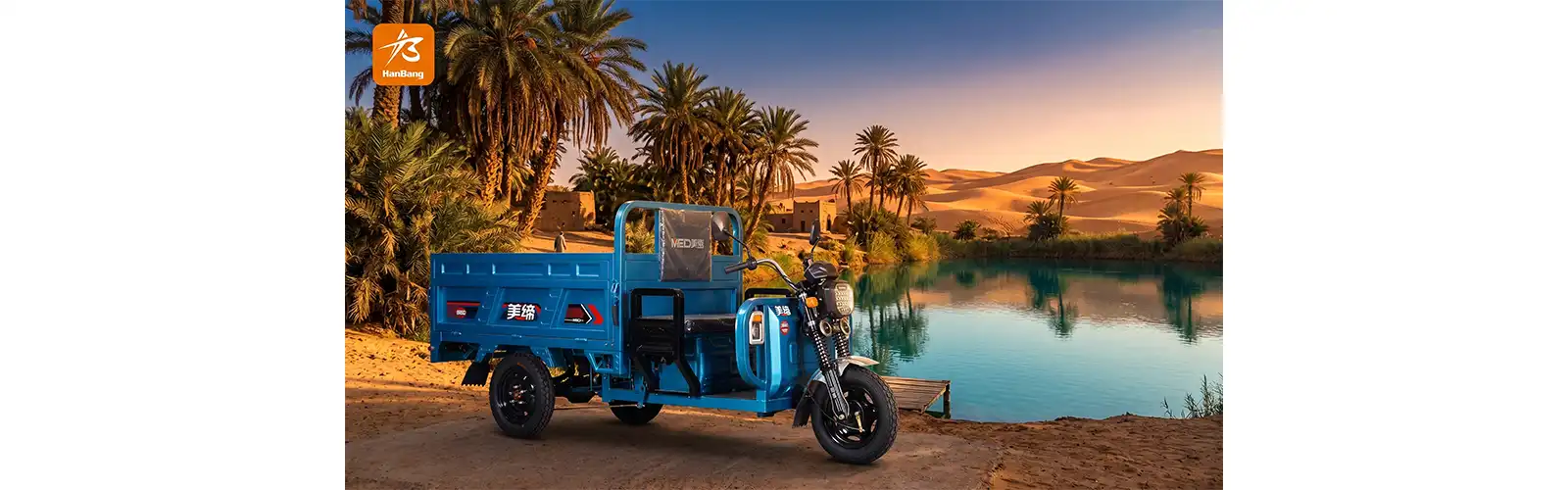
Performance Specifications — Understand What Drives Efficiency
Motor Power and Torque Capacity
The motor is the most important part of any Hanbang cargo electric tricycle. The power of your motor directly affects how well your car can handle rough terrain, steep hills, and big loads. The ZHANLONG 160 has a strong 60/72V 1000W motor that provides steady torque under a range of load conditions. This means it can be used on both flat urban routes and hilly country ones. This power range makes sure that the vehicle can accelerate quickly enough to get through crowded traffic while still staying stable when carrying the most weight possible. This motor design is especially helpful for people who live in rural areas because it keeps the motor from overheating during long climbs uphill with fertilizer or harvested crops, which is a common place where cheaper Hanbang cargo electric tricycles break. When looking at motor specs, you should think about more than just peak power. You should also think about how well the motor will work under normal working conditions, such as changes in temperature and the rough terrain your drivers have to deal with every day.
Battery Capacity and Operational Range
Choosing the right batteries has a big impact on how well you plan your daily operations and routes. The ZHANLONG 160 has a 60V 52Ah battery setup that gives it a useful range of 70 to 80 kilometers per charge. This standard works great for most last-mile deliveries and route-based transportation within cities. Knowing the real distance you need keeps you from spending too much on capacity you don't need and from having to deal with practical problems caused by not having enough range.
Long-term prices are also affected by battery technology. Compared to standard lead-acid systems, lithium-ion systems usually last longer and charge faster, but the original cost is higher. Check to see if you have access to charging stations. Most types can be charged using standard 110V-220V plugs, and the whole process takes about 6 to 8 hours. This time frame works well for overnight charging between shifts, but charging stations may need to be set up in the middle of the day for operations with more than one shift.
Route planning tools can help make the best delivery orders so that the range works as efficiently as possible. Hanbang's ZHANLONG 160 can go 70–80 km, which is far enough for transport services and food delivery platforms to work all day in cities. This gets rid of the range worry that often stops people from buying electric cars.
Controller Technology and System Integration
Advanced command systems are smart and coordinate how power is delivered, how batteries are managed, and how the car responds. The ZHANLONG 160 has an 18-tube processor that is enterprise-level technology that makes sure there are smooth power changes when speeding up or slowing down. This advanced system guards against power changes and has a built-in gear shift, which makes the driver more comfortable and extends the life of the mechanical parts.
Better controller design has real benefits, such as less energy wasted when moving in cities with lots of stop-and-go, better climbing performance when the car is loaded, and better battery life thanks to smart charge management. These systems also have safety features like regenerative braking help and overload protection, which come in handy when working in a variety of business settings, from construction sites to university buildings.
Maintenance Requirements for Sustained Performance
High quality trike cargo electric tricycles don't need as much regular upkeep as cars and trucks that use gasoline or diesel. For example, cars need oil changes and spark plug repairs every so often. Your main focus should be on checking the brake system, keeping an eye on the tire pressure, and making sure the electrical connections are solid. Front and back drum brakes on the ZHANLONG 160 provide solid stopping power and are easy to maintain. The 37# external spring shock absorption system needs to be checked on a regular basis to make sure it works properly, especially when it's being used on country roads that aren't paved or on building sites.
Battery care has a big effect on how long it works. By avoiding full recharge cycles, keeping the battery at the right temperature, and charging it according to the manufacturer's instructions, you can add 30 to 40 percent to its useful life. Setting up regular system checks, such as visually inspecting the wire cables, connectors, and tires, stops small problems from getting worse and causing expensive downtime. Over the course of five years, electric drivetrains usually have 60–70% lower upkeep costs than fuel-powered options. This is because their mechanical structures are simpler.
Cost Analysis and Total Cost of Ownership (TCO)
Initial Investment and Volume Pricing
Professionals in procurement know that upfront price is only one part of a thorough financial analysis. By buying directly from makers like Jiangsu Hanbang Vehicle Industry Group, fleet owners can save a lot of money because they don't have to pay markups to distributors. The company's efficient 25-working-day production cycle makes it possible to make products to order, which meets customers' specific needs without having to pay a lot for keeping inventory.
Volume-based pricing systems are especially helpful for logistics companies and city offices that need to buy a lot of units. Most of the time, bulk orders get bigger discounts, more flexible payment plans, and first dibs on production schedules. When deciding how much to spend at first, you should think about delivery logistics. Hanbang's established foreign shipping infrastructure makes it easy to send large amounts of goods to North American markets, and customers can easily track their orders as they are filled. Each unit comes with both CCC and ISO 9001 licenses, which make sure it meets quality standards and make the importation process easier for regulators.
Operational Cost Comparison
The biggest difference in cost between electric and gas-powered cargo trucks is how much energy they use. The cost of charging with electricity is usually 75–85% less than the cost of charging with gasoline or diesel fuel for the same distance. The ZHANLONG 160 can go 70–80 km on a single charge, which means it costs about 2–3 cents per kilometer to power, while standard tricycles that run on gas cost 12–18 cents per kilometer in most U.S. areas.
Electric drivetrains not only save you money on gas, but they also get rid of many ongoing costs, such as engine oil, transmission fluid, air filters, fixes to the exhaust system, and fees for emission testing. For business drivers who run daily routes, these saves add up over time and usually cancel out the higher original purchase prices within 18 to 24 months. Electric cars usually have lower insurance rates because they are less likely to catch fire and have simpler motor systems with fewer places where they can break.
Driver output is also part of operational performance. The ZHANLONG 160's quiet electric operation keeps operators from getting tired during long shifts, and its fast torque delivery makes it easier to move through crowded cities. These things make it easier to keep drivers and increase the number of deliveries that get completed. These secondary cost benefits have a big effect on total profits.
Warranty Coverage and After-Sales Support
Full guarantee plans protect your investment and keep you from having to pay extra for things you didn't expect. Look at the guarantee terms for the main parts, like the motor assembly, controller systems, battery packs, and structure frames. Hanbang's approved service network offers support infrastructure that is easy to get to, such as spare parts that are always available and trained repair technicians. This service environment is very important when you have a fleet of cars that need repair quickly.
Technical training materials, thorough user manuals, and quick customer service lines should all be part of the after-sales support. Vehicle uptime is directly affected by the availability of new parts. This is a very important measure for businesses, as every day of downtime means lost income. When comparing providers, find out how they keep track of their parts inventory, how long their normal delivery times are, and if they have regional distribution centers that serve your working area. These practical concerns are often more important than small changes in the original price.
Suitability for Your Business Needs — Matching Features with Use Cases
Payload Capacity and Cargo Configuration
By matching the vehicle's specs to its real operational needs, you can avoid both overspending on too much capacity and operational limits caused by not having enough capabilities. The ZHANLONG 160 has a 1.6-by-1.1-meter cargo box made of strengthened steel that can hold a variety of loads, from loose items to farm food. This size works best for last-mile delivery jobs, carrying 300 to 400 kilograms of goods on average, based on how the load is distributed.
Battery Range and Daily Operational Planning
Aligning the battery range with your route patterns keeps you from having to stop charging in the middle of a shift and saves you money that would have been spent on buying too much capacity. With a range of 70 to 80 kilometers, the ZHANLONG 160 can handle most urban delivery routes, which cover 45 to 65 kilometers per day on average, including stops at customers and trip back to the depot. Rural transportation companies that have to travel longer lengths between stops may need to improve their routes or put charging stations in key places.
Additional Usability Features and Safety Considerations
In addition to the basic specs, useful features have a big effect on how well operations run and how happy drivers are. The ZHANLONG 160's integrated gear shift rear axle (model 160) gives it a technical edge on steep climbs and lets it cruise smoothly on flat ground. The 3.75-12 front and 4.00-12 rear tire shape strikes a good mix between stability and maneuverability. The wear-resistant and non-slip compounds are made to work on a wide range of road surfaces, from smooth tarmac to dirt paths.
Safety measures directly lower the costs and risks of accidents. Good lighting, reliable stopping power (proven by full-load stopping distance certification), and a stable suspension design keep accidents from happening in bad weather or on rough ground. Weatherproofing standards, especially IP67-rated sealing for electrical parts, make sure that devices keep working even when it rains or when there is a lot of humidity in the air. This is very important for people who work in places where it rains a lot. Ergonomic design factors, such as making sure drivers are comfortable in their seats, that controls are easy to reach, and that vision is improved, keep operators from getting tired during long shifts. Over the course of a vehicle's lifecycle, these seemingly small features have big effects on how many drivers stay with the company and how efficiently it runs.
Real-World Application Scenarios
Learning about how other businesses use high quality trike cargo electric tricycles successfully will help you with your evaluation. Urban courier services use these small cars to get into crowded city areas where bigger vans can't go because of parking and traffic issues. The cargo compartment can be locked to keep important items safe on routes with multiple stops, and the zero-emission operation lets you get into environmentally restricted areas that are becoming more popular in cities.
Agricultural uses have different needs when it comes to capabilities. Farmers move gathered crops along unpaved field roads. The high-torque electric motor keeps the speed constant even on soft ground and modest hills. The ZHANLONG 160's reinforced body can handle rough terrain, and its quiet operation won't bother animals or hurt the atmosphere in country areas. Cities and campuses like that it can carry a lot of stuff and run quietly and cleanly. Maintenance teams in parks move supplies and equipment around without making noise that bothers visitors, and sanitation departments collect trash early in the morning through residential areas without getting complaints, which is a problem that always happens with diesel-powered alternatives that are loud.
Supplier Credibility and Procurement Logistics
Manufacturer Background and Production Capabilities
Supplier dependability has a direct effect on long-term business success. This means that evaluating the manufacturer is just as important as evaluating the car specifications. The intelligent production center that Jiangsu Hanbang Vehicle Industry Group runs is 150,000 square meters and has high-tech manufacturing systems like laser cutting tools, robotic welding lines, and automatic assembly processes. This yearly production capacity of 300,000 units shows that the business can handle large amounts of work while still maintaining high standards and delivering on time.
The fact that the company was founded in 2010 and has since earned nearly 200 domestic and foreign patents shows that it has been investing in research and development for a long time. The company's five wholly-owned subsidiaries and foreign activities show that it is more stable and committed to the market than most contract manufacturers. Third-party verification of production standards is provided by CCC approval and ISO 9001 quality management system compliance. This lowers the risk of buying from sellers who haven't been proven. When trying to convince the company's leaders of a purchase choice or getting money to buy a fleet, these qualifications come in very handy.
Global Distribution Network and Purchasing Channels
Accessible channels for buying things and a well-established distribution system make the buying process easier and make sure that help is always available. Hanbang is present in almost 50 countries through certified distributor networks that offer local store access, test drives, and face-to-face advice. This global presence makes it possible to test drive the car before committing to it, which eases some of the worries that come with buying equipment from other countries.
Direct buying routes through plant reps are an option to traditional relationships with distributors, and they may be cheaper for big orders. Knowing the different ways to buy something, like approved sellers, regional importers, and direct factory purchases, helps you negotiate better and find the best price structures. Check with each outlet to see what it can do in terms of customization, shipping times, and service after the sale. Often, the best way to buy relies on how much you need to order, how customized you want it to be, and whether your company prefers working with a local service provider or a straight manufacturer.
International Shipping and Order Fulfillment
Effective operations remove the idea of saving money on costs from actually being able to save money on purchases. Hanbang's well-established foreign shipping methods can handle large orders by optimizing containers, helping with customs paperwork, and providing real-time tracking systems. Knowing how long it usually takes for goods to get to your local port—about three to five weeks for ocean freight going to North American destinations—helps you plan your operations and keep track of your inventory more accurately.
Shipping costs have a big effect on the total price of the goods shipped, so it's important to look at the freight structure when comparing suppliers. When you ship multiple units at once, the cost of sending each one is much lower than when you ship them separately. Find out if the delivered price that sellers give you includes all freight charges and import taxes, or if these are different costs that you need to coordinate. Clear paperwork, like business bills, packing lists, and a certificate of origin, keeps customs clearing from taking too long, which can cause shipping delays and higher storage costs.
After-Sales Service Infrastructure and Technical Support
Support infrastructure after the sale decides whether your cars stay useful assets or become maintenance headaches. Hanbang has a network of approved repair shops, detailed technical manuals, and training programs for maintenance staff as part of its after-sales service. When parts need to be replaced, having spare parts available through regional distribution points cuts down on downtime as much as possible. This is especially important for business fleet vehicles, where every day of idle time means lost income.
How quickly technical help responds is also very important. Check out the ways people can communicate, how long it usually takes for someone to respond, and whether language hurdles could make fixing more difficult. Email help through addresses like nicole@xzmeidi.com keeps records of conversations that can be used for warranty claims and fixing technology problems. Some makers offer remote diagnostics, which let techs check for problems with electronic systems without having to physically get into the car. This speeds up the repair process. All of these parts of the service environment affect your total cost of ownership after the initial purchase. This is why it's important to carefully evaluate suppliers for long-term business success.
Conclusion
To choose the right Hanbang cargo electric tricycle, you need to look at its performance, total cost of ownership, operating fit, and the reliability of the provider. The four points listed—technical specifications that meet your operational needs, a full cost analysis that goes beyond the purchase price, features that work with specific business applications, and manufacturer reliability that supports long-term success—can help you make smart decisions about what to buy. Hanbang cargo electric tricycles like the ZHANLONG 160 offer great value because they are environmentally friendly, have low operating costs, and can be used in a wide range of businesses. These factors will help you make sure that your investment gives you long-lasting operational benefits, competitive advantages, and solid performance that helps your business grow in a world that is becoming more and more focused on sustainability.
FAQ
What is the average charging time for cargo electric tricycles?
Standard 110V-220V wall outlets need 6 to 8 hours to fully charge the batteries in most cargo electric tricycles. This amount of time allows for overnight charging between shifts, but some more modern lithium battery systems allow faster charging, cutting the time down to 4–5 hours with the right charging tools.
How do electric cargo tricycles perform in cold weather conditions?
In cold places below freezing temperatures, Hanbang cargo electric tricycle performance usually drops by 15 to 25 percent. Operators in northern regions should plan their routes with this shorter range in mind and look at models with battery heat management systems. When possible, parking cars in climate-controlled garages or parking lots helps keep the batteries working at their best during the winter.
What licensing requirements apply to cargo electric tricycle operation?
Different places have different rules, but in most places these Hanbang cargo electric tricycles are considered L-category powered tricycles and need regular driver's licenses. Some cities and towns require extra business vehicle permits for activities that carry cargo. Before deploying their fleets, operators should check with their local transportation offices to find out what the special needs are in the areas where they operate.
What maintenance schedule should fleet operators follow?
As part of regular upkeep, you should check the tire pressure every month, the brake system every three months, and the electrical connections every six months. Monitoring charge cycles and power levels on a daily basis is good for battery systems. Unlike gasoline engines, electric drivetrains don't need oil changes or most other fluid upkeep. This means that they require much less regular service and cost much less.
Partner With Hanbang for Your Electric Cargo Tricycle Needs
To switch your fleet to environmentally friendly electric cargo options, you need a reliable Hanbang cargo electric tricycle manufacturer that can provide you with full support and proven performance. Jiangsu Hanbang Vehicle Industry Group combines advanced manufacturing skills with the ability to adapt to your needs. They can support your unique operating needs by interacting directly with the plant. Our ZHANLONG 160 model is of enterprise-level quality and comes with ISO 9001 approval and nearly 200 patents that show it is always getting better. Contact our purchasing team at nicole@xzmeidi.com to talk about bulk discounts for Hanbang cargo electric tricycle suppliers, look into customization options, and learn how our factory-direct method lowers your overall cost while increasing your business value. You can look at full specs, get detailed quotes, and get in touch with our technology experts at hanbangev.com. They are ready to help you update your fleet in a way that is good for the environment.
References
1. Chen, W., & Martinez, R. (2022). "Electric Cargo Vehicles in Urban Logistics: Performance Analysis and Adoption Barriers." Journal of Sustainable Transportation, 15(3), 234-251.
2. International Energy Agency. (2023). "Global EV Outlook 2023: Electric Commercial Vehicles Market Analysis." IEA Publications, Paris.
3. Thompson, J., & Liu, H. (2021). "Total Cost of Ownership Comparison: Electric vs. Conventional Commercial Vehicles." Transportation Research Record, 2675(9), 445-462.
4. United States Department of Energy. (2023). "Electric Vehicle Benefits and Considerations for Fleet Operators." DOE Office of Energy Efficiency & Renewable Energy.
5. Wilson, P. (2022). "Last-Mile Delivery Solutions: Evaluating Electric Cargo Tricycles for Urban Logistics." Logistics Management Quarterly, 28(2), 67-84.
6. Zhang, L., Anderson, K., & Patel, S. (2023). "Battery Technology and Range Optimization in Electric Commercial Vehicles." International Journal of Electric and Hybrid Vehicles, 14(1), 12-29.
Tell us your requirements – get a tailored quote and technical support within 24 hours.